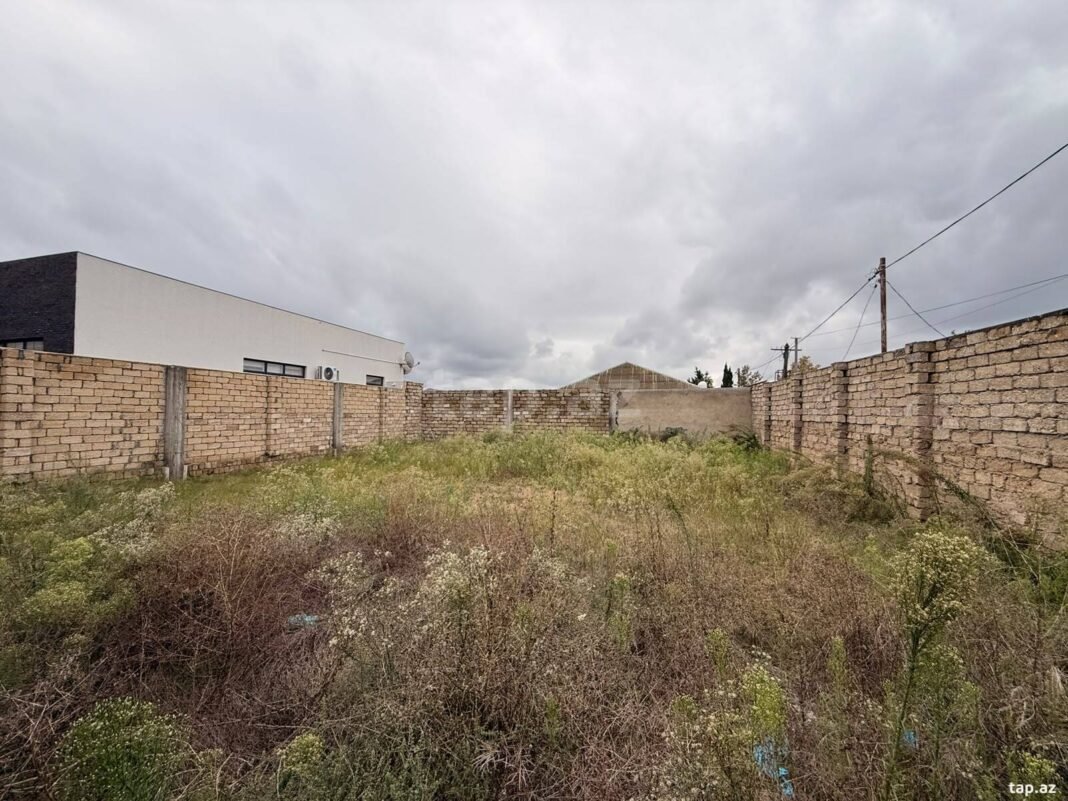
A commercial development plot in Baku’s Nasimi district sold for 850,000 manats, or about $500,000, per 100 square meters, according to real estate expert Ramil Gasimzade.
Gasimzade cited the transaction while explaining why the prices of some properties in the Azerbaijani capital far exceed typical market benchmarks. The land was intended for a nonresidential commercial project, not a private home, he said. At that price, one square meter cost 8,500 manats, or about $5,000.
In another example, Gasimzade said a roughly five-square-meter doner shop near the Nariman Narimanov metro station sold for 400,000 manats, or about $235,300. The outlet’s daily revenue was estimated at more than 1,000 manats.
He said such deals are driven primarily by location and the income that can be generated from customer traffic. A small floor area does not necessarily make a commercial property inexpensive when it is located at a metro exit or in an area with steady pedestrian flow.
Baku Home Prices Rise About 15%
Gasimzade estimated that Baku housing prices have risen about 15% since the beginning of the year. He described the market as moving through periods of relatively moderate growth followed by sharp increases.
Lower-priced homes are gradually disappearing from the market, he said. Small apartments in older buildings are being replaced by larger units in new developments that require significantly larger budgets.
One-bedroom Soviet-era Khrushchev apartments of about 30 square meters in the Narimanov district now cost 130,000 to 140,000 manats, or approximately $76,500 to $82,400, according to the expert. They remain in demand because the total purchase price is lower than that of larger homes.
Gasimzade also pointed to a growing gap between apartment prices and mortgage financing. He said one-bedroom apartments in Leningrad-design buildings can cost about 150,000 manats, two-bedroom units start at 180,000 manats, and three-bedroom apartments range from 230,000 to 250,000 manats.
That leaves buyers needing substantial funds of their own. Some families are responding by considering detached houses or land on Baku’s outskirts instead of apartments in the city.
Empty Apartments Do Not Necessarily Mean Weak Demand
Gasimzade said vacant homes do not by themselves prove that Baku has a surplus of affordable housing.
He described a residential complex in the Nasimi district where apartments remained unoccupied for extended periods while asking prices continued to rise. Some owners and developers treat real estate as a store of capital and are under no pressure to sell quickly, he said.
At the same time, an inflated asking price can delay a transaction for a long period. Properties offered at realistic market prices generally find buyers much faster, he said.
Warehouse Demand Expands Toward Alat
Gasimzade identified warehouse property in Baku’s Garadagh district and along the route toward Alat as a potentially promising segment. He linked the outlook to expanding transport corridors and growing business demand for logistics infrastructure.
He cited a modern warehouse of about 3,000 square meters renting for roughly 10 manats per square meter each month, producing total monthly rent of about 30,000 manats, or approximately $17,650.
Location, land-use designation and legal documents remain decisive when buying land, Gasimzade said. Some buyers pay for plots or buildings without checking exactly which rights they are acquiring, later triggering disputes over registration and compensation if the property is demolished.
The comments were made in an ARB television discussion on Baku’s housing market and reported by Vesti Baku.