AZE.US
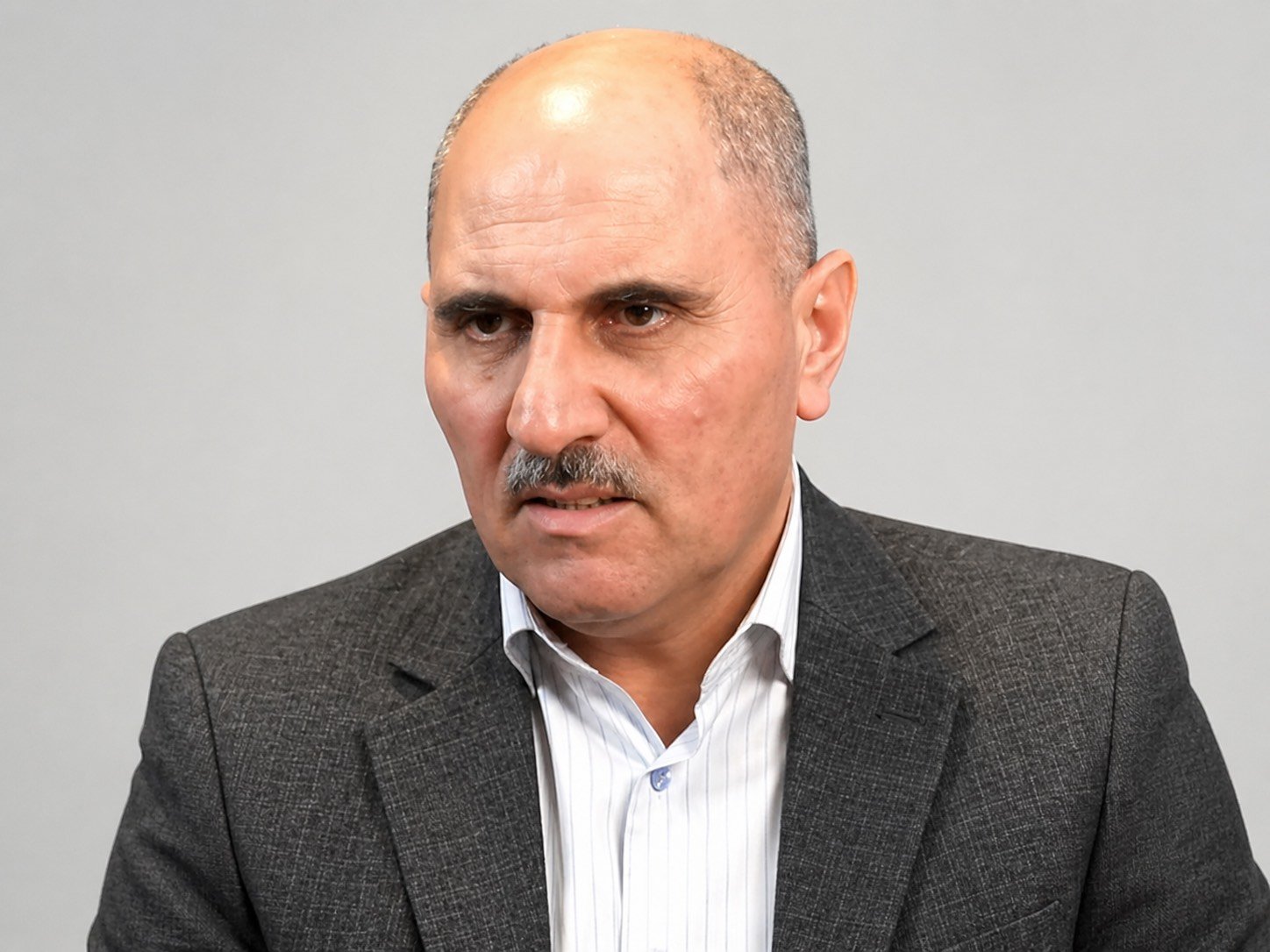
Honored Azerbaijani journalist Azer Hasrat has made a sharply worded statement about Islam, Turkic identity and the role of religious ideology in modern politics, saying that Islam became “the worst calamity” for Turkic peoples.
Speaking in a video segment titled “İslam dini türklərin başına gəlmiş ən dəhşətli bəladır” on the Bax Da platform, Hasrat argued that Islam weakened the national cohesion of Turkic peoples and turned religion into a source of internal division.
“Islamic religion is the worst calamity that happened to the Turkic nation,” Hasrat said.
According to Hasrat, Turkic peoples were stronger and more united before Islam became a dominant religious identity.
He argued that many of today’s conflicts in the Muslim world are not clashes between different civilizations, but disputes within the Islamic world itself.
Hasrat said the issue is not limited to theology. In his view, religion becomes a political problem when it begins to replace national identity, state loyalty and civic responsibility.
He also pointed to the Shiite factor, saying that some groups in Azerbaijan place religious affiliation above loyalty to the Azerbaijani state. Hasrat linked this to the broader question of external religious and political influence, a topic that has long been sensitive in Azerbaijan because of concerns over Iranian ideological activity.
His remarks are likely to provoke a mixed reaction. For some, Hasrat’s comments will be seen as a blunt criticism of politicized religion, radicalism and foreign influence. For others, the statement may sound like an overly broad attack on Islam itself, a religion followed by millions of Turkic people, including many Azerbaijanis.
Hasrat also mentioned Turkey, saying that part of Turkish society has taken a hostile attitude toward Azerbaijan because of religious considerations. He presented this as another example of how confessional divisions can damage ties even between closely related Turkic peoples.
The broader message of his statement was political rather than theological: religion, Hasrat argued, becomes dangerous when it stops being a matter of personal faith and turns into an ideological tool against national interests.
In Azerbaijan, the debate is especially sensitive. The country has long defined itself as a secular state while remaining a majority-Muslim society. At the same time, concerns over radical religious movements, Iranian-linked networks and the politicization of Shiite identity continue to shape public discussion.
For that reason, Hasrat’s statement goes beyond a personal opinion. It touches one of the most difficult questions in Azerbaijani society: where personal faith ends, and where political dependence begins.
AZE.US