AZE.US
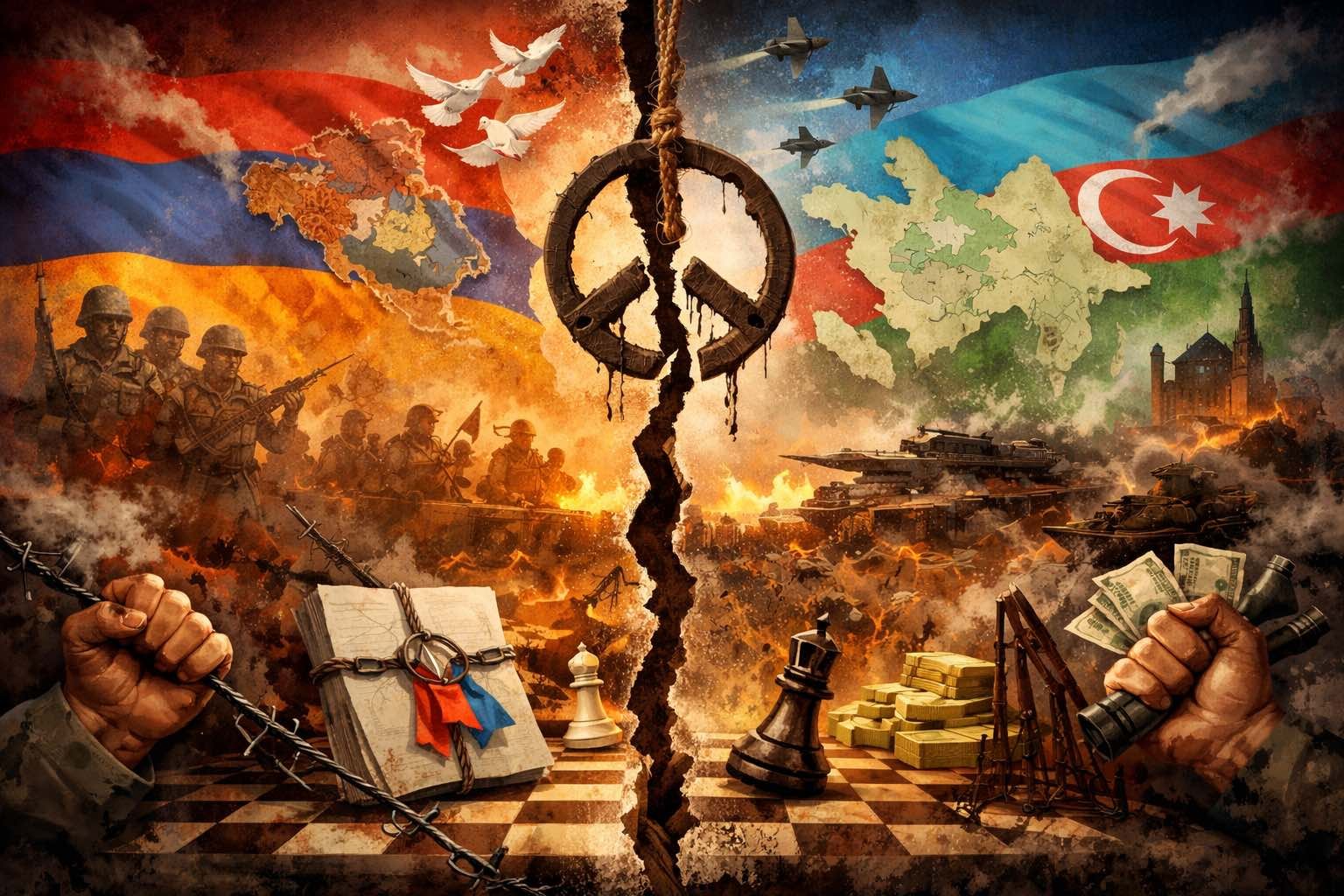
The debate over peace between Armenia and Azerbaijan has not disappeared from Armenian public life. If anything, it has become constant. But as it grows louder, it also feels thinner – less like a civic conversation and more like a controlled political arena.
That was the underlying tension in a recent discussion on Pressclubs TV, where journalist Zara Harutyunyan argued that the peace narrative has shifted from public aspiration to political instrument.
After the 2020 war, cross-border dialogue between Armenian and Azerbaijani journalists gradually became less taboo. Statements that once triggered outrage are now part of routine discourse. Yet the normalization of speech has not necessarily meant the normalization of agency.
According to Harutyunyan, the peace conversation in Armenia has lost its autonomy. It no longer operates as an independent public force capable of influencing politics from below. Instead, it has been absorbed into domestic power competition.
Support reconciliation? You are labeled pro-government. Question the parameters of a peace deal? You are pushed into the opposition camp. In such a polarized environment, even nuanced positions are quickly politicized.
Armenia’s current divide is no longer framed simply as “war or peace.” It is increasingly shaped as “those who want peace” versus “those who do not want war.” Behind these phrases lie competing geopolitical expectations and economic calculations.
Prime Minister Nikol Pashinyan has positioned his government as committed to rapid normalization and regional unblocking. The logic is pragmatic: stabilize the country, prevent renewed conflict, and open economic corridors. For the ruling team, peace is framed as strategic inevitability.
Opposition forces, meanwhile, emphasize military recovery and resistance to concessions they view as unfair. Yet their rhetoric, critics argue, resonates less strongly with a population exhausted by war and wary of further escalation.
The result is a peace discourse that feels procedural rather than participatory. Negotiations are perceived as elite-driven, conducted by officials and experts. Ordinary citizens observe, comment, and argue online – but rarely feel that they shape outcomes.
This perception has produced a form of civic fatigue.
Even symbolic battles – such as disputes over place names – reflect the same deeper pattern. Whether a city is called by one historical name or another often depends less on memory and more on political context. Language becomes another extension of power, not a neutral space for dialogue.
For some Armenian commentators, the deeper issue is not what territories are called, but who controls economic flows, trade routes, and strategic leverage in the region. Peace, in this framing, is less about emotional reconciliation and more about the redistribution of influence.
From an external perspective, especially in Azerbaijan where normalization is often framed as a post-conflict settlement process moving forward, Armenia’s internal struggle over the meaning of peace highlights a broader reality: agreements are signed by governments, but stability requires societal adjustment.
Whether Armenia’s public discourse will regain a sense of ownership over the peace process – or continue to treat it as a monopoly of political actors – remains an open question.
What is clear is that the conversation is no longer about whether peace should happen. It is about who defines it, who benefits from it, and who feels represented in the process.