AZE.US
More rainfall should be good news for Azerbaijan as water stress grows globally. But in Baku, rain increasingly turns into flooding, traffic paralysis and daily disruption – exposing years of infrastructure neglect and poor urban planning.
Rainfall across Azerbaijan and the Absheron Peninsula should, in theory, be seen as a positive development. At a time when access to fresh water is becoming one of the world’s biggest long-term challenges, more rainy days could strengthen the country’s water balance and create new opportunities for better resource management.
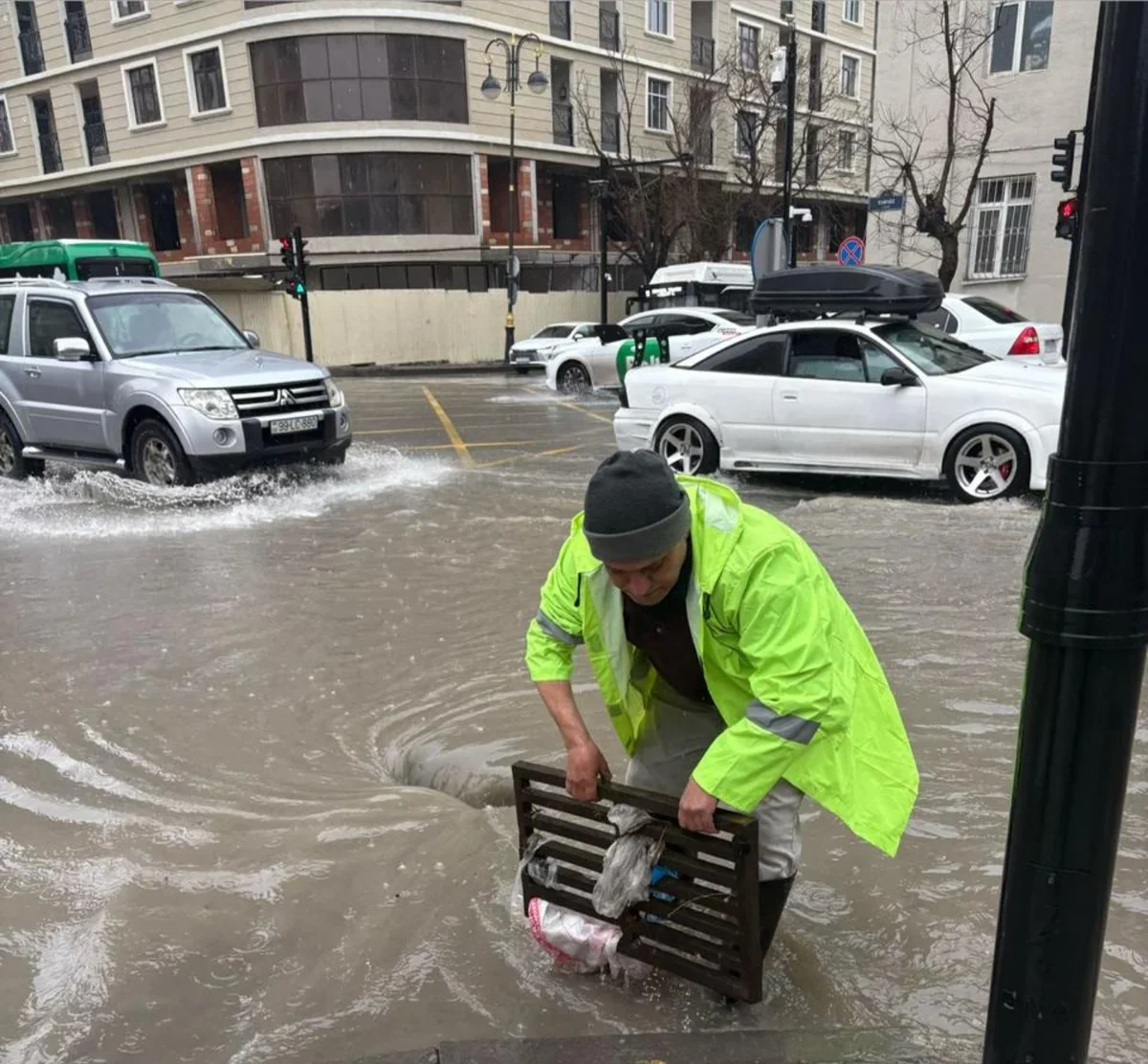
In Baku, however, rain is increasingly producing the opposite effect. Instead of being absorbed into a functioning urban system, heavy showers quickly turn into street flooding, transport disruptions and serious inconvenience for residents.
Economist and political commentator Natig Jafarli argues that the problem is not the rain itself, but the condition of the city’s infrastructure. In his view, one of the government’s biggest mistakes was allowing the old Soviet-era stormwater and sewage systems to be dismantled or degraded over the years.
Baku once had not only sewage lines, but also separate drainage routes designed specifically to carry away rainwater. During the construction boom of the late 1990s and early 2000s, those systems were often cut through when they interfered with the foundations of newly built high-rise buildings. In many cases, rainwater lines were simply redirected into the ordinary sewage network.
That decision has had lasting consequences. A sewerage system originally designed for a city of around 2 million people is now expected to serve roughly 4 million. The result is predictable: overloaded pipes, insufficient capacity and a network that can no longer cope when serious rainfall hits. Even a relatively short downpour can leave large parts of Baku waterlogged.
Jafarli also points to another structural problem: access to sewer connections gradually became less of an engineering matter and more of a paperwork formality, often distorted by corruption. As technical planning gave way to ad hoc approvals, the city lost the kind of coordinated approach needed to keep pace with rapid urban expansion.
That is why the real story is bigger than a weather event. If Azerbaijan is indeed becoming wetter, that could be an advantage for the country. But without competent planning, modern drainage systems and a functioning urban vision, what should be a natural benefit will continue to turn into a citywide failure in Baku.