AZE.US
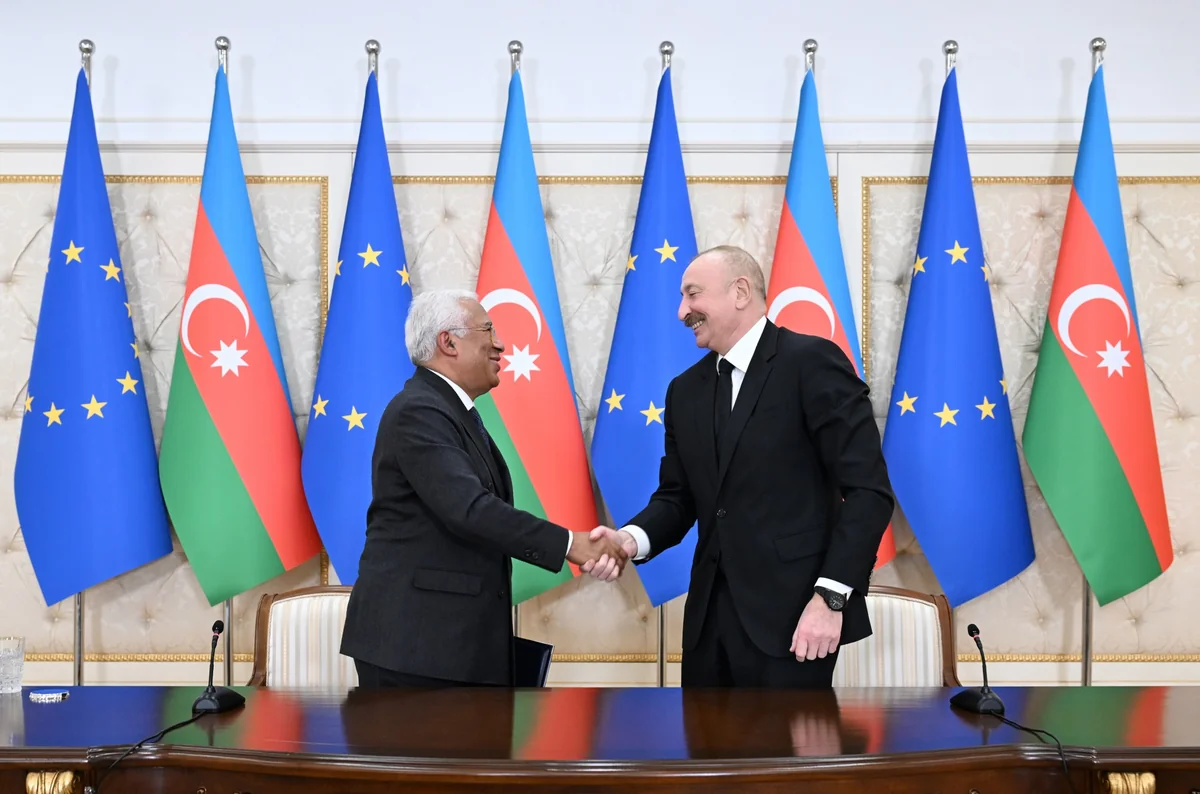
Energy cooperation remains the central pillar of relations between Azerbaijan and the European Union, President Ilham Aliyev said Wednesday during a joint press statement with European Council President António Costa in Baku.
Aliyev noted that 16 countries – most of them EU member states – are already receiving Azerbaijani natural gas, highlighting Baku’s growing role in Europe’s energy security.
“Energy cooperation has always been, is now, and will undoubtedly remain a key part of our partnership,” Aliyev said. He pointed to the 2022 Strategic Energy Partnership agreement with the European Commission, after which Azerbaijan increased both the volume of gas exports to Europe and the number of countries receiving supplies.
According to the president, Azerbaijan plans to expand natural gas production in the coming years, including through development of new fields.
“If everything proceeds according to schedule, within two to three years Azerbaijan will have additional gas volumes of at least 10 billion cubic meters,” Aliyev said.
At the same time, Baku is strengthening cooperation with the EU in renewable energy, where the country sees major potential.
Aliyev said Azerbaijan is investing heavily in wind and solar power projects and aims to generate between 6 and 8 gigawatts of renewable energy within the next five to six years, much of it intended for export.
The president also emphasized the importance of economic ties with the bloc, noting that the European Union accounted for roughly 50 percent of Azerbaijan’s total trade turnover in January, making it the country’s largest trading partner.
“I am confident that with new projects and investment opportunities, trade will continue to grow,” he said.
Peace Process With Armenia
Aliyev also addressed regional developments, saying Azerbaijan and Armenia have already entered what he described as a period of long-term peace.
He noted that Azerbaijan has begun supplying petroleum products to Armenia over the past seven months and removed restrictions on the transit of goods through Azerbaijani territory to the neighboring country.
“These steps demonstrate our strong political will,” Aliyev said.
The Azerbaijani leader pointed to the timeline between the last major military confrontation in September 2023 and the peace agreements reached in Washington in August 2025, describing it as proof that reconciliation is possible when both sides commit to peace.
“Nothing is better than peace. Only those who have experienced war truly understand its value,” he added.
Aliyev said the normalization process also opens new opportunities for expanding the Middle Corridor and strengthening regional connectivity between Europe and Asia.
EU Support And Regional Security
European Council President António Costa welcomed the progress in the peace process and described it as “historic.”
“The Washington agreements reflect your commitment to dialogue and reconciliation,” Costa said, adding that the European Union fully supports the implementation of the peace framework between Azerbaijan and Armenia.
Costa also thanked Azerbaijan for assisting with the evacuation of EU citizens from Iran during the recent regional escalation.
He further stated that the European Union strongly condemns the recent Iranian drone attack on Nakhchivan airport, stressing the importance of regional stability and adherence to international law.
Strategic Connectivity And Future Cooperation
Costa highlighted the strategic importance of the Middle Corridor transport route, as well as the planned Baku–Nakhchivan railway, which he said could strengthen economic links between Europe and Asia and create new jobs across the region.
He also said the EU is looking forward to the European Political Community summit scheduled to take place in Azerbaijan in 2028, describing it as another sign of growing cooperation between Brussels and Baku.
“In a time of growing global instability, strengthening ties between us is more important than ever,” Costa said.