AZE.US
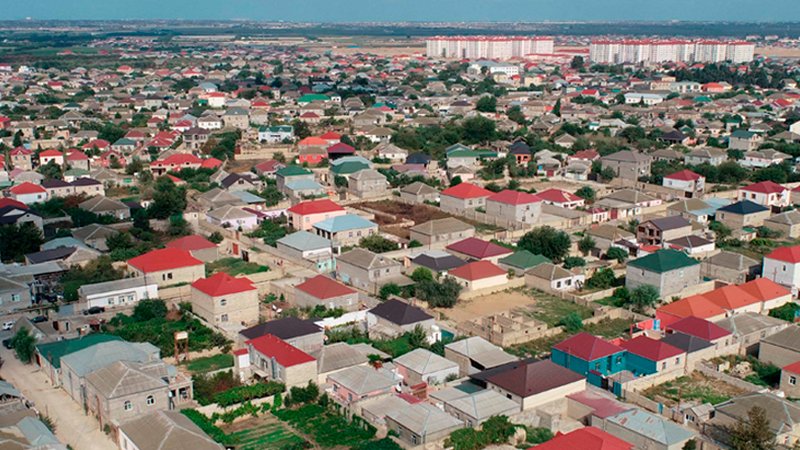
An Azerbaijani economist has questioned the legal and administrative approach to so-called “unauthorized constructions” in Baku, arguing that the issue requires structural reform rather than short-term enforcement measures.
The debate resurfaced following a recent meeting at the Baku City Executive Authority, where officials reportedly discussed illegal buildings and set a one-month deadline to address the issue in Surakhani district.
Economist Natig Jafarli said such timeframes are unrealistic given that the problem has developed over decades. He renewed his call for a comprehensive legal framework and proposed what he describes as a property amnesty for qualifying structures.
Jafarli also raised a key legal inconsistency: many of the homes categorized as “illegal” are connected to state-provided utilities, including electricity, gas and water, with official meters installed and payments processed through public service providers.
“If state companies supply utilities to a property, this implies de facto recognition of residential use,” he argued.
The economist said the definition of “unauthorized construction” should be clarified, particularly in cases where homeowners financed construction independently and where buildings meet basic safety and technical standards.
Analysts note that unresolved property status creates broader economic distortions. Homes without formal documentation cannot be used as collateral, limiting access to credit markets and constraining household wealth formalization.
Policy experts say a structured legalization mechanism – with clearly defined eligibility criteria – could help integrate such properties into the formal economy while protecting citizens’ rights.
The issue remains sensitive, as authorities seek to balance urban planning, legal compliance and social stability in a rapidly expanding capital.