AZE.US
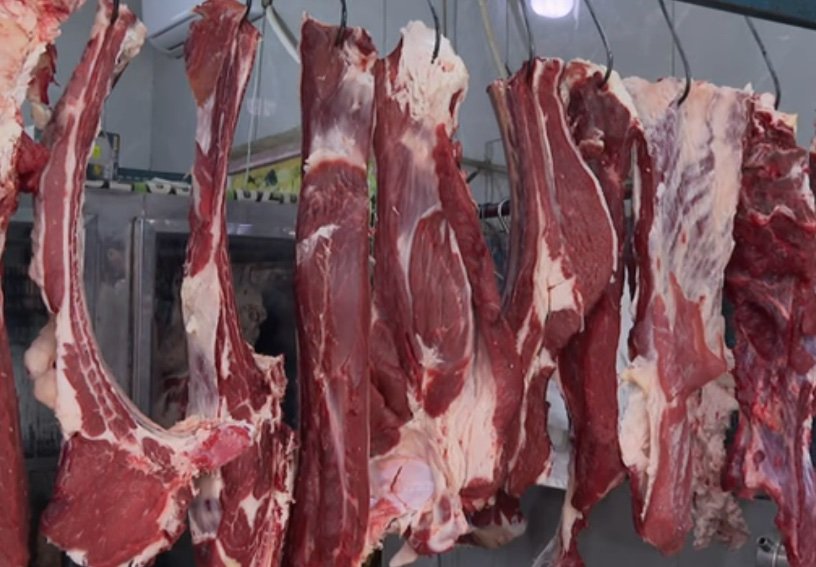
Beef prices have been rising at retail points in Azerbaijan, even as farmers in the regions say live cattle prices have remained broadly stable.
Livestock breeders say the increase is being felt mainly at the point of sale, not at the farm gate. In many cases, they say, animals are still being sold at roughly the same prices as before, while meat reaches consumers at much higher rates.
Bakhtiyar Aliyev, a farmer from the Barda district, said his family depends largely on income from raising cattle. He said they fatten animals several times a year and sell them based on current market conditions.
Farmers say smaller animals are often sold without exact weighing, with prices agreed by visual estimate of live weight. Larger cattle are more likely to be sold based on measured weight.
According to producers in Barda, the live-weight price of well-fattened cattle currently stands at around 15 to 15.5 manats per kilogram. But they say middlemen often try to buy at 12 to 13 manats and then resell at a significantly higher price.
Farmers in other regions describe a similar pattern. In Tovuz, livestock breeders say the weak functioning or closure of some animal markets has pushed more transactions directly into farmyards, where buyers often have the upper hand in setting prices.
Producers say feeding and maintaining cattle has become increasingly expensive. Costs for feed and overall care have risen, but the farm-level selling price of live animals has not increased enough to offset those pressures.
As a result, many farmers say the main profits are being captured not by producers but by intermediaries. While livestock may leave the farm at 12 to 14 manats per kilogram of live weight, beef in urban markets is then sold at 16 to 17 manats or more.
That has sharpened a broader question across the country: if the price of live cattle has not changed much, why is meat becoming more expensive for consumers?
Farmers say the answer lies in an inefficient supply chain, dependence on intermediaries, and rising input costs that continue to push retail prices upward.