AZE.US
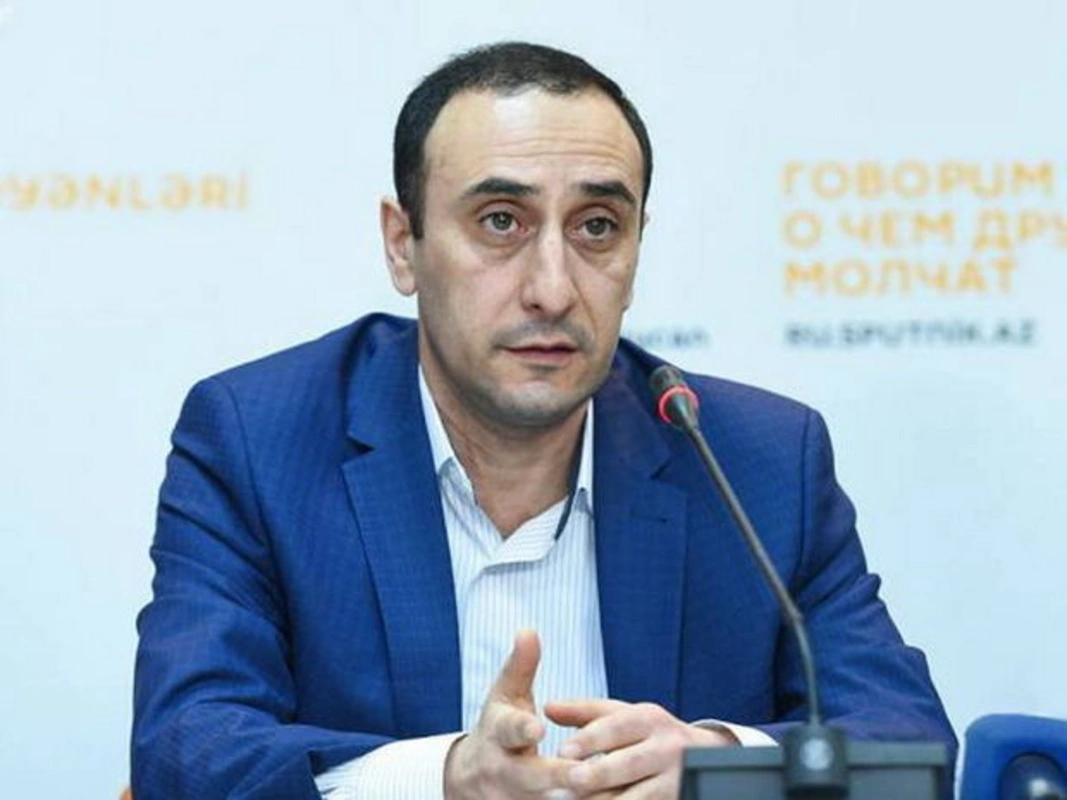
Turkey is not seeking the disintegration of Iran, but it does view Iran’s weakening as a favorable outcome, political analyst Rizvan Huseynov said in an interview on the Novosti Kavkaza YouTube channel. He argued that a broad consensus has formed inside Turkey around the idea that Iran should remain intact as a state, while losing the capacity to destabilize the wider region.
According to Huseynov, this position is shared not only by supporters of President Recep Tayyip Erdogan’s ruling camp, but also by large parts of Turkey’s secular public. He described that overlap as an important sign that, on the Iran issue, Turkish society is showing an unusual degree of strategic agreement despite its deep internal ideological divides.
Huseynov said the logic behind that consensus is straightforward: Ankara does not want to see Iran collapse and turn into another Syria, Iraq or Afghanistan. In his view, such a scenario would create a far more dangerous regional crisis, spill instability across borders and damage the interests of both Turkey and Azerbaijan.
At the same time, he argued that many in Turkey see Iran’s reduced influence as beneficial. He said the preferred outcome for Ankara is an Iran that remains on the map, but is no longer able to aggressively export its political and ideological model or sustain the same level of proxy activity across the Middle East.
Huseynov also linked this thinking to what he called the mood of “Anatolian street” — a shorthand for conservative, provincial and deeply political segments of Turkish society that he said play a major role in shaping the country’s rhetoric and strategic instincts. In his telling, that electorate broadly supports a policy of cautious neutrality in the war around Iran, while rejecting both regional chaos and direct Turkish entanglement.
He argued that this approach could leave Turkey in a stronger position as the crisis evolves. If the military phase around Iran eases, Huseynov said, Ankara may try to expand its role in stabilizing the region and shaping future negotiations, presenting itself not as a force of destruction but as a power capable of imposing order.
In that sense, he portrayed Turkey’s strategic line as neither pro-Iran nor anti-Iran in absolute terms. Rather, it is centered on preventing a total regional breakdown while using the moment to improve Turkey’s own standing in the Middle East.