By Leyla Mammadli for Aze.US
The latest U.S. military strike against Iran is not merely another episode in Washington–Tehran confrontation. It signals a structural shift in regional security dynamics – one that extends well beyond the Middle East and directly affects the South Caucasus.
This is not a peripheral crisis for Azerbaijan. It is a proximity event.
Azerbaijan As A Strategic Transit Node
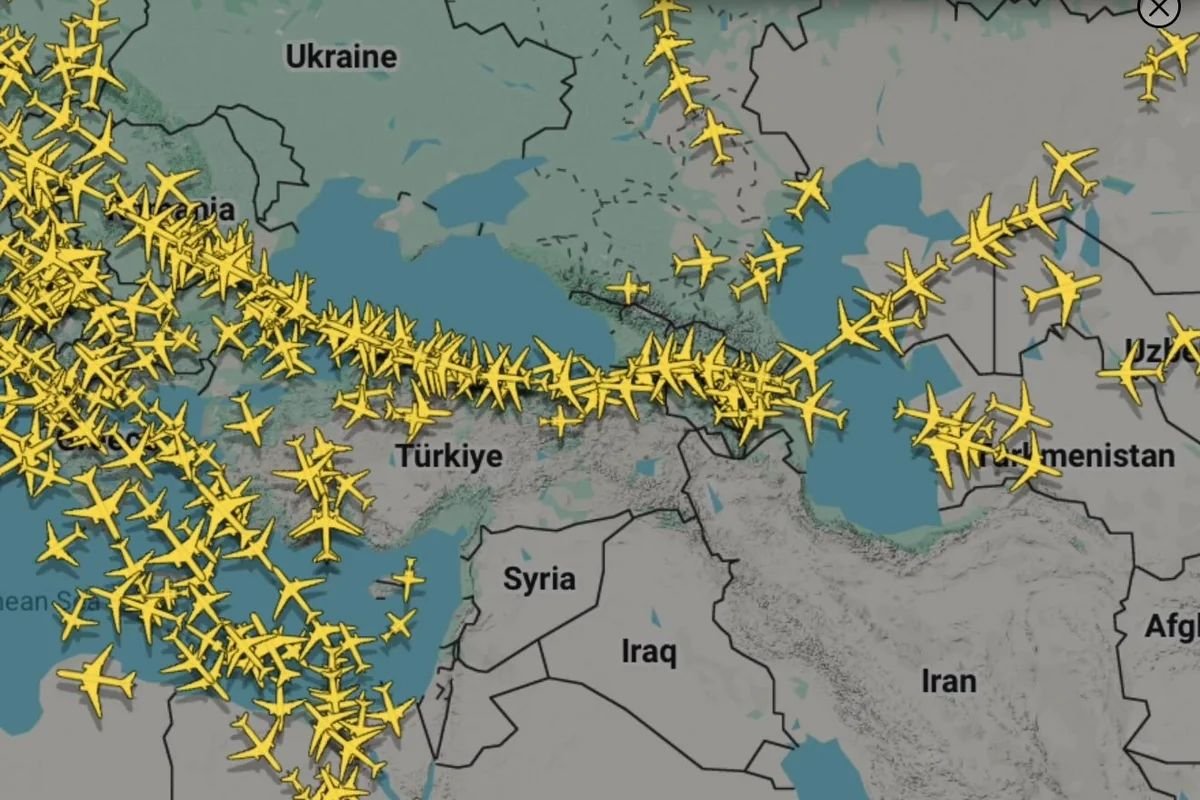
Azerbaijan is no longer viewed solely as an energy exporter. It has become a critical air and land corridor linking the Black Sea, Turkey, the South Caucasus and Central Asia.
As instability grows in the Persian Gulf, alternative transit routes gain strategic value. The Black Sea-Turkey-South Caucasus–Central Asia axis is increasingly relevant for logistics, aviation, and trade diversification.
Greater relevance, however, means greater exposure.
Strategic visibility brings strategic vulnerability.
The Iran Factor: Demographics And Security Sensitivity
Northern Iran is home to millions of ethnic Azerbaijanis. Cities such as Tabriz, Ardabil, and Urmia are not abstract map points – they represent cultural and historical continuity across the Araz River.
Any prolonged military escalation could generate:
-
heightened internal security measures in Iran’s border regions,
-
economic disruption affecting cross-border dynamics,
-
potential humanitarian spillover.
It is important to separate emotion from strategy. Iranian Azerbaijanis are integrated into the political and economic structure of the state. However, under external pressure, Tehran is likely to intensify centralization and security oversight – a pattern seen historically in crisis periods.
Such tightening can increase internal sensitivities.
The Core Strategic Question For Baku
How does Azerbaijan preserve balance?
-
Russia to the north
-
Iran to the south
-
Turkey as a key ally
-
Expanding ties with the United States and the European Union
In an environment of open confrontation, multi-vector diplomacy becomes more complex. External actors may expect clearer positioning.
For Azerbaijan, overt alignment risks long-term structural costs.
Three Primary Risk Categories
1. Border Security
Even limited destabilization along the Araz corridor could create migration pressure or security incidents. Preventive contingency planning is essential.
2. Diplomatic Compression
Balancing working relations with Iran while deepening cooperation with Western partners becomes more delicate if escalation continues.
3. Energy And Logistics Corridors
The Middle Corridor gains strategic relevance as alternative supply chains expand. Yet increased relevance also raises the corridor’s geopolitical profile – and therefore its exposure to pressure.
Broader Implications For The South Caucasus
Escalation around Iran could indirectly affect the Armenia-Azerbaijan normalization process.
If major powers redirect focus to the Middle East, diplomatic engagement in the South Caucasus may temporarily decline. Conversely, reduced external competition could create space for regional actors to consolidate their own security architecture.
The key variable is whether instability remains contained or evolves into a prolonged regional conflict.
Strategic Imperative
The priority for Azerbaijan is not choosing sides – but preserving maneuverability.
This requires:
-
sustained balanced diplomacy,
-
active risk modeling and humanitarian contingency planning,
-
reinforcement of regional dialogue mechanisms,
-
avoidance of emotionally driven rhetoric.
In periods of systemic transition, flexibility becomes a strategic asset.
Azerbaijan’s ability to engage multiple power centers simultaneously remains its strongest security advantage. Maintaining that equilibrium under rising pressure will define its resilience in the emerging regional order.