Aze.US
Why the Debate in Azerbaijan Is Bigger Than It Seems
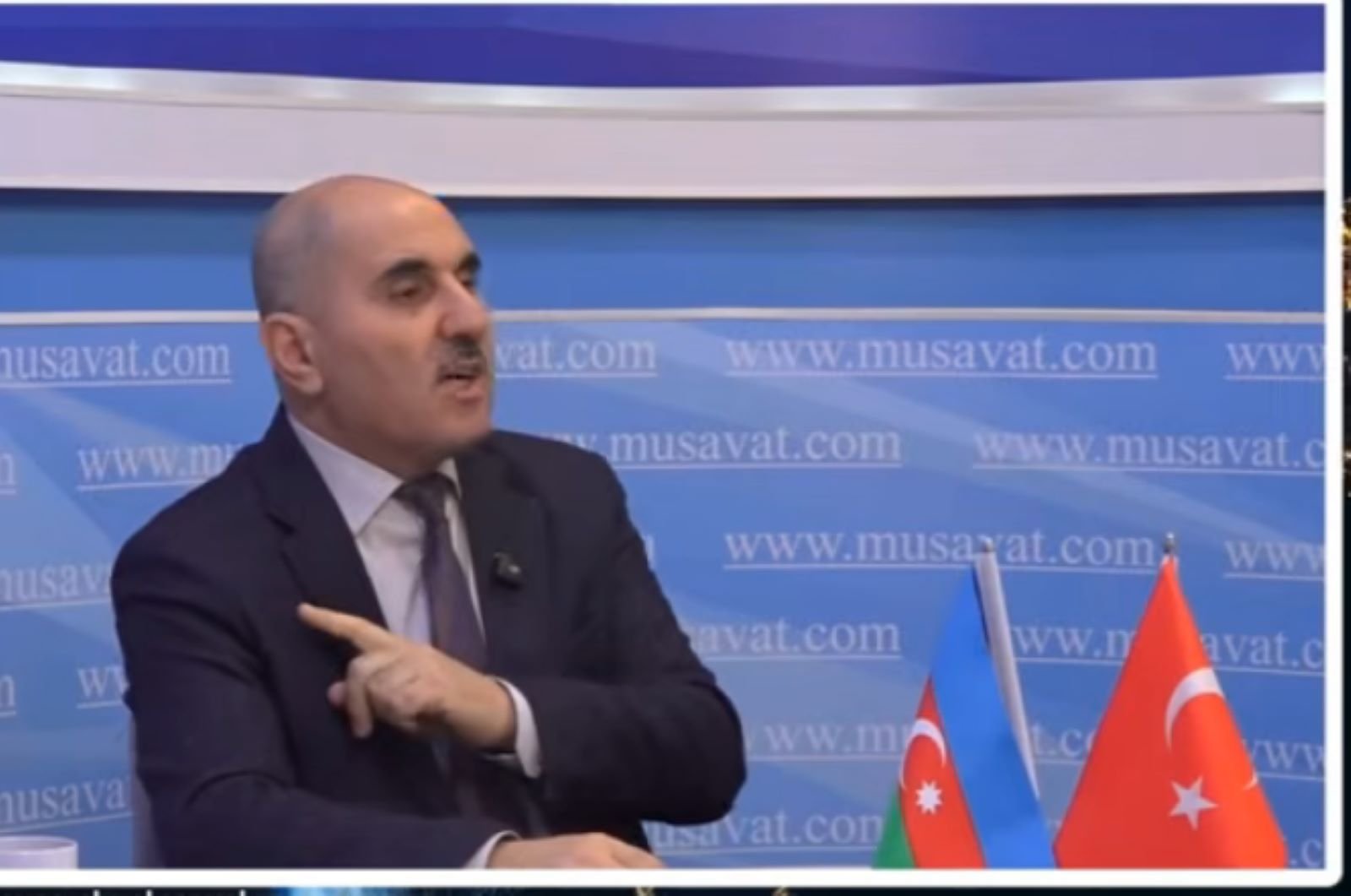
A sharp public statement by Azerbaijani journalist Azer Hasrat has reignited a familiar but unresolved debate across the post-Soviet world:
can national identity fully coexist with the continued dominance of the Russian language?
In a televised appearance, Hasrat argued that individuals who consistently prioritize Russian in daily life cannot be considered genuine patriots of Azerbaijan.
The claim is controversial, emotionally charged, and socially divisive.
Yet the intensity of the reaction reveals something deeper than a domestic cultural dispute.
It exposes an unfinished historical transition.
Beyond Language: A Question of Sovereignty
Across the former Soviet space, language has never been merely a communication tool.
It has functioned as:
-
an administrative instrument,
-
a cultural hierarchy,
-
and, crucially, a mechanism of political influence.
Even three decades after independence, Russian often retains elite, urban, and institutional prestige in multiple states.
This persistence is not accidental; it reflects the long shadow of an imperial system whose soft power outlived its formal borders.
From this perspective, the Azerbaijani debate mirrors wider regional dynamics visible in:
-
Kazakhstan’s gradual linguistic rebalancing,
-
Kyrgyzstan’s ongoing status discussions,
-
and broader efforts to redefine post-imperial identity across Eurasia.
What appears locally as a cultural argument is, in reality, a geopolitical realignment in slow motion.
Patriotism in the Age of Hybrid Influence
Hasrat’s formulation – that language choice reflects loyalty – is intentionally uncompromising.
Critics view it as exclusionary.
Supporters see it as a long-overdue assertion of cultural sovereignty.
Both reactions highlight a central tension of the modern post-Soviet condition:
formal independence was achieved quickly;
psychological and cultural independence is unfolding far more slowly.
In an era defined by hybrid influence, media narratives, and soft-power competition,
language becomes a frontline – not of armies, but of identity formation.
The Risk of Polarization
Yet absolutist framing carries its own dangers.
Reducing patriotism to linguistic behavior risks:
-
deepening internal social divides,
-
alienating bilingual urban populations,
-
and transforming a strategic cultural discussion into a zero-sum identity conflict.
For states navigating complex geopolitical environments,
internal cohesion is itself a national security asset.
The challenge, therefore, is not choosing between identity and pluralism,
but constructing a model where state language, civic unity, and global openness reinforce rather than undermine one another.
A Regional Turning Point
The renewed intensity of language debates suggests the post-Soviet space is entering a second phase of de-imperial transition:
-
the first was political independence in the 1990s;
-
the second is cultural and psychological sovereignty in the 2020s.
This phase is inherently contentious,
because it touches not borders or treaties,
but memory, belonging, and everyday habit.
Azerbaijan is not alone in confronting this moment.
But the clarity – and sharpness – of its public discourse makes the country an early indicator of where the wider region may be heading.
What This Debate Really Signals
Ultimately, the controversy is not only about Russian or Azerbaijani speech.
It is about who defines identity in the 21st-century post-Soviet world:
-
inherited imperial culture,
-
pragmatic globalization,
-
or consciously rebuilt national narratives.
The answer will shape not just language policy,
but the strategic orientation of an entire region.
And that is why a single televised statement in Baku resonates far beyond Azerbaijan’s borders.