Aze.US
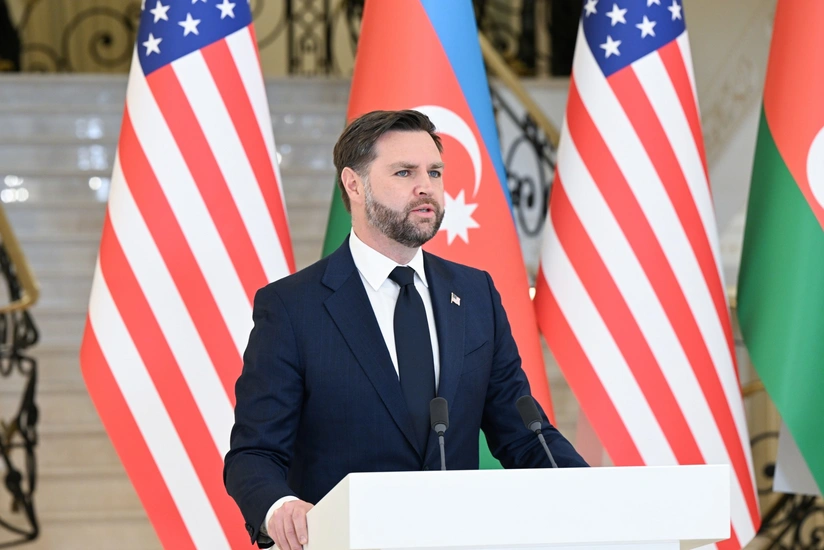
The recent diplomatic activity surrounding U.S. Vice President JD Vance’s engagement in the South Caucasus is widely framed as routine outreach. In reality, it reflects something more consequential: the gradual replacement of the region’s post-Soviet geopolitical order.
For decades, the South Caucasus operated within a familiar structure. Russia functioned as the primary security guarantor, Western actors provided financial and institutional support, and unresolved conflicts served as instruments of leverage. That framework did not collapse overnight, but the regional shifts following the wars of 2020 and the transformations of 2023 effectively ended its viability.
Russia remains geographically present. Politically, however, it no longer defines the region’s strategic direction. This emerging vacuum is not being filled through visible military expansion or formal alliance systems. Instead, Washington appears to be shaping influence through connectivity, energy corridors, technological integration, and elite-level partnerships – the core instruments of twenty-first-century power projection.
Within this framework, the South Caucasus is evolving from a geopolitical periphery into a transit and coordination node linking Europe with Central Asia. Control over routes, infrastructure, and regulatory alignment increasingly matters more than territorial presence.
Azerbaijan’s rising strategic relevance follows this logic. Geography, energy capacity, and a demonstrated ability to execute large-scale infrastructure projects position Baku as a functional partner in regional connectivity. In contemporary geopolitics, operational reliability often outweighs ideological alignment.
At the same time, the emerging architecture suggests a division of roles. The United States defines strategic parameters and long-term rules, while Türkiye provides localized presence and implementation capacity. Similar distributed-influence models have appeared in other regions where Washington seeks stability without direct administrative burden.
Armenia, by contrast, represents a space of transition rather than consolidation. Movement away from Russian-centered security structures toward uncertain Western alignment introduces internal political strain and external strategic competition – a pattern historically associated with prolonged instability.
Beyond the South Caucasus itself, Iran remains the most sensitive variable shaping regional outcomes. Any managed political transformation in Tehran would accelerate geopolitical reconfiguration across the wider region, amplifying the significance of current diplomatic positioning.
Taken together, these dynamics indicate that the South Caucasus is no longer merely an area of observation. It is becoming an active arena of strategic restructuring. Stability, if it emerges, will likely stem not from reconciliation alone but from a newly established balance of power.