AZE.US
Azerbaijan’s meat market is facing a problem that has been building for years: local production is weakening, livestock numbers are falling and imports are becoming more expensive.
In the first three months of the year, Azerbaijan imported 12,299 tons of meat worth $28.63 million. In volume terms, imports rose by only 3.4%, but their value increased by 15.3%. That means imported meat is costing the country significantly more, even though the increase in physical supply has been modest.
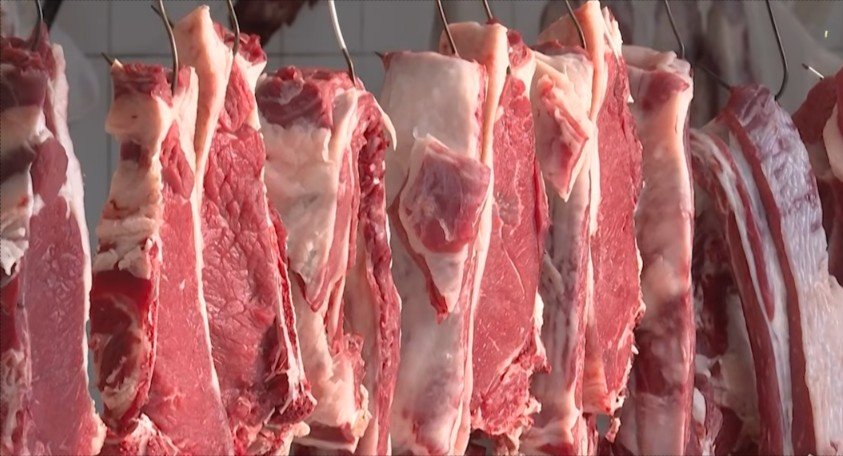
The pressure is already visible in Baku’s butcher shops. Sellers say prices have recently increased by about 1 to 1.5 manats. Beef now costs around 16 to 18 manats per kilogram, depending on the point of sale, while lamb averages 21 to 22 manats, although cheaper offers can still be found in some markets.
Economist Natig Jafarli, speaking to Musavat.com, said the current situation is not unexpected. According to him, Azerbaijan has seen a serious decline in both cattle and small livestock over the past five years.
He said the number of cattle has fallen by about 300,000 head, while the number of sheep and goats has dropped by 1.7 million to 1.8 million head. For the meat market, these are not just abstract figures. Fewer animals in local farms mean weaker domestic production and greater reliance on imports.
Jafarli said the economy must be viewed as a single system: when production falls, the effects inevitably reach prices, imports and the broader food supply balance.
One of the main reasons, he said, is the gradual loss and occupation of pastureland. That has been compounded by a weaker feed base, low profitability in livestock farming and a declining number of people willing to stay in such a difficult sector.
Farmers in the regions describe the same pressure at ground level. They say livestock farming no longer brings the returns it once did. Feed, hay, barley and alfalfa have become more expensive, while keeping animals through winter has become especially costly. Farmers say alfalfa alone now costs 7 to 8 manats, a serious burden for small farms.
In Tovuz and other districts, farmers say they can no longer cover their costs. Machinery, planting, seeds and feed have all become more expensive, while opportunities for normal grazing and feed preparation have narrowed. As a result, some small farms are reducing their herds or leaving the market entirely.
There is also a social factor. Jafarli said urban life is increasingly pulling people away from rural work. For some villagers, a city job paying 1,000 to 1,500 manats appears more stable and more attractive than hard livestock work with uncertain income.
The result is that villages lose workers, and the market loses locally produced meat.
Economist Khalid Kerimli also links the rise in imports to two factors: growing demand for meat and a decline in the number of animals in local farms. According to him, the number of small livestock has fallen by about 25% over the past decade, while cattle numbers have also declined noticeably. That reduces supply on the domestic market and pushes prices higher.
Against this backdrop, Azerbaijan is buying more meat from abroad. Frozen lamb is mainly imported from Mongolia, live sheep and goats from Georgia, Russia and Kazakhstan, and frozen beef from Ukraine, Russia and Brazil.
Jafarli argues that the problem has become systemic and requires more than cosmetic measures. Livestock farming must become profitable enough for people to remain in the sector instead of leaving for cities in search of more predictable income.
He says the sector needs long-term low-interest loans, direct market access for farmers, modern technologies, more productive animal breeds, accessible and preferably free veterinary services, and a stronger feed base.
Without such measures, the negative trend may deepen. The population is growing, while livestock numbers are falling. That imbalance will continue to put pressure on prices.
For consumers, the implication is simple: if local production does not recover, meat may become even more expensive. For the state, the risk is broader. This is no longer only about prices in shops, but also about food security.
Jafarli warned that the current situation had been predicted years ago. If decisions are delayed again, the meat market could face a new and sharper wave of price increases.
AZE.US