AZE.US
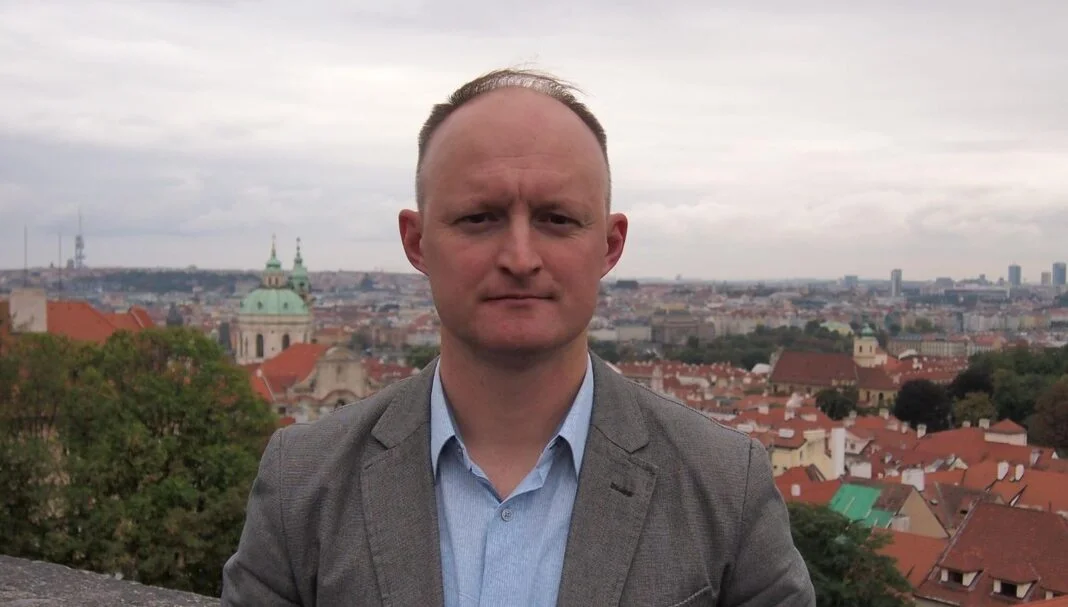
Political analyst Vladimir Kopchak says Ukrainian President Volodymyr Zelensky’s visit to Baku was not just another diplomatic stop, but a public confirmation of a deeper Kyiv-Baku track that has been developing for years, including humanitarian, political and potentially defense-industrial cooperation.
Political analyst Vladimir Kopchak, speaking in an interview with the “Novosti Kavkaza” channel, said Ukrainian President Volodymyr Zelensky’s visit to Baku marked a new and more visible stage in relations between Ukraine and Azerbaijan.
According to Kopchak, the visit should not be seen as an isolated event. He described it as part of Ukraine’s broader “eastern policy,” which includes Turkey, Gulf states, Syria and, increasingly, Azerbaijan. In his view, Kyiv’s work with Baku did not begin now, but the latest visit gave that cooperation a more open political form.
Kopchak said the meeting effectively brought into public view a relationship that had been developing for years, often quietly and away from the headlines. He noted that this work intensified after Russia’s full-scale invasion of Ukraine in February 2022 and is now being shaped by a much wider regional security context.
One of the most important parts of the visit, he said, was the public reference to cooperation in the defense-industrial sector. Kopchak pointed to discussions around air defense, counter-drone systems and possible defense production as signs that Kyiv and Baku are looking at practical security cooperation, not just political symbolism.
He argued that this should not be framed as a “challenge” to Russia, but rather as a response to growing risks coming from Russia, Iran and the wider regional axis aligned against Ukraine and its partners.
Kopchak also highlighted Azerbaijan’s humanitarian support for Ukraine, including the reception of Ukrainian children. He said that this part of the relationship should not be forgotten even as attention shifts toward defense, energy and geopolitics.
In his assessment, the Baku visit also fits into a wider regional chain that includes Ankara and other capitals. Kopchak said the Kyiv-Ankara-Baku connection is becoming part of a broader architecture in which the South Caucasus and the Caspian region matter to Ukraine not only as transport or energy corridors, but also as a strategic space around Russia.
For Ukraine, he said, the South Caucasus is important because Moscow’s influence along its perimeter is no longer uncontested. Ukraine’s resistance since 2022 has changed the calculations of many states in the region, and Kyiv is now working more actively with countries that see the same risks in Russia’s behavior.
Kopchak’s main point was that the Zelensky visit did not create the Kyiv-Baku track from scratch. It made it visible. What had long been handled cautiously and often quietly has now been given a public diplomatic frame.
AZE.US