AZE.US
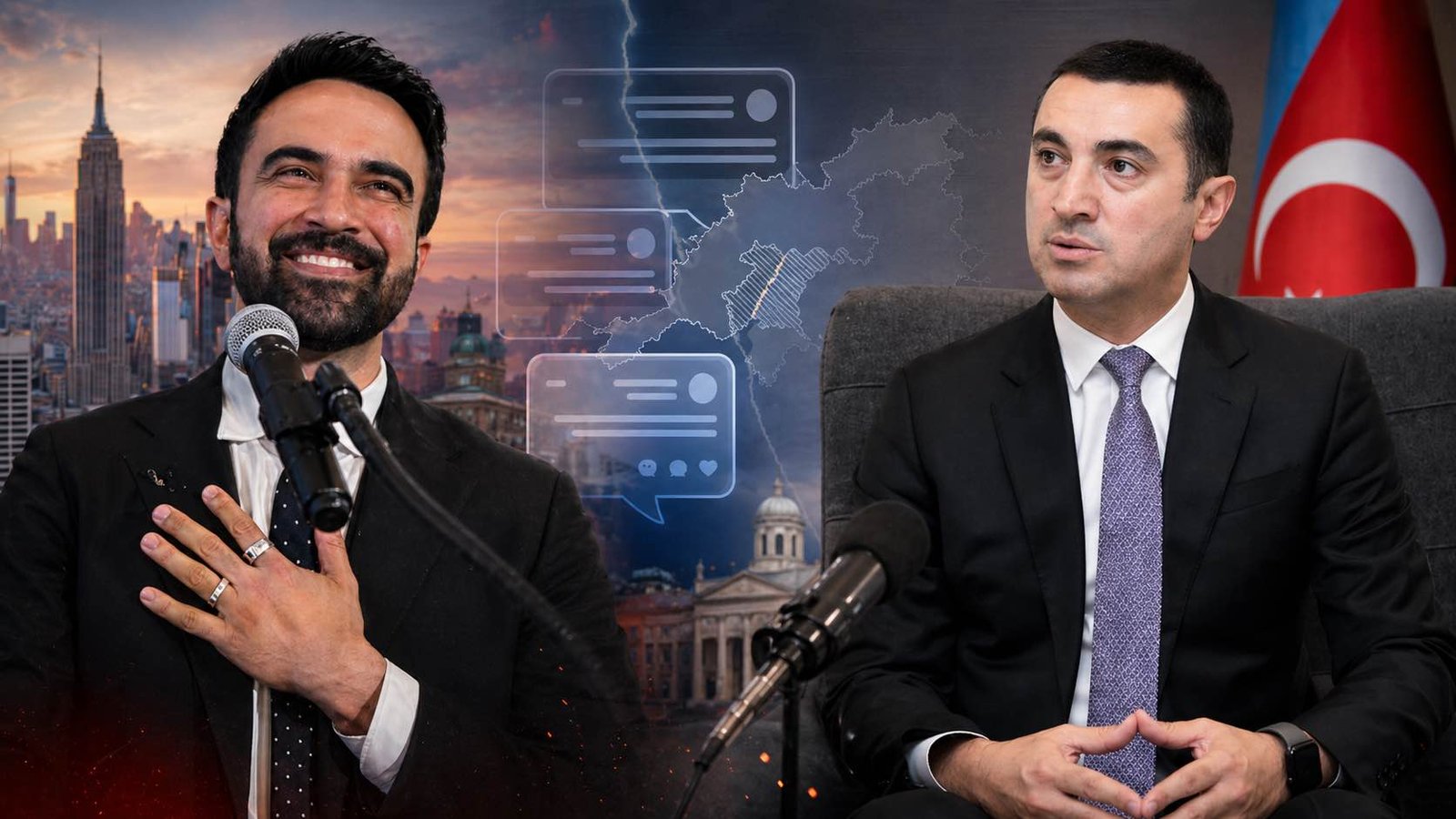
New York Mayor Zohran Kwame Mamdani has drawn a sharp reaction from Azerbaijan after using an Armenian Genocide Remembrance Day statement to accuse Azerbaijan of attacking Armenians in Karabakh and expelling more than 100,000 people from the region.
In a post on X marking the 111th anniversary of the Armenian Genocide, Mamdani said Armenians were killed by the Ottoman Empire across what is now Turkey, Syria and Armenia. He then linked that history to the South Caucasus, claiming that “the military forces of Azerbaijan and Turkey attacked the Armenian population in Nagorno-Karabakh” in 2020 and that Azerbaijan “expelled over 100,000 Armenians” from the region in 2023.
The wording immediately drew anger in Baku, where officials and civil society representatives said the mayor had repeated a one-sided Armenian narrative while ignoring the internationally recognized status of Karabakh as part of Azerbaijan, the decades-long occupation of Azerbaijani territories and the displacement of hundreds of thousands of Azerbaijanis.
Azerbaijani Foreign Ministry spokesman Aykhan Hajizada rejected Mamdani’s remarks, saying public figures should act responsibly, avoid spreading misinformation and contribute to reconciliation rather than deepen divisions through politically motivated statements.
He said Azerbaijan acted in 2020 within its internationally recognized sovereign territory and in line with international law and U.N. Security Council resolutions.
Mayor Zohran Kwame Mamdani, public figures should act responsibly, refrain from spreading misinformation, and contribute to reconciliation rather than deepening division through politically motivated and historically false statements.
We reject your inflammatory statement. Such… https://t.co/0Cwy6ocoq1
- Aykhan Hajizada (@Aykhanh) April 25, 2026
Hajizada also rejected the use of the word “expulsion” to describe the departure of Armenians from Karabakh in 2023.
According to Baku’s position, Armenian residents were offered reintegration, equal rights and security guarantees after Azerbaijan restored constitutional order in the region. Azerbaijan says the September 2023 operation ended the presence of illegal armed formations and restored state authority after nearly three decades of separatist control.
The dispute touches one of the most sensitive points in the Armenian-Azerbaijani conflict. International reporting has described the 2023 events as a mass exodus of ethnic Armenians after Azerbaijan’s military operation, while Azerbaijan says the departure was not forced and that reintegration terms were offered to residents who wished to remain. AP reported at the time that more than 100,000 Armenians left Karabakh after Azerbaijan took control, while also noting that Baku introduced a reintegration plan promising equality and rights protection.
A group of Azerbaijani NGO representatives also sent an open letter to Mamdani, arguing that an elected official in a city such as New York should not rely on the position of only one side. The letter said his statement failed to mention the fate of hundreds of thousands of Azerbaijani internally displaced people and their decades of suffering.
The NGO representatives said they were ready to provide the mayor with more information and meet with him. They also proposed that New York install a memorial plaque or monument dedicated to the Khojaly tragedy of 1992 and organize an annual flower-laying ceremony on February 26 with the participation of both Azerbaijani and Armenian community representatives.
For Baku, the problem is not only that Mamdani commemorated Armenian suffering. It is that he used the anniversary to draw a direct line from the Ottoman-era tragedy to Azerbaijan’s actions in Karabakh more than a century later.
Azerbaijani officials and activists view that framing as an attempt to erase the Azerbaijani side of the conflict, including occupation, forced displacement, war crimes and the destruction of cultural and religious heritage.
The controversy also shows how quickly South Caucasus issues can enter U.S. local politics through diaspora narratives. For Armenian groups, Mamdani’s message was an act of recognition and solidarity. For Azerbaijanis, it was a provocative statement from the mayor of America’s largest city that turned a complex conflict into a one-sided political slogan.
Baku’s response was unusually direct: if public officials want to speak about Karabakh, Azerbaijani officials say, they should speak about the whole history - not only the part that fits one community’s political campaign.
AZE.US