AZE.US
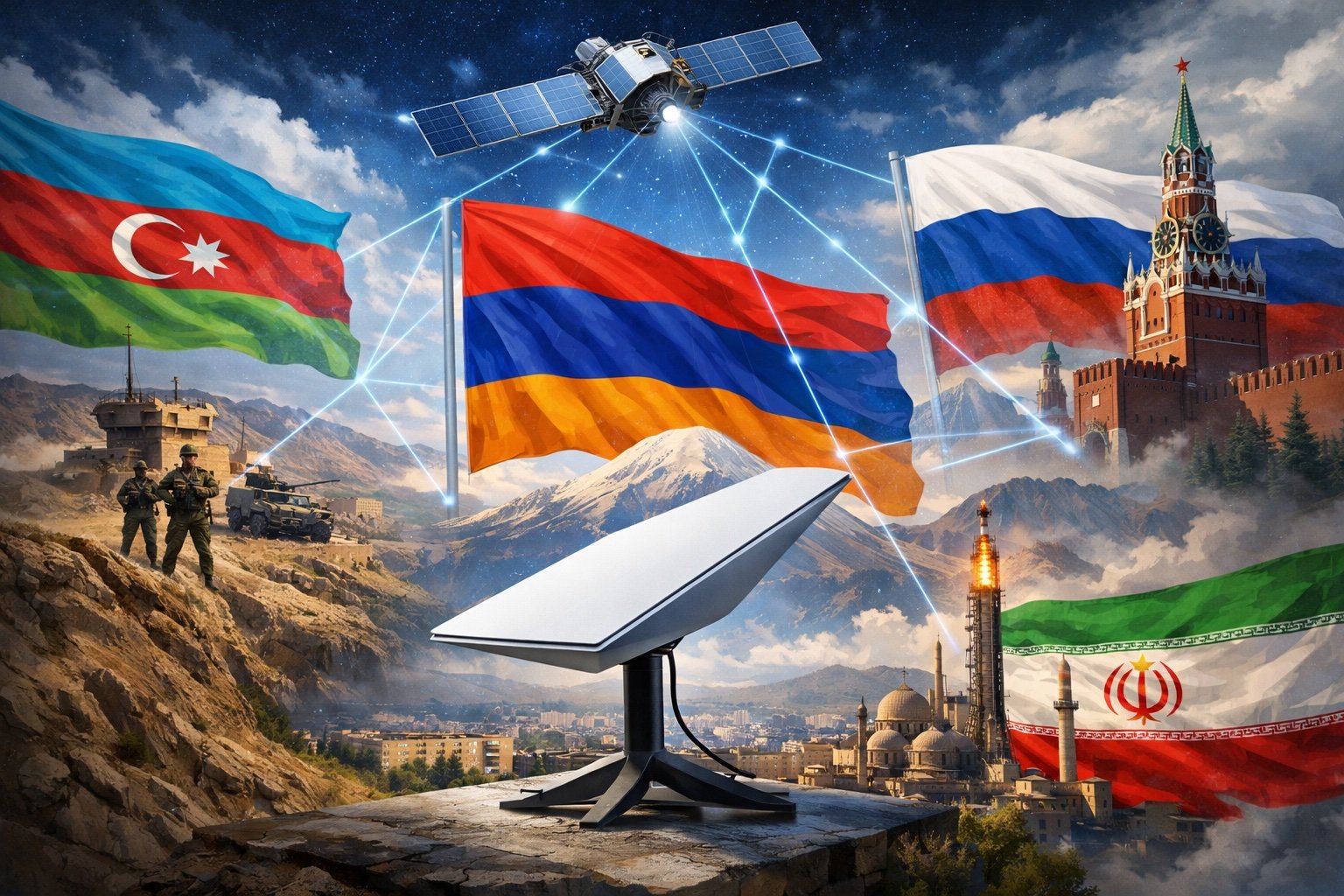
The reported delivery of more than 100 Starlink terminals to Armenia may appear, at first glance, to be a technical or humanitarian step aimed at improving connectivity. In reality, the move carries broader geopolitical meaning. In a region where infrastructure, security, and influence are tightly intertwined, digital access is never just about the internet.
For Armenia, the arrival of satellite-based communication technology represents an opportunity to reduce structural isolation. Landlocked geography, closed borders with Turkey and Azerbaijan, and long-standing dependence on limited transit routes have shaped the country’s strategic vulnerability. Reliable satellite connectivity offers resilience during crises and strengthens civilian and governmental communication capacity. These are practical gains.
Yet technology in contested regions rarely remains neutral. Starlink is not simply a commercial service; it has already demonstrated strategic relevance in modern conflicts, most visibly in Ukraine. The deployment of such systems therefore signals not only connectivity, but alignment-real or perceived-within emerging security architectures.
For the United States and its partners, expanding digital infrastructure in Armenia fits a broader pattern of incremental engagement in the South Caucasus. Rather than dramatic military commitments, Western involvement increasingly takes the form of technology, economic support, and institutional cooperation. This lower-visibility approach reduces escalation risks while still shaping long-term regional orientation.
From Moscow’s perspective, however, even incremental Western presence can appear consequential. Russia has historically viewed Armenia as part of its security perimeter, anchored by military basing, energy ties, and economic integration. Any shift-military, political, or technological-toward Western systems is therefore interpreted through the lens of strategic competition. Satellite internet, though civilian in form, complicates traditional leverage based on infrastructure control.
Iran, too, watches such developments carefully. Stability along its northern border and resistance to expanded Western influence remain core priorities. New communication systems near sensitive transit corridors inevitably attract scrutiny, even when framed in purely civilian terms.
For Azerbaijan, the implications are more nuanced. On one hand, improved civilian resilience in Armenia could support long-term regional stabilization if it reduces crisis volatility. On the other, any external technological engagement that alters the strategic balance-or is perceived to do so-becomes part of the broader security equation. In the South Caucasus, perception often matters as much as capability.
This moment therefore reflects a deeper transition underway across the region. Power is no longer expressed solely through troops, pipelines, or territorial control. Digital infrastructure, energy grids, transport corridors, and financial systems are becoming equally decisive instruments of influence. The South Caucasus is gradually entering this new competitive landscape.
At the same time, the symbolism should not be overstated. One hundred satellite terminals will not redefine regional geopolitics overnight. Structural realities-unresolved political disputes, economic constraints, and security mistrust-remain the dominant forces shaping the future. Technology can shift margins, but it cannot substitute for political settlement.
The central question is whether such steps contribute to stabilization or rivalry. If digital connectivity becomes part of broader economic opening and regional cooperation, it may support a more predictable South Caucasus. If instead it is absorbed into zero-sum competition among external powers, even civilian technologies risk deepening fragmentation.
Much will depend on the wider diplomatic trajectory. Ongoing discussions around normalization, transport connectivity, and peace arrangements still hold the greatest transformative potential. Compared with those structural issues, satellite internet is a secondary-but symbolically revealing-development.
In that sense, Starlink’s arrival in Armenia is less about bandwidth than about direction. It illustrates how the South Caucasus is being gradually woven into competing technological and political ecosystems. The region is no longer defined only by post-Soviet legacies, but by its place in a wider contest over connectivity, security, and influence.
Whether this emerging phase leads toward integration or renewed division remains uncertain. But one conclusion is already clear: in today’s geopolitics, even signals from space carry unmistakably terrestrial consequences.