AZE.US
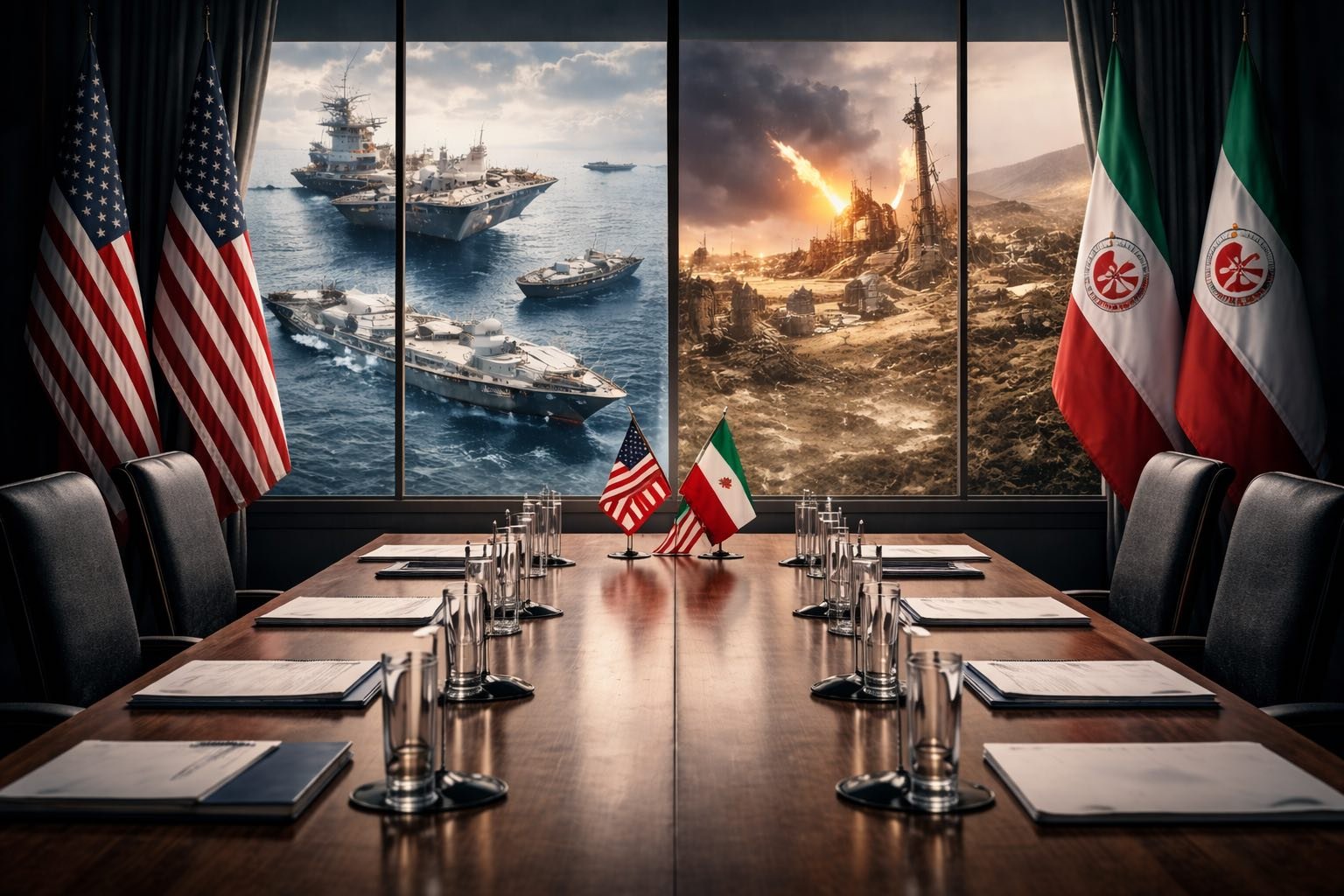
Geneva has once again become a diplomatic crossroads. Within the same city and nearly the same hours, two separate переговорных трека unfolded: one focused on Russia’s war against Ukraine, the other on the future of U.S.-Iran relations.
Formally, these are distinct crises. Strategically, they reflect the same global reality - a period defined less by decisive breakthroughs than by cautious bargaining under pressure.
The U.S.-Iran meeting lasted more than three hours and produced carefully measured optimism. Iranian Foreign Minister Abbas Araghchi described the talks as constructive and confirmed that work on potential agreement texts would continue. At the same time, he stressed that progress should not be mistaken for an imminent deal. Diplomacy, in this case, is moving forward in increments rather than leaps.
Washington’s red lines remain unchanged. U.S. officials reiterated that preventing Iran from obtaining nuclear weapons is a core security priority. Public messaging around long-range missile capabilities appeared more restrained, suggesting either tactical sequencing in negotiations or unresolved disagreements still kept behind closed doors. Tehran, for its part, paired openness to dialogue with familiar warnings about military resilience and sovereignty, maintaining the dual language that has long defined its negotiating posture.
Beyond rhetoric lies geography - and leverage. The Strait of Hormuz remains the central pressure point in any confrontation with Iran. Roughly a third of global seaborne oil passes through the narrow waterway, making even the threat of disruption economically significant.
Yet history shows that Tehran has never fully closed the strait, including during the Iran-Iraq war, the peak of sanctions pressure in 2011-2012, and the tanker incidents of 2019. A total blockade would damage Iran’s own exports, escalate military risk, and provoke regional as well as international retaliation. For that reason, the strait functions more as a strategic signal than a practical option.
Military positioning continues alongside diplomacy. Reports of additional U.S. fighter deployments and naval movement toward the broader Middle East underscore a familiar pattern: negotiations conducted under visible deterrence. Such signaling is intended to prevent escalation, but it also illustrates how fragile the current balance remains.
At the same time, discussions linked to Russia’s war in Ukraine revealed a different tension - not between adversaries, but within alliances. Ukrainian President Volodymyr Zelensky suggested that pressure aimed at achieving compromise appears unevenly distributed, raising concerns in Kyiv about the strategic direction of Western diplomacy. Whether this reflects tactical maneuvering or deeper recalibration remains unclear.
Taken together, the parallel tracks in Geneva highlight a broader shift in international politics. The current era is not defined by sweeping peace settlements or ideological transformation. Instead, it is marked by incremental negotiation, calibrated pressure, and the constant management of risk. Progress is possible, but rarely dramatic. Stability, when achieved, is likely to be provisional.
Geneva therefore symbolizes more than dialogue. It reflects a world attempting to step back from escalation without yet finding a path to resolution. And in that narrow space between confrontation and compromise, the shape of the next geopolitical phase is quietly being decided.