AZE.US
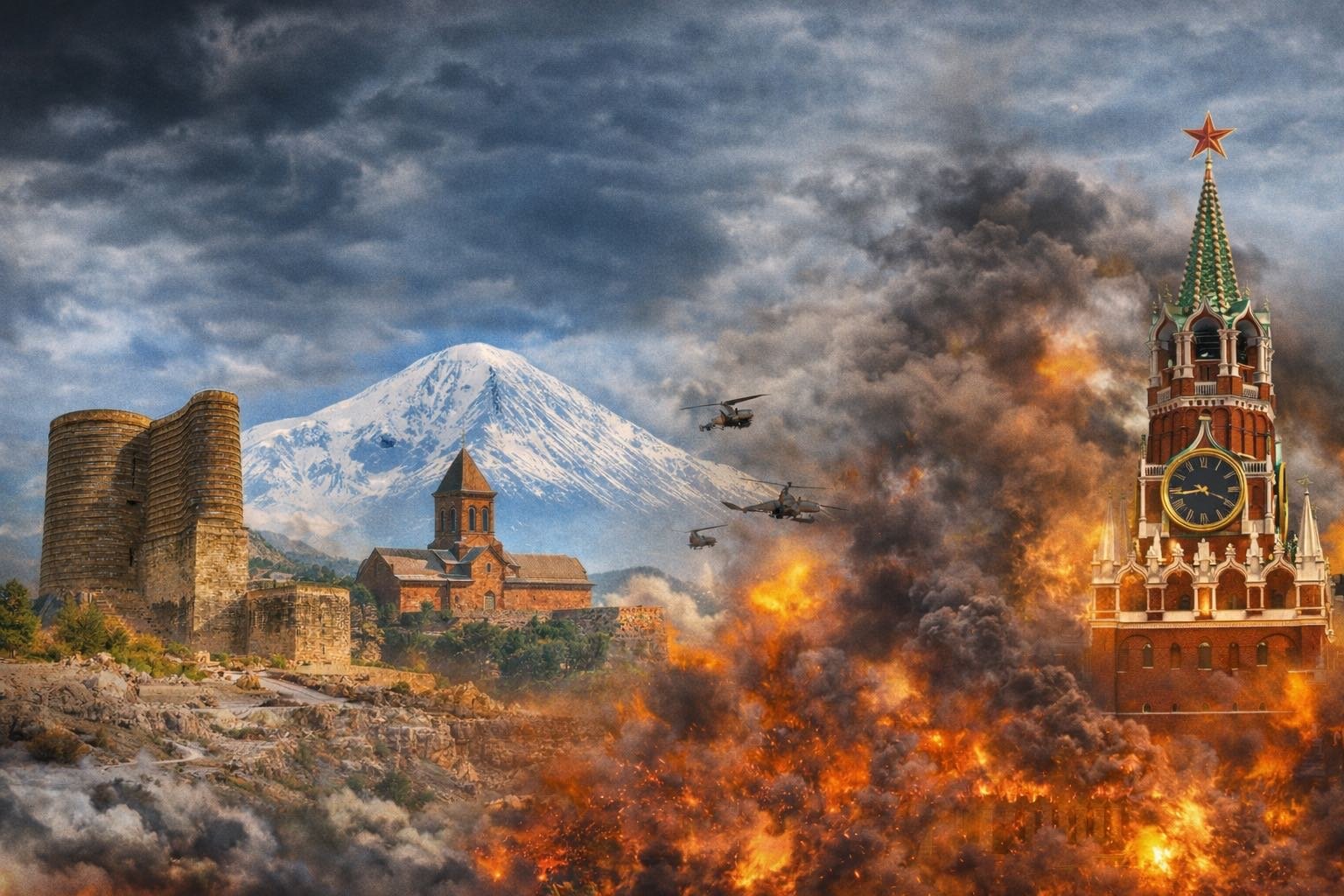
Russia’s influence in the South Caucasus has been steadily eroding, according to Azerbaijani economist and political analyst Natig Jafarli, who argues that recent developments are not isolated incidents but part of a broader geopolitical realignment.
In a recent commentary, Jafarli said the visible tensions and diplomatic frictions represent consequences rather than root causes. “The reasons are deeper,” he noted, pointing to structural changes in regional alliances and transport routes.
For decades, Moscow regarded the South Caucasus as a strategic sphere of influence dating back to imperial times.
However, analysts say Russia’s prolonged military engagement in Ukraine and shifting global priorities have limited its capacity to maintain leverage across multiple fronts.
At the same time, Turkey and Azerbaijan have pursued what Jafarli described as a “step-by-step strategy,” strengthening economic ties with Georgia, deepening Ankara-Baku coordination and supporting gradual normalization efforts between Armenia and its neighbors. These moves have reshaped the regional balance without direct confrontation.
A key factor in this shift is Azerbaijan’s growing role as a transit and logistics hub. Western governments and Central Asian states have intensified discussions on alternative energy and trade corridors linking Europe to the Caspian region and beyond. Many of these initiatives position Azerbaijan as a central transport route for oil, gas, uranium and critical raw materials.
“Extracting resources is not enough,” Jafarli said.
“Without secure and reliable corridors, their strategic value diminishes.” In that context, Azerbaijan’s geographic and infrastructure advantages have increased its geopolitical weight.
Some observers in Moscow view this evolution with concern, particularly as cooperation between Central Asian states, Turkey, the European Union and the United States expands. However, Jafarli cautioned against exaggerating the risks of military escalation.
“Azerbaijan is neither anti-Russian nor pro-Russian,” he said. “It seeks pragmatic and respectful relations.”
While rhetoric may intensify and diplomatic friction may persist, analysts suggest the current phase reflects competition over influence rather than imminent confrontation.
The broader question is whether Russia can recalibrate its regional approach amid global pressures, or whether the South Caucasus will continue integrating into alternative economic and political frameworks.
For now, the region appears to be entering a new strategic chapter-one defined less by traditional spheres of influence and more by connectivity, trade corridors and diversified partnerships.