AZE.US
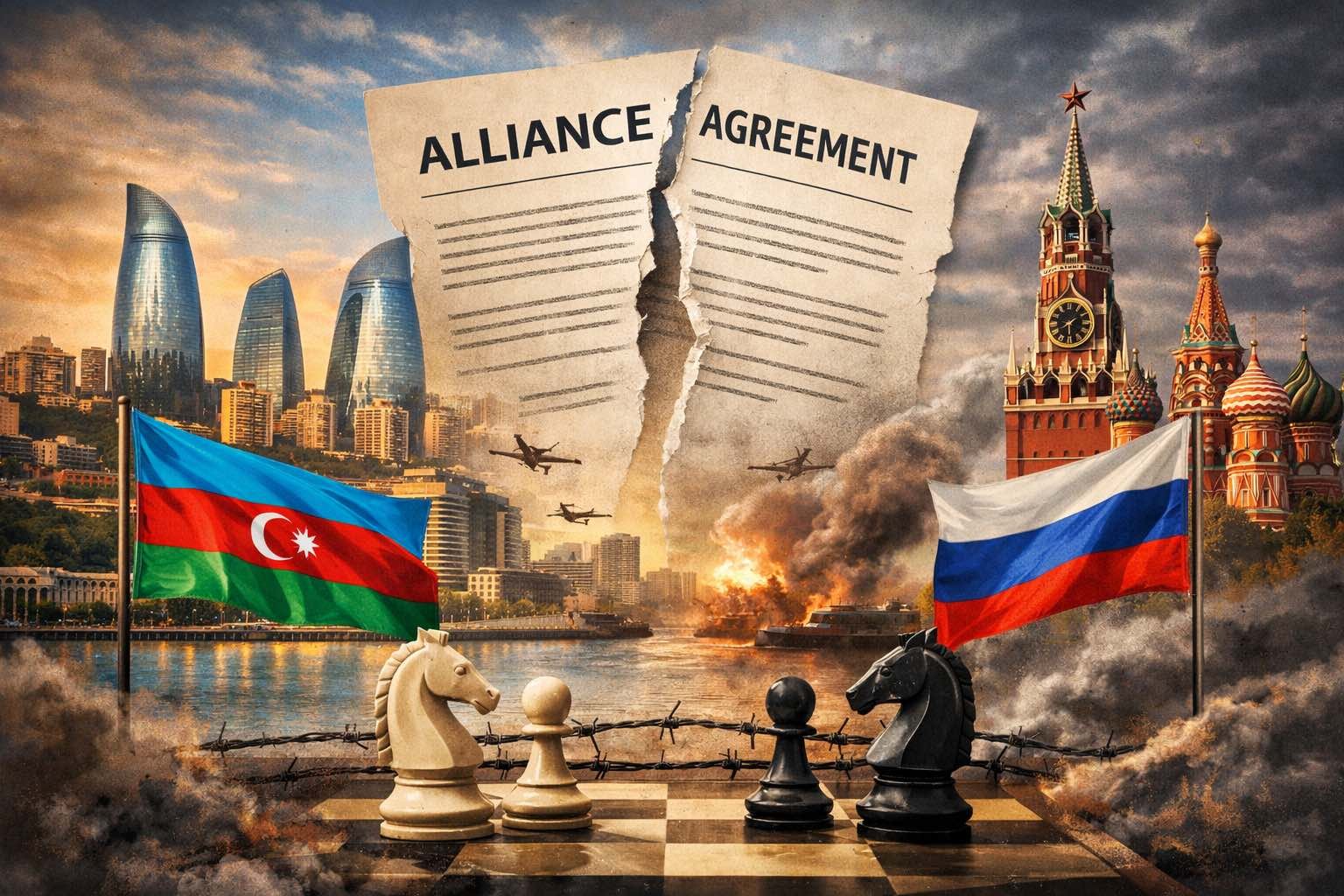
Four years after Azerbaijan and Russia signed their declaration on allied cooperation, questions are growing about what that document now means in practice. While the text remains in force, the political atmosphere between Baku and Moscow has shifted markedly, shaped by the war in Ukraine, regional realignments and a series of bilateral tensions.
The declaration, signed shortly before Russia launched its full-scale invasion of Ukraine, was intended to formalize an already complex relationship. At the time, Baku was pursuing a policy of strategic balancing – maintaining dialogue with Moscow while also deepening ties with Turkey and the West. In parallel, Azerbaijan had signed a strategic partnership document with Ukraine, underscoring its multi-vector approach.
Today, analysts argue that the key issue is not the existence of the document itself, but whether it has substantive content. Economic cooperation between Azerbaijan and Russia continues, including trade and energy contacts. However, political and humanitarian dimensions of the relationship appear more strained than before.
The broader regional context has also changed. Russia’s military focus on Ukraine and the reallocation of resources have reduced its direct role in several South Caucasus processes. Moscow is no longer a central actor in the Armenia-Azerbaijan peace track, nor in the normalization dialogue between Armenia and Turkey. This shift has altered the regional balance and created space for greater engagement by the European Union and the United States.
At the same time, tensions have periodically surfaced in the information space, with analysts pointing to episodes of political friction and mutual dissatisfaction. Some observers describe the current phase not as a rupture, but as a cooling – a transition from formal partnership language to a more pragmatic, interest-driven interaction.
For Azerbaijan, the priority remains strategic autonomy. Officials have repeatedly emphasized that the country does not seek membership in military blocs and continues to pursue a foreign policy based on flexibility and national interest. For Russia, maintaining influence in the South Caucasus remains important, though its leverage has evolved.
Four years on, the declaration signed in Moscow stands as a reminder of a different geopolitical moment. Whether it becomes a foundation for renewed alignment or remains largely symbolic will depend on how both sides adapt to a rapidly changing regional order.