AZE.US
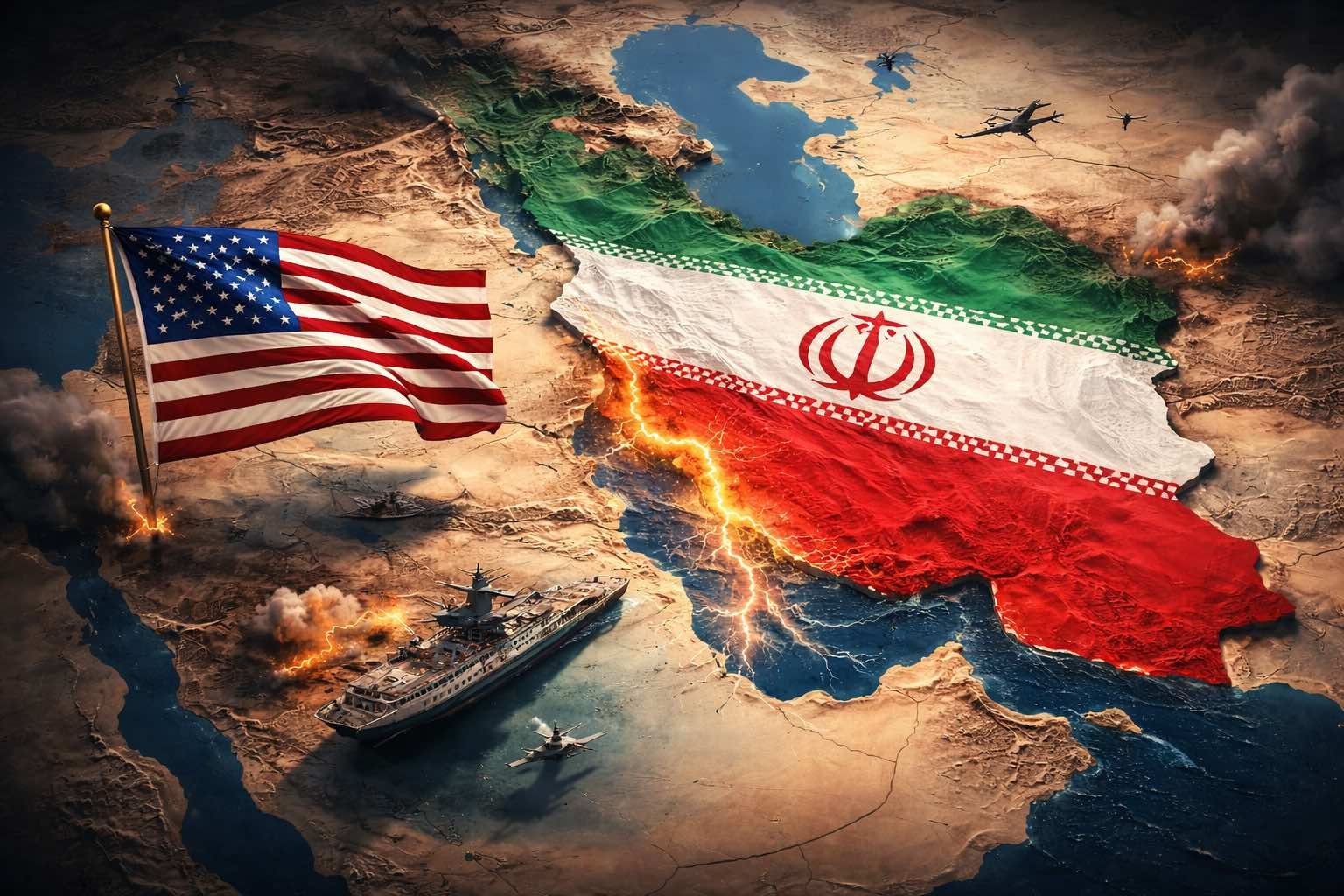
President Donald Trump has sharpened his rhetoric on Iran, warning that continued uranium enrichment and regional military activity could trigger decisive U.S. action. But as tensions rise, a critical question emerges: could Iran evolve into a strategic quagmire for the White House?
Escalation Without a Clear Endgame
Publicly, Washington’s demands remain firm:
-
Iran must scale back uranium enrichment.
-
Tehran should curb its ballistic missile program.
-
Support for regional armed groups, including Hezbollah, Hamas and the Houthis, must end.
Iran, however, signals willingness to discuss nuclear parameters while rejecting negotiations over its missile capabilities and regional posture. From Tehran’s perspective, missiles represent deterrence – particularly given Israel’s military superiority and undeclared nuclear capacity.
The core dilemma for Washington is not whether pressure can be applied, but what comes next if pressure fails.
Military Signaling vs. Strategic Clarity
Recent U.S. force positioning in the region has reinforced the perception of readiness. Yet military signaling alone does not define strategy.
If strikes occur, what would constitute success?
-
Temporary disruption of nuclear facilities?
-
Long-term rollback of enrichment capacity?
-
Political weakening of Iran’s leadership?
History suggests limited strikes rarely deliver lasting political transformation. Instead, they often produce asymmetric retaliation, cyber escalation, and regional destabilization.
The Regional Multiplier Effect
Iran’s influence extends beyond its borders. Any direct confrontation risks activating allied networks across multiple theaters. Even if financial channels are constrained, ideological and operational ties remain.
A conflict could also expose energy infrastructure to risk, affecting global markets and intensifying geopolitical volatility – particularly at a moment when multiple global flashpoints remain active.
Domestic and International Calculus
For Trump, credibility is central. Strong statements raise expectations of tangible outcomes. However, decisive military action without a clearly articulated post-conflict framework carries political and strategic risk.
Meanwhile, Tehran may calculate that time works in its favor – strengthening defense systems, deepening ties with Russia and China, and betting on divisions within Western alliances.
Pressure Tool or Open-Ended Conflict?
Iran is not a contained battlefield. It is a strategic node connecting U.S.-Israel security dynamics, Gulf stability, great power competition, and energy markets.
If calibrated carefully, pressure could remain a negotiating lever. But without a defined political objective beyond “maximum pressure,” escalation could evolve into a prolonged confrontation with uncertain exit routes.
The fundamental question is not whether tension will rise. It is whether Washington has a coherent strategy for the day after.