AZE.US
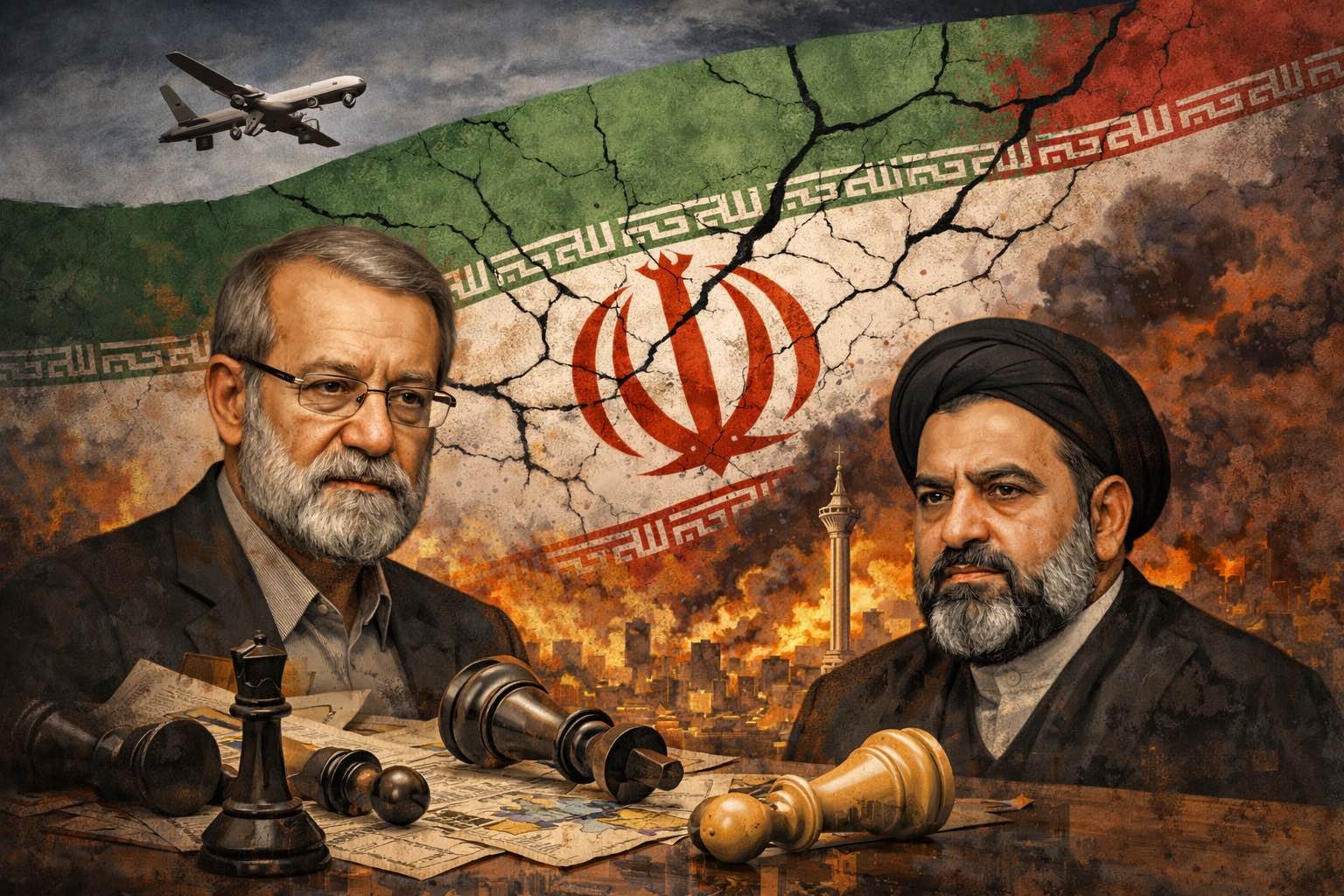
The killing of Ali Larijani, Iran’s Supreme National Security Council secretary and one of the country’s most important power brokers, has sharply narrowed Tehran’s political room for maneuver. Iranian authorities confirmed his death after an Israeli strike, while Reuters reported that his loss has complicated decision-making inside the Iranian system at a critical moment in the war.
Larijani was not just another senior official. He had long sat at the intersection of security, foreign policy and elite political coordination. Reuters described him as one of the most powerful figures in Iran’s security hierarchy, while AP said he was widely believed to be effectively running the country after earlier strikes killed other top leaders.
That matters because systems under pressure do not only lose individuals. They lose connectors – people able to link the military establishment, the clerical class and the political bureaucracy into something resembling a functioning state. Reuters said Larijani’s death is likely to shrink Iran’s options and further strengthen the role of the Islamic Revolutionary Guard Corps in state decision-making.
This is why the strike looks bigger than a tactical battlefield success. It suggests the war is no longer only about degrading military capabilities. It is also about weakening the core mechanism through which Tehran makes, coordinates and transmits strategic decisions.
The more that mechanism is damaged, the more likely it becomes that Iran’s response will be shaped by its hardest-line and most militarized actors. That is an inference based on the reported shift in influence toward the IRGC after Larijani’s death.
For outside powers, that may seem like leverage. In reality, it may also mean that whatever limited space remained for controlled de-escalation is getting smaller. A system that loses political balance does not automatically become more flexible. Often, it becomes more rigid, more reactive and more dangerous.
For the wider region, including the South Caucasus, that raises the stakes. A weaker but more militarized Iran is not necessarily an easier neighbor. It may be less coherent, less predictable and more prone to high-risk moves as its leadership tries to prove that the system is still intact.
Larijani’s death therefore matters not only because of who he was, but because of what his absence now reveals. Iran is not simply losing senior officials. It is losing parts of the machinery that once gave the state strategic flexibility. And in wartime, that kind of loss can be even more consequential than a battlefield setback.