AZE.US
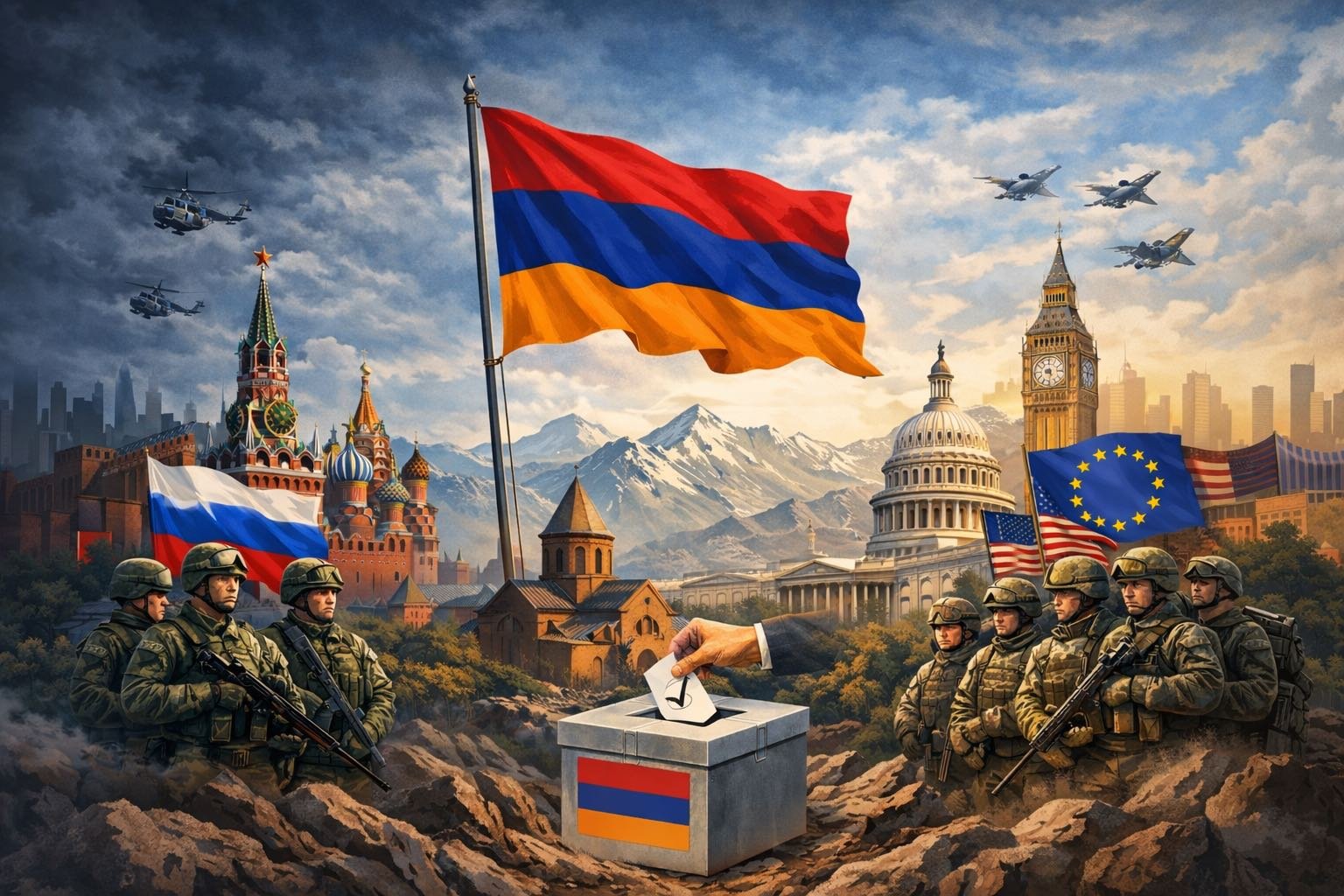
Armenia is entering a politically sensitive period in which its strategic direction may carry consequences beyond its domestic landscape. The country’s evolving relationship with Russia and its expanding engagement with Western partners are increasingly shaping the geopolitical balance of the South Caucasus.
At stake is not only electoral politics, but the long-term orientation of Armenia’s foreign and security policy.
Gradual Distancing From Moscow
Following the 2020 war and subsequent regional developments, Yerevan has demonstrated signs of recalibrating its reliance on Moscow in the security sphere. Armenian officials have publicly expressed dissatisfaction with certain security mechanisms and have taken steps to diversify defense cooperation.
At the same time, economic ties with Russia remain substantial. Trade volumes between the two countries have expanded in recent years, partly due to shifting regional logistics and sanctions-related realignments affecting Russian markets.
Armenia continues to depend on Russian energy supplies and financial flows, making a full strategic rupture unlikely in the near term.
Expanding Western Engagement
Parallel to this, Armenia has intensified dialogue with the European Union and the United States. Cooperation frameworks have expanded in governance reform, economic assistance, and defense consultation.
For Western actors, the South Caucasus represents a strategic corridor linking Europe and Central Asia. Engagement with Armenia is therefore embedded in a broader geopolitical competition that extends beyond bilateral relations.
The question is whether Armenia can translate external interest into sustainable internal reform and strategic autonomy.
The Regional Impact
Any significant shift in Armenia’s political course would directly influence regional dynamics, including normalization efforts with Azerbaijan and the future of transport connectivity projects.
Infrastructure initiatives, including cross-border transit routes, have become central to broader discussions about economic integration and security architecture in the South Caucasus. The direction Yerevan chooses will affect how these projects advance.
Russia’s Calculated Approach
Despite speculation about possible Russian pressure, Moscow’s room for maneuver appears constrained. Ongoing military commitments elsewhere have limited its ability to apply overt leverage in Armenia.
Russia retains influence through economic, political, and institutional channels. However, its position is no longer uncontested.
Domestic Calculations
Within Armenia, public opinion reflects a mix of security concerns, economic pragmatism, and fatigue after years of regional turbulence. Political forces are positioning themselves around narratives of sovereignty, stability, and reform.
The outcome of this internal debate will determine whether Armenia continues gradual diversification of partnerships or rebalances toward traditional alliances.
A Defining Moment For The South Caucasus
Armenia’s strategic positioning is increasingly intertwined with broader regional transformation. As major powers compete for influence, the country’s choices will reverberate across neighboring capitals.
For the South Caucasus, the issue is not simply alignment with one bloc or another. It is whether the region can move toward a more stable, connectivity-driven framework, or remain subject to cyclical geopolitical contestation.
The coming political cycle in Yerevan may provide a clearer answer.