Aze.US
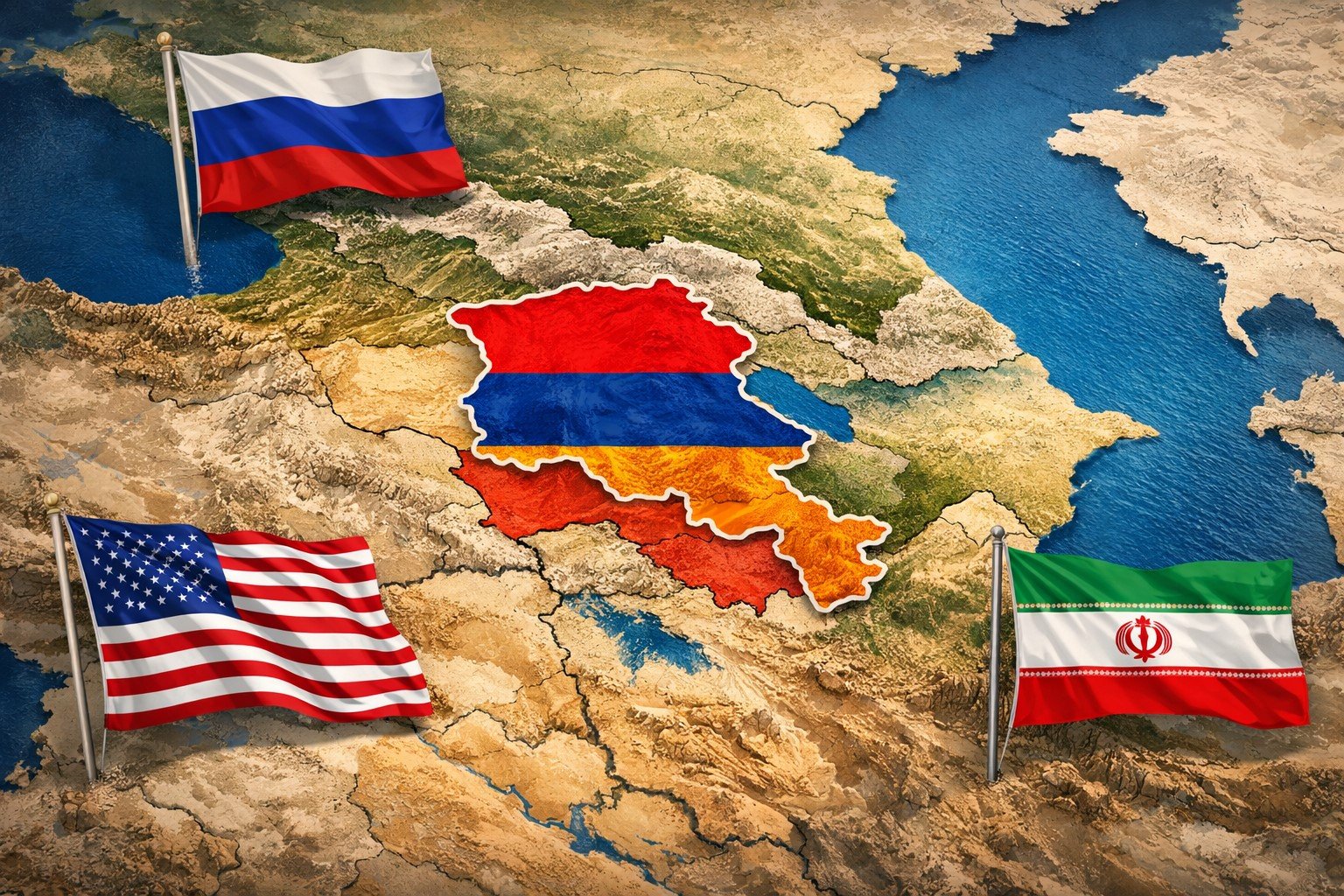
Armenia’s deepening engagement with the United States is evolving from diplomatic outreach into a potential strategic realignment, a shift that could reshape power dynamics in the South Caucasus while exposing Yerevan to significant political and economic risks.
During the recent visit of the U.S. vice president to Yerevan, the sides discussed large-scale cooperation in the energy sector, including nuclear-related projects estimated at up to $9 billion. The initiatives involve modern small modular reactor technology and broader energy-infrastructure upgrades aimed at reducing Armenia’s long-standing dependence on Russian fuel and technical support.
That dependence is most visible at the Metsamor nuclear power plant, which operates with Russian technology and supplies. Any effort to diversify the sector therefore carries geopolitical implications, offering Washington an entry point into a sensitive strategic domain while giving Armenia an opportunity to widen its foreign-policy options.
Moscow Signals Resistance Without Escalation
Russia has responded cautiously but signaled unwillingness to relinquish influence. Officials reiterated Moscow’s readiness to participate in future nuclear-energy construction and emphasized its established expertise in small-scale reactor technology.
Analysts say a rapid break in Armenia’s structural dependence on Russia remains unlikely. Moscow retains military presence in the country, plays a role in border security and maintains substantial economic leverage. Even partial erosion of these positions would alter the regional balance of power.
As a result, Russia is expected to rely on economic instruments, security ties and political pressure rather than abrupt confrontation-an approach designed to slow Armenia’s westward drift while avoiding open rupture.
Security Diversification After the 2020 War
Armenia’s outreach to Washington also reflects post-2020 security recalibration. Limited effectiveness of traditional alliance mechanisms pushed Yerevan to explore diversified defense partnerships.
Expanded military-technical contacts, including potential drone cooperation, signal gradual rather than immediate realignment. The strategy seeks to reduce single-source dependence without triggering direct geopolitical rupture-an inherently delicate balance.
Moving too quickly risks retaliation from Moscow; moving too slowly may fail to produce meaningful security guarantees. This tension defines the strategic uncertainty facing Armenia’s leadership.
Competition Over Corridors, Energy and Influence
The shift unfolds within broader geopolitical competition in the South Caucasus, where transport connectivity, energy routes and regional alignment are increasingly contested.
For Washington, a stronger presence in Armenia could:
-
improve access to corridors linking the Caspian region and Central Asia to Europe
-
constrain Russian and Iranian regional leverage
-
expand long-term strategic infrastructure influence
For regional states, intensified rivalry creates both opportunity and pressure to navigate between competing power centers.
Domestic Political Stakes
The foreign-policy pivot also carries internal political implications. Western engagement may bolster the Armenian government by signaling alternative partnerships and economic prospects.
Yet external backing raises expectations. If promised investments or energy reforms fail to deliver visible results, domestic political risks could increase, narrowing the government’s room for maneuver.
A Region Entering a New Competitive Phase
Taken together, recent developments suggest the South Caucasus is entering a period of more explicit geopolitical competition.
Russia is attempting to preserve entrenched influence.
The United States is expanding strategic presence.
Regional actors are seeking leverage within the rivalry.
Armenia faces the most complex calculation. Reducing historic dependence could open strategic flexibility, but it also heightens exposure to great-power competition on its own territory.
For Yerevan, the current trajectory may prove transformative-but the costs and consequences remain uncertain.