AZE.US
As diplomatic contacts between Baku and Yerevan continue and talk of a formal peace agreement resurfaces, a more practical question is emerging: are the societies themselves ready for economic normalization?
Recent street interviews in Baku suggest the answer is complicated.
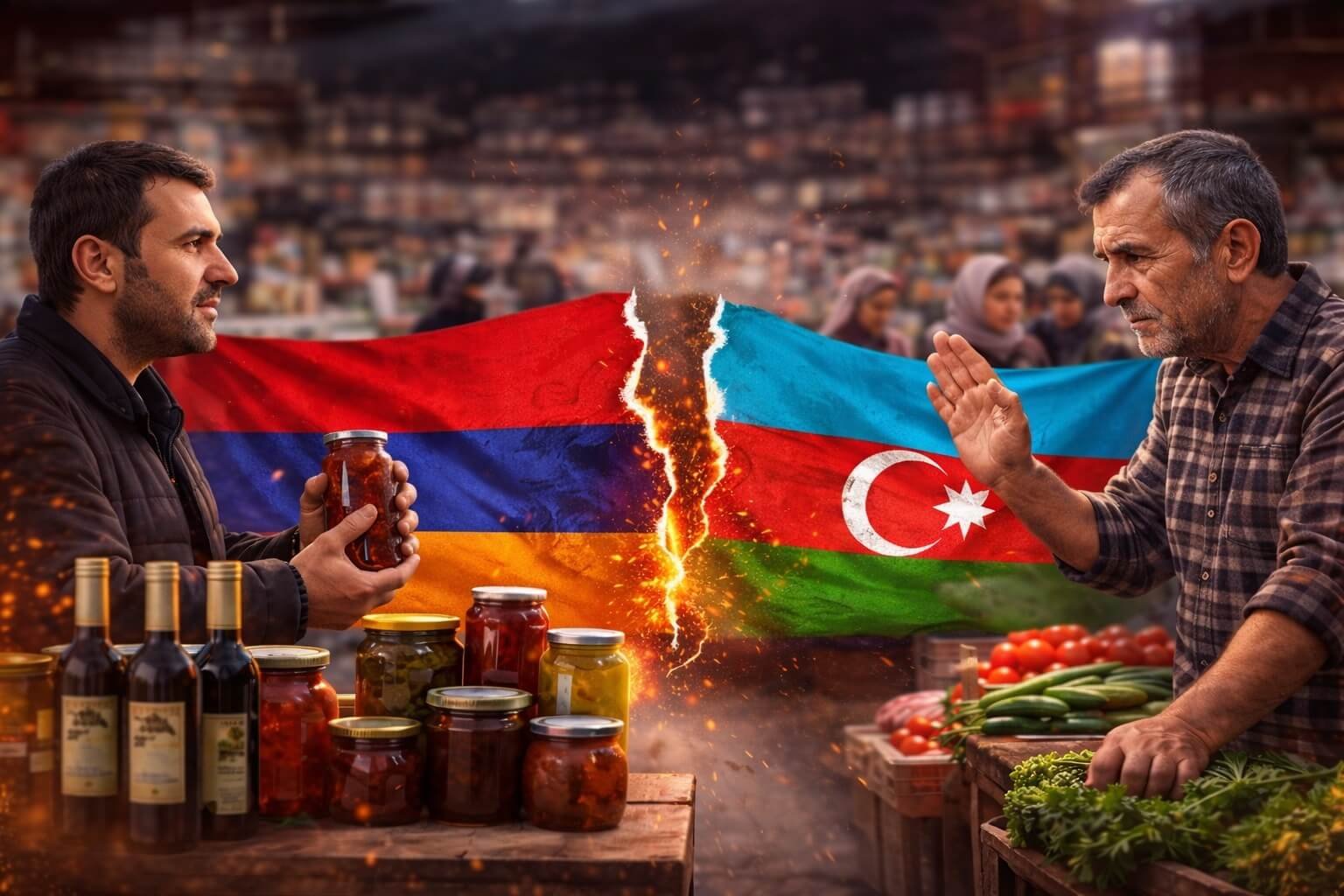
When asked whether they would buy or sell Armenian-made products, market vendors and customers offered sharply divided reactions. Some rejected the idea outright, citing the legacy of three decades of conflict and the memory of wartime trauma. Others took a pragmatic view, arguing that trade is business – and business should not be politicized.
The split highlights a broader structural issue in the South Caucasus: political normalization can move faster than public psychology.
The Economic Logic
From a purely economic standpoint, limited trade could make sense for both countries. Armenian officials have publicly signaled interest in exporting certain industrial and agricultural goods. Azerbaijan, with a larger market and stronger purchasing power, represents potential demand.
Economic experts note that bilateral trade could:
-
stimulate production growth
-
expand export channels
-
reduce logistics costs through regional integration
-
lower consumer prices via competition
Even during years of conflict, Azerbaijanis and Armenians conducted business in third countries such as Russia and Georgia. That precedent suggests coexistence through commerce is not structurally impossible.
The Psychological Barrier
However, public sentiment remains shaped by history.
More than 30 years of confrontation, displacement, and loss cannot be undone through economic rationale alone. For many families directly affected by the conflict, trade normalization is not just a financial question – it is a moral and emotional one.
This matters.
Sustainable economic integration requires consumer acceptance. Without it, even a signed peace treaty may not translate into real trade flows.
Diplomacy vs. Social Readiness
Political contacts between the two governments have intensified in recent years, and technical discussions around transport, energy, and regional connectivity continue. But normalization operates on multiple levels:
-
Political agreements
-
Institutional mechanisms (banking channels, customs systems)
-
Business incentives
-
Public trust
The first two can be negotiated relatively quickly. The fourth is far slower.
For international observers – particularly investors assessing regional stability – this dynamic is critical. Trade between Azerbaijan and Armenia will not depend solely on signatures. It will depend on whether societies are ready to accept economic interdependence.
What This Means for the Region
If economic normalization gains traction, it could reshape regional logistics routes, diversify supply chains, and reduce long-term geopolitical friction.
If public resistance remains strong, integration may stay symbolic – limited to transit corridors and indirect flows rather than visible consumer trade.
The South Caucasus is entering a delicate phase: diplomacy is advancing, but reconciliation is still uneven.
Markets often reveal what official statements do not. And right now, they show a region still negotiating not just peace agreements – but peace itself.