AZE.US
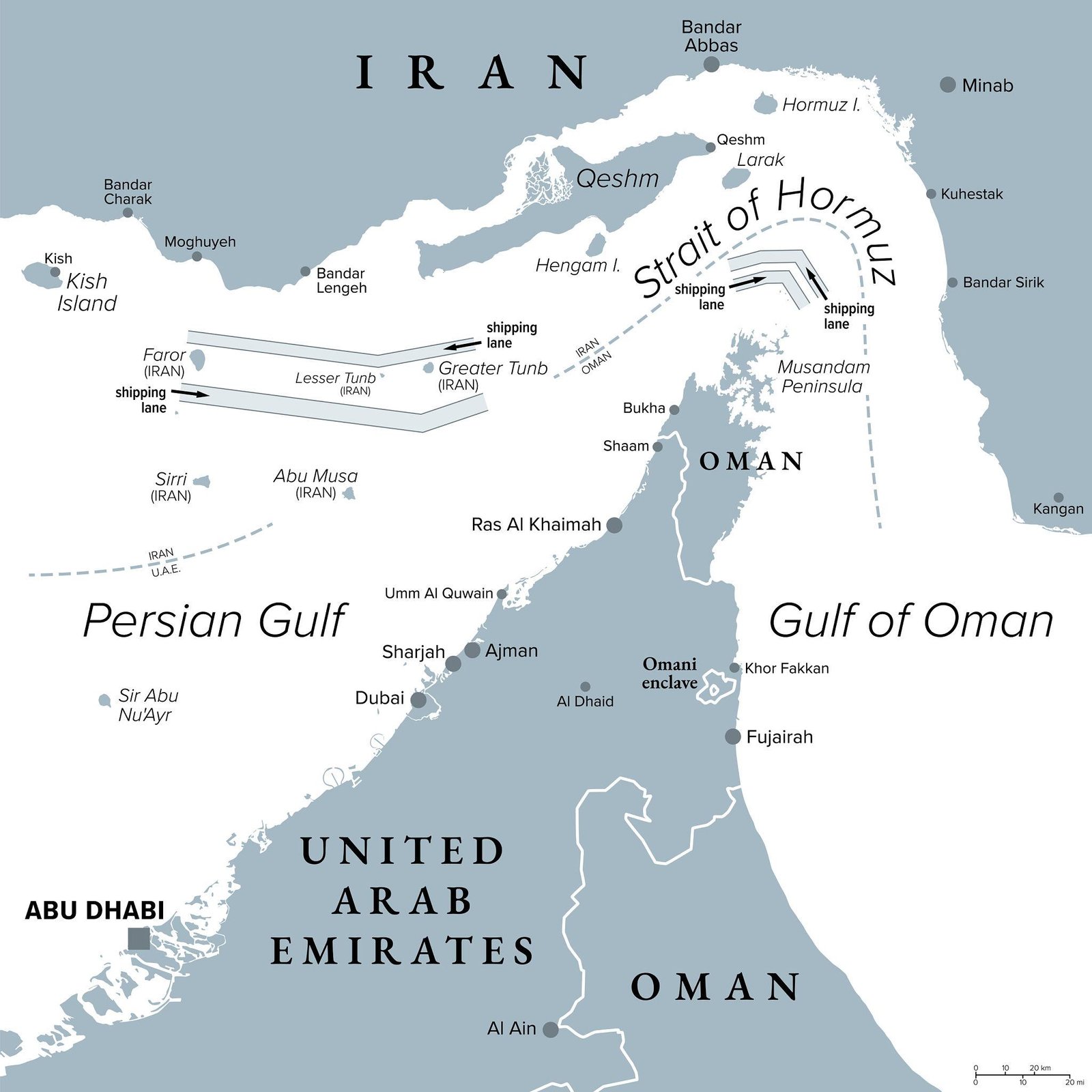
Tensions between the United States and Iran have renewed concerns over the security of the Strait of Hormuz, a narrow waterway that handles roughly one-fifth of global oil shipments.
The strait links the Persian Gulf to the Gulf of Oman and the Arabian Sea. Major energy exporters including Saudi Arabia, Iraq, Kuwait, the United Arab Emirates and Qatar rely on the route to deliver crude to international markets.
Recent statements by U.S. President Donald Trump, who said Tehran faces a limited window to reach a deal over its nuclear program, have heightened regional tensions. Iranian officials have warned that military pressure could trigger broader consequences.
Energy analysts say even temporary disruptions in shipping through the Strait of Hormuz could push oil prices sharply higher. In a sustained closure scenario, Brent crude could move above $120 per barrel, depending on the duration and severity of the disruption.
Iran possesses capabilities that could complicate navigation, including anti-ship missiles, naval mines and fast attack craft operated by the Islamic Revolutionary Guard Corps. However, a prolonged blockade would likely prompt a direct response from the United States and its allies.
Washington has increased its military presence in the region, including operations linked to facilities such as the base on Diego Garcia in the Indian Ocean.
A shutdown of the strait would have global implications. Higher oil prices could accelerate inflation, raise transportation costs and increase volatility in financial markets. Asian economies heavily dependent on Gulf crude would face supply risks, while Europe could experience renewed energy price pressure.
While a full closure remains a worst-case scenario, the mere possibility has already added a geopolitical premium to oil markets and heightened uncertainty across global energy trade.