AZE.US
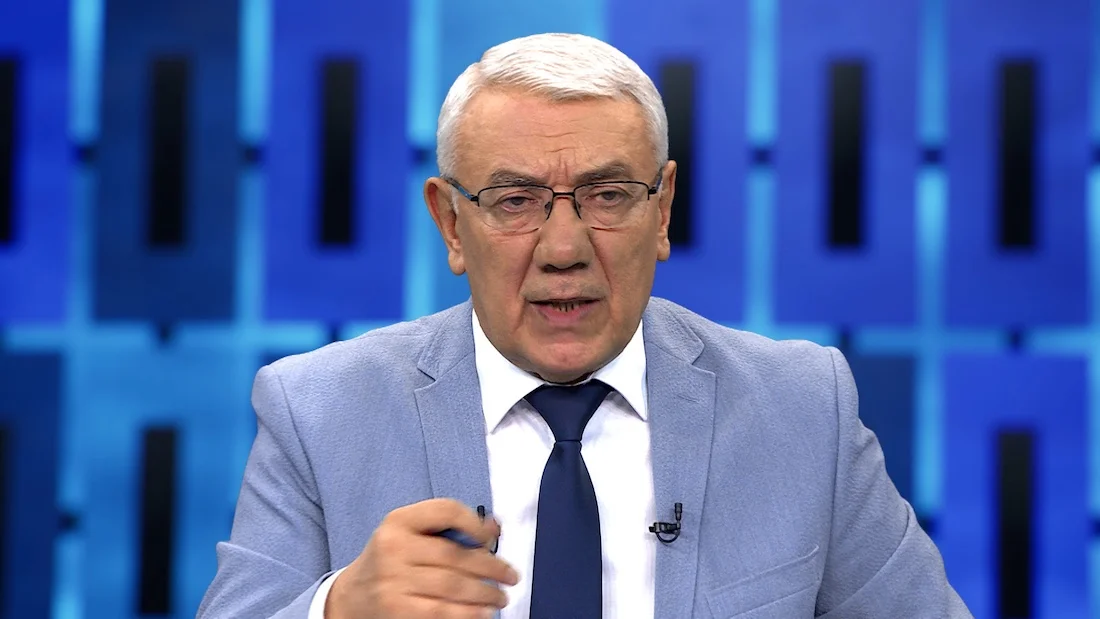
Azerbaijani political analyst Eldar Namazov says the war surrounding Iran could significantly alter the geopolitical landscape of the South Caucasus.
Speaking on the YouTube channel Novosti Kavkaza, Namazov commented on recent regional developments and the messages delivered by Azerbaijani President Ilham Aliyev during the Global Forum held in Baku.
According to the analyst, Aliyev’s speech contained important signals for both domestic audiences and international partners.
“The president emphasized that peace has been established and that the peace process between Azerbaijan and Armenia continues to advance,” Namazov said.
He noted that Azerbaijan was the side that initiated the peace framework after the end of the conflict and presented a five-point proposal that later formed the basis of negotiations.
“At the same time, it was important to hear statements from the Armenian leadership in European capitals,” he added.
Namazov pointed in particular to remarks by Armenian Prime Minister Nikol Pashinyan, who recently said that Karabakh Armenians should live in Armenia and integrate into Armenian society.
“These statements are significant, especially against the backdrop of resolutions adopted by some European institutions criticizing Azerbaijan,” the analyst said.
Iran War And Regional Risks
Namazov warned that the war involving Iran is currently the most serious factor shaping the regional security environment.
According to him, the conflict is accompanied by a large-scale information battle.
“Alongside the real war, there is also an intense information war. Many media outlets are using the situation for their own political purposes,” he said.
The analyst noted that the U.S. administration had previously indicated that the military operation could last around four weeks.
“Only thirteen days have passed so far. Therefore, claims that the plan has failed are premature,” Namazov said.
Possible Scenarios
Namazov believes several scenarios remain possible for Iran’s political future.
One option could involve internal political change within the Iranian leadership, with part of the ruling elite taking control and opening negotiations with the West.
A second scenario would involve mass protests emerging after the main phase of military operations ends.
“In that case, Iranian society itself would determine the country’s political future,” he said.
The third and most dangerous scenario, according to Namazov, would resemble the Syrian model — where central authority weakens and parts of the country fall under the control of regional or ethnic forces.
“This would be the most dramatic and destabilizing outcome,” the analyst warned.
Azerbaijan’s Reaction
Namazov also addressed Azerbaijan’s response following the strike on Nakhchivan.
He said Baku reacted quickly and decisively, placing the armed forces on high alert and temporarily restricting key transport routes.
“These steps sent a clear signal to Tehran,” he said.
According to the analyst, diplomatic contacts and de-escalation messages from Iran followed shortly afterward.
Turkey’s Role
Commenting on speculation about the possible expansion of the conflict, Namazov dismissed claims that Turkey could become the next target.
“Turkey remains one of the key pillars of security for both Europe and the Middle East,” he said.
The analyst added that a true global war would only be possible in the event of a direct confrontation between the United States and China.
“Until that happens, it is premature to talk about a third world war,” Namazov said.