AZE.US
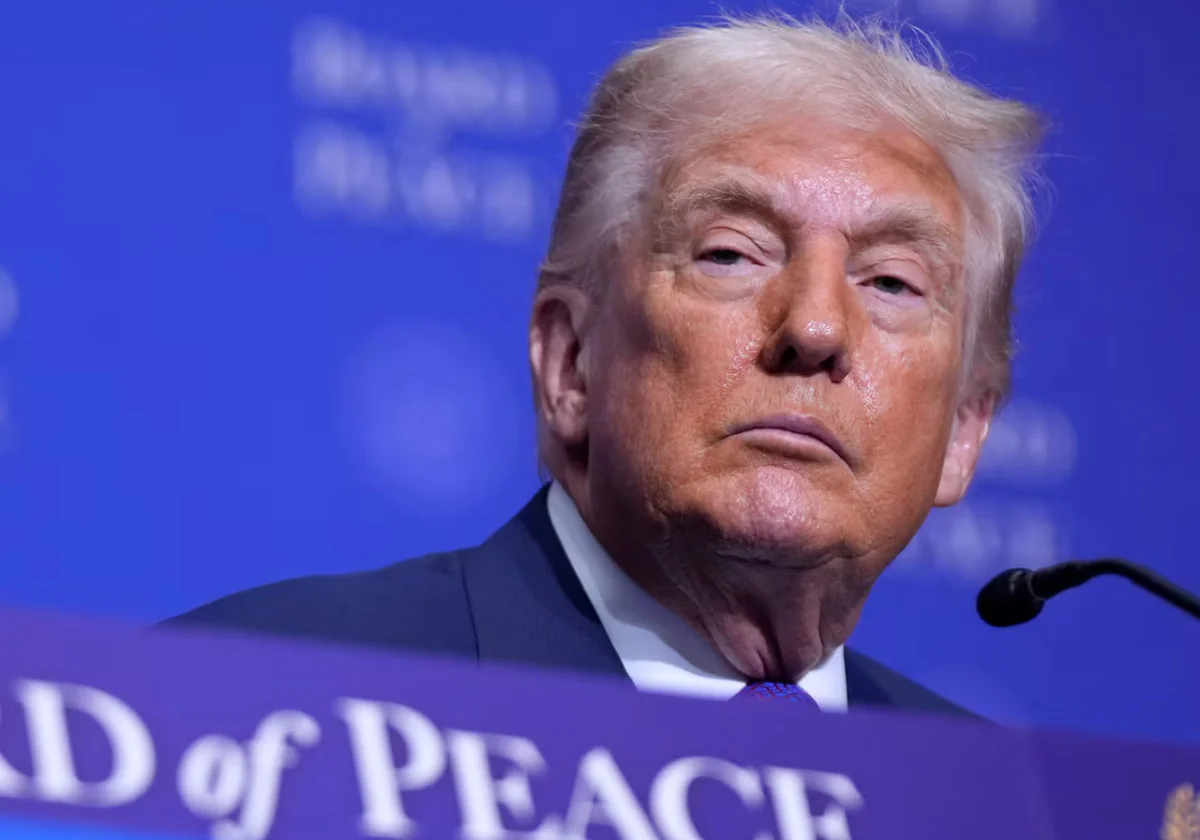
The first session of the so-called “Peace Council,” an initiative promoted by President Donald Trump’s administration, was held in the U.S. capital this week, signaling what appears to be an effort to reshape conflict mediation beyond traditional international institutions.
Officially, the platform is framed as a mechanism to advance dialogue and resolve ongoing crises. Unofficially, it reads as a broader attempt by Washington to reassert strategic leadership at a time when established multilateral structures are widely seen as slow, fragmented or ineffective.
The agenda touched on several flashpoints, including Gaza, Iran’s nuclear program and regional security arrangements. In his remarks, Trump also referenced the Azerbaijan-Armenia normalization process, describing it as an example of how even entrenched conflicts can move toward resolution under sustained diplomatic pressure.
Gaza: Reconstruction and Leverage
Trump announced that the United States is prepared to allocate $10 billion for Gaza’s reconstruction, while encouraging other countries to contribute financially. The figure is significant. The operational framework, however, remains unclear.
Key questions were left unanswered: Who would administer the funds? Who would guarantee security? And under what political arrangement would reconstruction proceed?
Without a clear governance model on the ground, reconstruction risks becoming not only a humanitarian undertaking but also a geopolitical instrument.
Iran: Firm Rhetoric, Limited Detail
The U.S. president reiterated that Washington would not allow Iran to acquire nuclear weapons. The tone remained firm. Concrete measures were less defined.
No new sanctions package or diplomatic roadmap was outlined during the session. Analysts say this suggests that, for now, the administration is signaling strategic intent rather than unveiling immediate policy shifts.
A Parallel Mechanism?
The very branding of the “Peace Council” has drawn attention. At a time when global institutions face paralysis over major conflicts, Washington may be exploring a more flexible, coalition-based format – one that can operate outside the procedural constraints of the United Nations system.
Such an approach would allow the United States to assemble issue-specific coalitions around particular crises, potentially accelerating decisions while consolidating influence.
Implications for the South Caucasus
The reference to the Azerbaijan-Armenia process was notable. The South Caucasus has increasingly been viewed through the lens of broader geopolitical competition, particularly as Russia’s regional role evolves and Western engagement fluctuates.
If the Peace Council evolves into an active diplomatic instrument, the region could once again attract heightened U.S. involvement. That would likely reshape the balance among external actors seeking to influence the contours of a final peace agreement between Baku and Yerevan.
Strategy or Political Messaging?
For the Trump administration, the initiative carries both domestic and international dimensions. Domestically, it reinforces an image of decisive leadership and alternative diplomacy. Internationally, it signals that Washington intends to remain a central architect in conflict resolution from the Middle East to the post-Soviet space.
Whether the Peace Council becomes a durable mechanism or remains a political initiative will depend on its ability to produce tangible outcomes – funding structures, enforceable agreements and sustained coordination among key stakeholders.
For now, it stands as an ambitious framework. Its real test will be whether it can move beyond rhetoric and deliver measurable shifts on the ground.