AZE.US
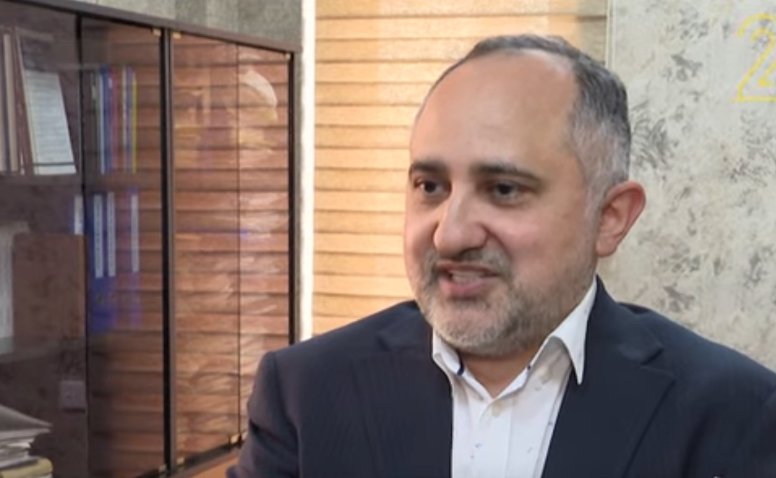
Azerbaijani lawyer Akram Hasanov says the fourth week of the war against Iran ended without the outcome its opponents were likely counting on. Despite the loss of senior officials and significant damage to its resources, the Iranian regime did not collapse. More than that, Hasanov argues, Tehran managed to deliver serious strikes against both Israel and U.S. military bases.
In his view, that alone changes how the conflict should be understood. What was expected by some as a campaign to quickly break Iran is now turning into a war with the potential to produce far broader and more dangerous consequences for the region and beyond.
Hasanov argues that Iran has not only preserved internal stability but has also shown an ability to shake the wider global environment through the Strait of Hormuz factor. In his reading, that has helped push oil prices higher and added fresh pressure to the world economy. He also says the West is far from united in unconditional support for the actions of the United States and Israel.
A central part of Hasanov’s argument is that if the Iranian regime survives this war, the consequences will go far beyond Tehran claiming a political victory. He believes such an outcome would likely push Iran to move even more aggressively toward acquiring nuclear weapons, weaken Israel’s image as an untouchable fortress, and damage the United States’ standing as the world’s unquestioned top power.
Hasanov sees two main scenarios ahead. The first is a ground operation against Iran. In his view, that path could destroy the regime, but only through a long and bloody war with major casualties and severe consequences not only for the region, but also for the United States and Israel themselves.
The second scenario, he says, is the most alarming. That would be a nuclear strike on Iran justified by claims that Tehran was only days away from obtaining a nuclear weapon. Hasanov presents this not as a stated policy, but as the most extreme danger if the war drags on and fails to produce the result its architects expected.
For Hasanov, the conflict has already moved beyond the logic of limited pressure. The longer Iran remains capable of absorbing blows and striking back, the higher the risk that the war will enter a phase where decisions once seen as unthinkable begin to look possible.