AZE.US
Interest in melon farming is declining in Azerbaijan, with farmers scaling back planting as costs rise and returns become harder to secure.
Official statistics show that acreage under this category of crops has fallen sharply from a year earlier, highlighting growing pressure on producers in one of the country’s traditional agricultural segments.
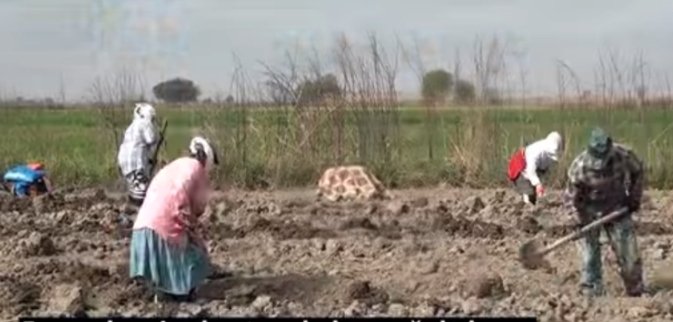
Farmers say the economics have become increasingly difficult. Farid Velizade, who has worked in melon farming for 16 years, said he and others have had to reduce planting areas in recent seasons.
According to him, preparing just one hectare now costs around 5,500 manats. Even after that spending, sales are not guaranteed. He said weak consumer demand and unfavorable weather can leave produce unsold in the fields, making it difficult even to recover basic expenses.
Input prices have also climbed. Velizade said nitrogen fertilizer that cost 30 manats last year is now selling for 40 manats. Other farming expenses, including labor, have also increased, further squeezing already thin margins.
Farmers say the sector is no longer delivering reliable profit and in many cases is pushing them into loss.
Economists say the decline in melon farming is part of a broader shift inside the agricultural sector rather than an isolated problem. While some spring crops are losing ground, planting areas for sugar beet, corn and perennial grasses have increased, suggesting that producers are moving toward crops they see as less risky or more profitable.
Analysts say farmers are making decisions based on market demand, prices, risks and overall efficiency. In that sense, the retreat from melon farming reflects a practical response to changing economic conditions rather than a temporary fluctuation.
Experts also warn that if production of goods aimed at the domestic market continues to fall, the impact could eventually be felt in consumer prices. Lower output in essential agricultural products would increase the risk of further price growth.
They also point to a deeper structural problem. In their view, Azerbaijan has yet to fully transition to a more intensive farming model based on higher productivity. Instead, much of the sector still depends on extensive growth, where expansion in land use plays a larger role than efficiency gains.
That, economists say, leaves the country more vulnerable to supply pressure and external shocks. They argue that the government should do more to encourage local production of goods that are part of the consumer basket and reduce weaknesses in domestic food supply.
For now, farmers say they hope conditions will improve in the next season and that planting areas will begin to recover.