By AZE.US Editorial Team
A train cannot run on a declaration. It needs tracks, border procedures and two governments willing to keep their commitments when the cameras have gone.
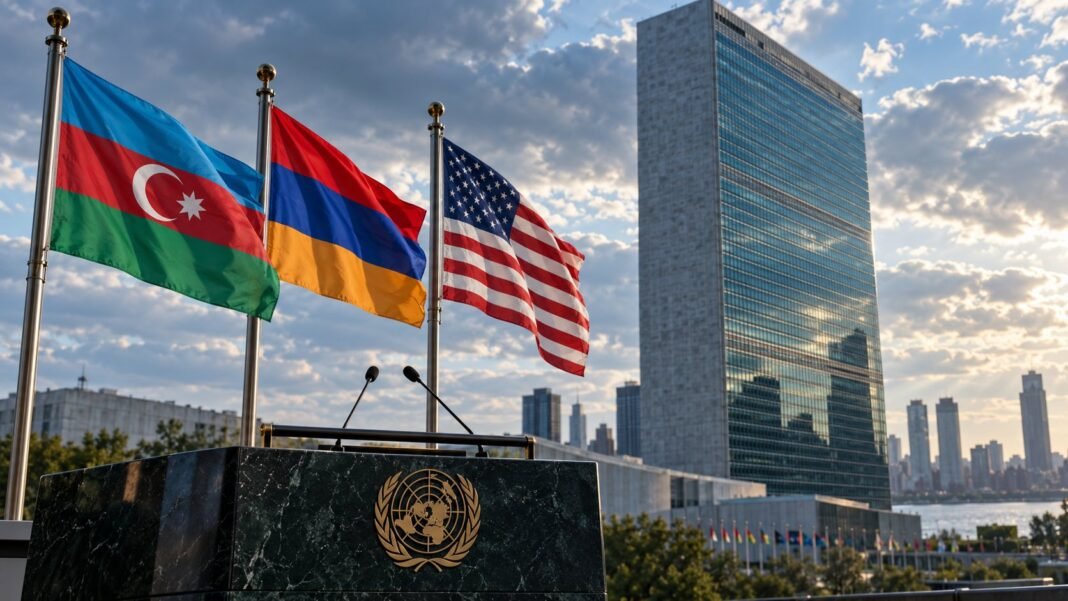
That is the measure of what this week’s United Nations General Assembly means for Azerbaijan. Leaders are speaking about peace in New York. Baku and Yerevan must still decide how to make it work.
In his Sept. 24 address, Armenian Prime Minister Nikol Pashinyan described plans for a direct rail link with Azerbaijan and a route connecting mainland Azerbaijan with its Nakhchivan exclave through Armenian territory.
He also discussed work on the Trump Route for International Peace and Prosperity, or TRIPP. Yet he acknowledged the limit of the progress so far: the peace agreement has been initialed. Signing and ratification remain ahead.
That distinction matters. An initialed text shows that negotiators have settled on wording. It does not, by itself, settle how a railway will operate, how people and cargo will cross borders or how either side will respond when a dispute arises. Those decisions will determine whether a route promised in New York becomes a service people can rely on.
For Azerbaijan, a dependable connection to Nakhchivan would have clear strategic value. Armenia also sees opportunities in restored rail links and access to wider trade routes, as Pashinyan made plain in his speech. The two countries have reasons to cooperate. They also have a history that makes confidence difficult to build. Economic incentives may help sustain peace, but they cannot substitute for agreed rules and consistent enforcement.
The General Assembly offers Azerbaijan an audience beyond the South Caucasus. On Sept. 22, Foreign Minister Jeyhun Bayramov met the president of the General Assembly; their discussion included regional connectivity, sustainable development and climate action. Such meetings give Baku an opportunity to explain what it hopes to build and to hear what international partners would need to see before committing their support.
Peace must also be judged by what happens away from proposed trade routes. Pashinyan raised the fate of missing people, demining and the issue of people held in Azerbaijan after the conflict. These are difficult matters on which the sides have different positions. They deserve sustained attention. A family waiting for news of a missing relative cannot measure progress in projected freight volumes.
Azerbaijan has another reason to remain engaged at the U.N. On the strength of the climate conference it hosted in Baku, it can contribute to discussions about turning international agreements into results.
At COP29, countries adopted a collective goal of mobilizing at least $300 billion a year by 2035 for climate action in developing countries, with developed countries taking the lead. That is not a pledge by Azerbaijan to provide the money. Its role as host gave it experience in bringing governments together around a difficult agreement.
None of this will be completed during a week of speeches. The U.N. cannot sign the Armenia-Azerbaijan agreement for its parties or set the operating rules for their borders. What New York can do is make their stated intentions visible to the world.
Azerbaijan’s return from the General Assembly should therefore be judged by the work that follows: progress toward signing the peace agreement, clear arrangements for transport and credible steps on the human consequences of the conflict. Those would give this week’s diplomacy a lasting meaning.
AZE.US