AZE.US
The demolition of an Armenian church in Khankendi has reopened a sensitive debate over the symbols left behind after decades of Armenian control over Karabakh.
In Azerbaijan, the issue is being framed not simply as a question of religion, architecture or cultural heritage, but as part of a broader argument over occupation-era structures and the political meaning attached to them.
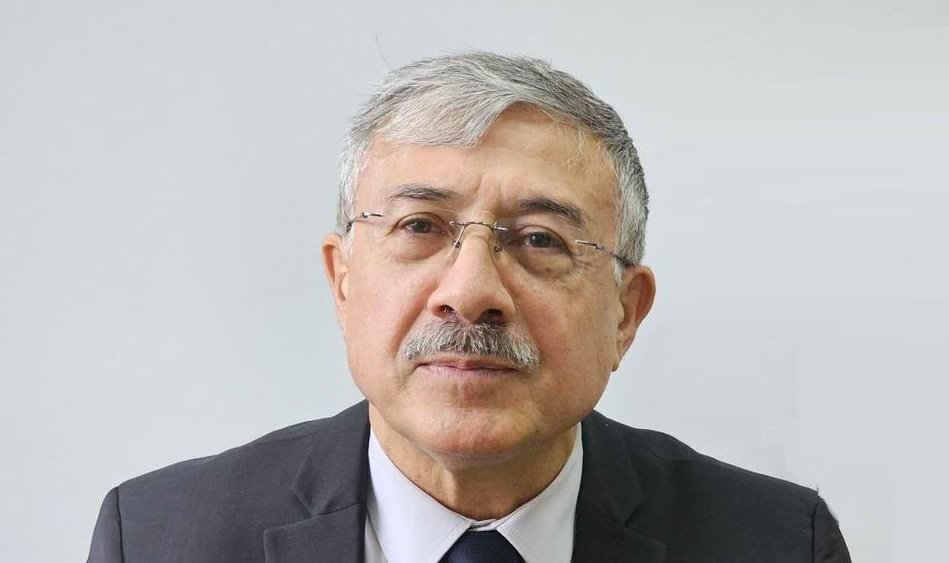
Azerbaijani expert Chingiz Mammadov, speaking on the YouTube channel Daily Europe Online, said the building should not be viewed outside the context in which it was constructed. The church was completed in 2019, shortly before the Second Karabakh War, when Khankendi was still under Armenian control.
According to Mammadov, the site was not built as an ordinary place of worship for a local community, but as a visible marker of presence and control. He pointed in particular to its location, saying the structure was placed in a way that visually dominated the city.
That distinction is central to the Azerbaijani argument. In Baku’s view, the demolition was not an anti-religious act, but the removal of a structure built during occupation and perceived as a political symbol rather than a purely spiritual institution.
Mammadov also rejected comparisons with Soviet-era campaigns against religious buildings. He argued that the Soviet destruction or repurposing of churches was driven by ideological hostility to religion, while the case in Khankendi concerns sovereignty, illegal construction and the legacy of occupation.
The issue remains politically charged. Armenian groups and critics of the peace process may present the demolition as an attack on religious or cultural heritage, especially as Armenia heads deeper into an already tense domestic political cycle.
Mammadov, however, said Azerbaijan should not shape its reconstruction policy in Karabakh around Armenia’s internal political calendar. In his view, Baku is acting according to its own agenda for the restoration and redevelopment of territories that returned to Azerbaijani control.
The dispute over the church therefore goes beyond one building. For Armenians, it may be framed as a question of heritage and religious identity. For Azerbaijan, it is part of a wider process of removing the visible markers of occupation and redefining the public space of Karabakh after its return to Azerbaijani sovereignty.
That clash of interpretations is what gives the controversy its broader political meaning. The debate is not only about what stood in Khankendi, but about how the post-war landscape of Karabakh will be remembered, rebuilt and represented.
AZE.US