AZE.US
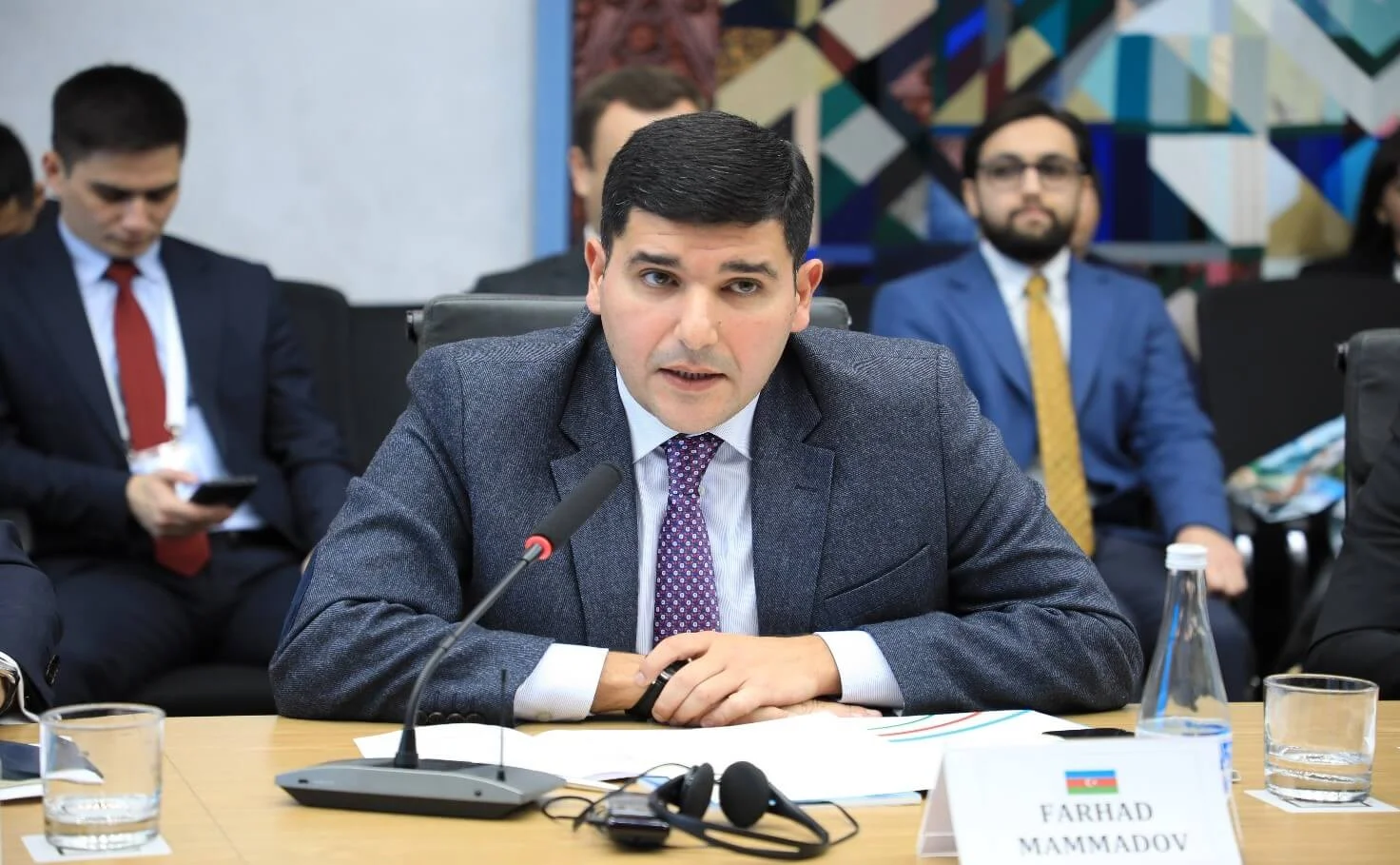
The death of Ali Larijani may mark the end of one phase of the U.S.-Israeli campaign against Iran and open a more dangerous period of internal instability, Azerbaijani political analyst Farhad Mammadov said, arguing that Tehran now faces growing pressure not only from outside but also from within.
As reported by Vesti Baku, Mammadov, who heads the Center for South Caucasus Studies, wrote on his Telegram channel that Larijani’s death effectively completes the turnover of Iran’s wartime military-political leadership.
Reuters reported on March 17 that Iranian media confirmed Larijani’s death after an Israeli strike, making him one of the most senior figures lost by Tehran in the current war.
In Mammadov’s reading, the problem for Iran is no longer limited to battlefield losses. He argues that after the removal of top figures around the system, no obvious new Rahbar has emerged in practical terms. In recent weeks, he says, Larijani and Foreign Minister Abbas Araghchi had come to project the image of continuity, speaking with the authority once associated with the supreme leadership.
Mammadov describes Larijani as the last major figure whose legitimacy was rooted in ties to the late Ali Khamenei and in leadership of an informal wartime command structure that exercised real power beyond the constitutional framework. Reuters and AP both described Larijani as a central backroom powerbroker whose influence stretched across Iran’s security, political and diplomatic systems.
He argues that this informal center of decision-making, which drew authority from the Rahbar and from Larijani’s own standing, has now been stripped of both pillars. In that sense, the strike was not only a blow against one official, but against a mechanism through which decisions were being coordinated during wartime.
Mammadov also suggests that Israel is likely to intensify strikes against Iran’s remaining military leadership in an effort to widen gaps in decision-making and increase disarray at the top. That broader interpretation aligns with reporting that Larijani’s death is being seen as a major shock to Iran’s chain of command and to the balance between political legitimacy and coercive power.
The next question, he argues, is which branch of power may begin challenging the current state order. In his assessment, the Islamic Revolutionary Guard Corps holds the real instruments of force, while the presidency and parliament retain more formal political legitimacy. That tension could become more visible as Iran tries to manage succession, wartime command and external pressure at the same time. Reuters identifies Masoud Pezeshkian as Iran’s president, underscoring the split between elected institutions and the security apparatus that analysts now see as increasingly important.
Mammadov further raises the possibility of rising danger around President Pezeshkian, framing the moment as one in which elite competition could turn more openly hostile. That claim remains his analysis rather than an independently confirmed development.
He also points to a possible diplomatic clue: the timing of Foreign Minister Araghchi’s reported call with Baku. In Mammadov’s view, whether that contact took place before or after news of Larijani’s death may matter for interpreting the tone of the Iranian side’s readout and any implied signals carried in it.
Taken together, the argument is that Larijani’s killing may prove more consequential than a single high-profile assassination. It could deepen the vacuum at the top of Iran’s system and speed up a struggle over who has the authority to govern, negotiate and command in wartime.