AZE.US
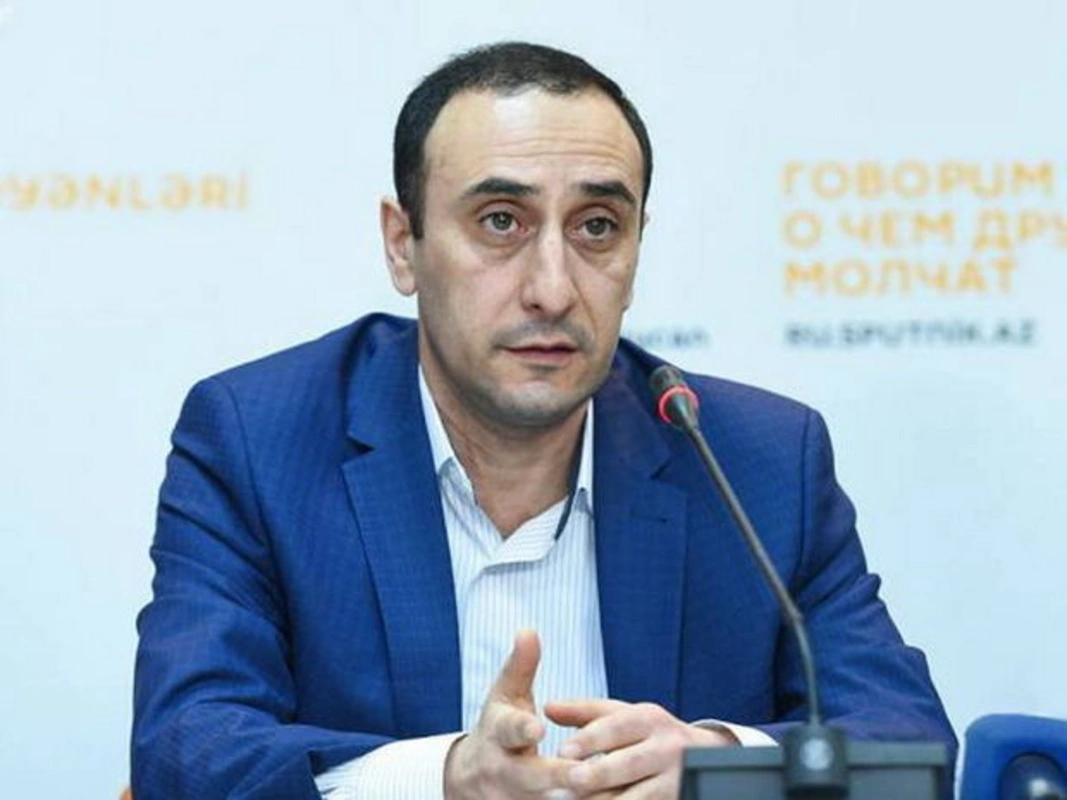
Azerbaijani political analyst Rizvan Huseynov has said a recent flag-burning incident in Yerevan may point to a change in the way Armenia’s radical nationalist forces are being handled amid the fragile peace process with Azerbaijan.
Speaking on the Daily Europe Online YouTube channel, Huseynov commented on a march in Yerevan involving representatives of the youth wing of the Armenian Revolutionary Federation, also known as Dashnaktsutyun, during which a Turkish flag was burned. The action drew a diplomatic response, but Turkey reacted with relative restraint.
The more telling point, according to the discussion, was not only that the Turkish flag was targeted, but that the Azerbaijani flag was not.
Huseynov said that, logically, forces such as the Dashnaks would be interested in provoking additional tension between Baku and Yerevan. He recalled a previous incident in which an Azerbaijani flag was burned on stage during an event attended by Armenian Prime Minister Nikol Pashinyan, after which the organizer involved was dismissed and later linked to Dashnak circles.
This time, however, the Azerbaijani flag was left untouched.
According to Huseynov, that may suggest that the Armenian authorities now have certain levers of pressure over the Dashnaks and the segment of the former Karabakh clan that he said is supported by Russia. He also did not rule out another possibility: that Russia itself may now see certain red lines and may not want a new escalation between Armenia and Azerbaijan at this stage.
Huseynov said the burning of Turkish flags by Dashnak groups is not new, which may explain Ankara’s calmer reaction. He suggested that the organizers likely calculated that such an action would not create the same level of tension as a direct provocation against Azerbaijan.
The analyst’s comments come as Armenia and Azerbaijan remain engaged in a delicate postwar process, with both sides discussing peace, borders and regional transport routes. In Huseynov’s view, the current situation has pushed Yerevan toward caution, especially as its traditional external backers are distracted by wider geopolitical crises.
He said Iran, which had long opposed Azerbaijan- and Turkey-backed regional transport projects, is now absorbed by its own problems. Russia, meanwhile, is facing a more complex regional environment and has been forced to adapt to the new balance of power that emerged after 2020.
Huseynov also argued that Pashinyan has become a kind of “consensus candidate” for Moscow, not because Russia is fully satisfied with him, but because replacing him could make Armenia even more unpredictable. In that scenario, he said, Russia’s remaining hopes for transport and transit projects in the South Caucasus could be put at risk.
For Baku, the episode around the flag burning may therefore carry a broader message: radical anti-Turkish gestures in Armenia continue, but direct provocations against Azerbaijan may now be seen as too dangerous.
AZE.US