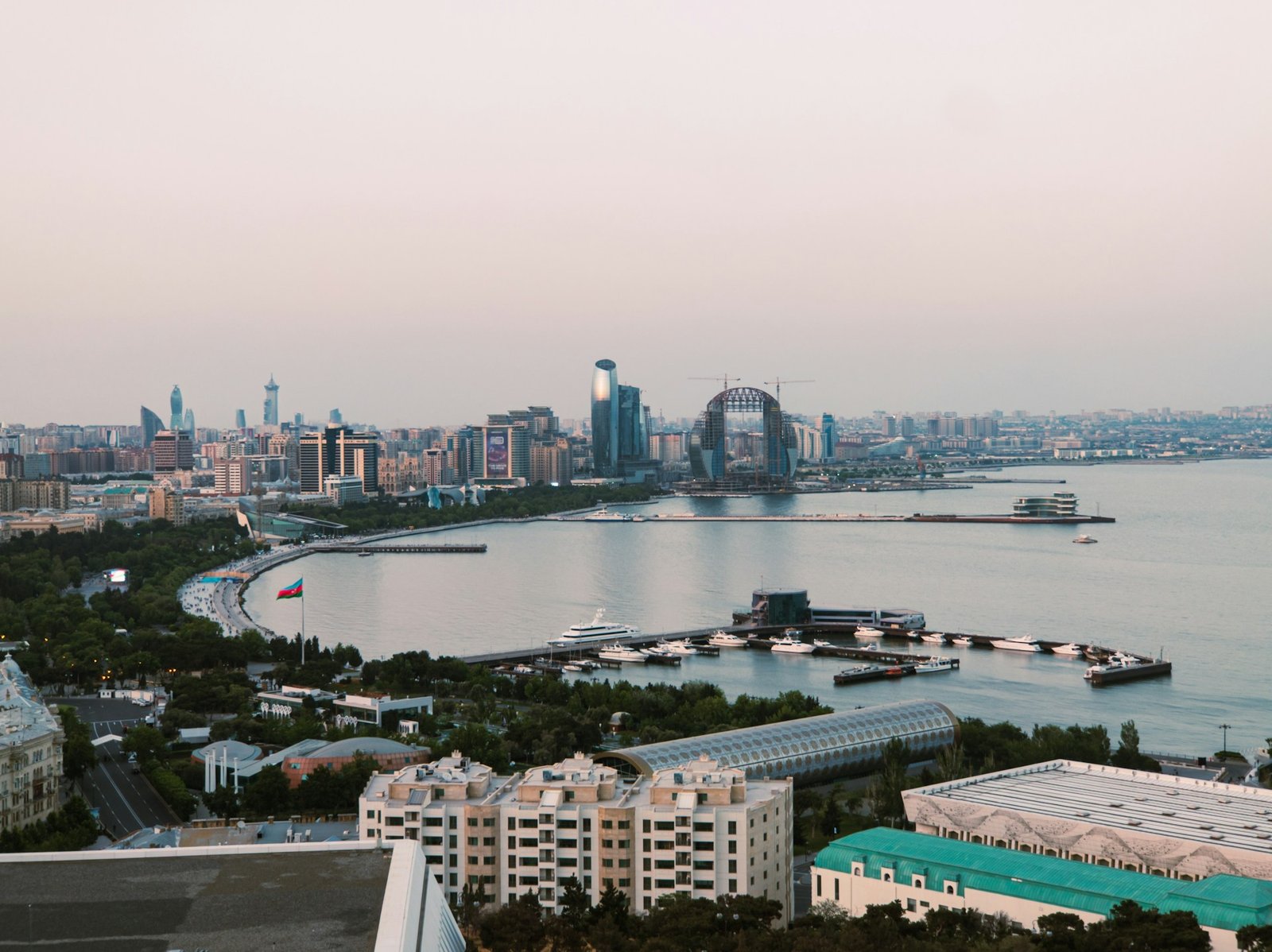
Aze.US
In recent years, Azerbaijan has moved from being viewed as a peripheral post-Soviet state to becoming a country of growing strategic relevance across Eurasia. By 2026, this shift is no longer subtle. It is visible in energy diplomacy, transport connectivity, regional security dynamics, and the broader geopolitical recalibration unfolding across the South Caucasus.
For global policymakers and analysts, the question is no longer whether Azerbaijan matters, but how far its regional role may expand in the coming decade.
A Changing Geopolitical Landscape in the South Caucasus
The South Caucasus has entered a period of structural transformation. Long-standing security arrangements are weakening, traditional alliances are being reconsidered, and new economic corridors are reshaping regional geography.
Within this environment, Azerbaijan occupies a unique position.
It borders Russia, Iran, Turkey, and the Caspian Sea basin-placing it at the intersection of competing political, military, and economic interests. Few countries combine this level of geographic sensitivity with expanding diplomatic and economic capacity.
Since the end of the 2020 Karabakh war and subsequent regional negotiations, Baku has increasingly pursued a multi-vector foreign policy, balancing relations with Western institutions, regional powers, and emerging Asian partners. This strategy has allowed Azerbaijan to avoid rigid alignment while still deepening cooperation across multiple fronts.
Such flexibility is becoming a defining strategic asset in an era of fragmented global order.
Energy Security and Europe’s Long-Term Calculations
Energy remains the most visible dimension of Azerbaijan’s rising importance.
As Europe continues efforts to reduce dependency on Russian gas, the Southern Gas Corridor has gained renewed political and economic weight.
Azerbaijan’s role is not limited to supplying hydrocarbons.
Equally significant is its function as a reliable transit and diversification partner, capable of connecting Caspian resources with European markets through stable infrastructure and long-term contractual frameworks.
In 2026, discussions increasingly focus on:
-
expanding pipeline capacity
-
integrating renewable energy exports from the Caspian region
-
strengthening long-term supply guarantees to European consumers
These developments position Azerbaijan not merely as an exporter, but as a system-level contributor to European energy resilience.
At the same time, Baku is investing in green energy projects—particularly wind and solar potential in the Caspian Sea-signaling an awareness that future strategic relevance will depend on transition energy as much as fossil fuels.
Transport Corridors and the Geography of Connectivity
Beyond energy, Azerbaijan’s geographic role is being redefined by logistics.
The Middle Corridor-linking China to Europe via Central Asia, the Caspian Sea, the South Caucasus, and Turkey-has moved from theoretical concept to operational trade route. Global supply-chain disruptions and geopolitical tensions elsewhere have accelerated interest in this pathway.
Azerbaijan functions as the corridor’s central hinge:
-
the Port of Baku on the Caspian
-
rail links through Georgia and Turkey
-
customs and transit modernization efforts
Together, these elements transform the country into a bridge between continents, rather than a terminal endpoint.
For international investors, this shift matters.
Infrastructure that once served regional trade now supports intercontinental logistics, increasing Azerbaijan’s long-term economic and political leverage.
Security Balance Without Formal Alignment
Perhaps the most understated aspect of Azerbaijan’s strategic rise is its security positioning.
Unlike many states in contested regions, Azerbaijan has avoided becoming fully dependent on any single military bloc. Instead, it maintains:
-
close defense cooperation with Turkey
-
pragmatic dialogue with Russia
-
cautious engagement with Western security structures
-
stable, though complex, relations with Iran
This balancing act is difficult, but it reduces vulnerability.
In a fragmented global system, strategic autonomy can be as valuable as formal alliances.
Moreover, post-conflict stabilization in the region-though incomplete-has opened space for new diplomatic formats and economic normalization initiatives. Azerbaijan’s willingness to participate in these processes reinforces perceptions of it as a regional agenda-setter rather than merely a stakeholder.
Perception Gaps in Global Discourse
Despite these shifts, international narratives about Azerbaijan often lag behind reality.
Coverage frequently remains framed through outdated post-Soviet or conflict-centric lenses, overlooking structural economic and geopolitical changes of the past decade.
This perception gap has consequences.
Underestimating mid-sized regional powers can distort policy planning, investment strategies, and diplomatic expectations.
By 2026, Azerbaijan represents a broader global pattern:
countries outside traditional power centers gaining influence through connectivity, energy, and flexible diplomacy, rather than sheer military scale.
Understanding this trend is essential for anyone analyzing Eurasia’s future.
Looking Ahead: Strategic Weight Beyond Size
Azerbaijan is unlikely to become a great power in the classical sense.
But in the emerging international system, influence is no longer measured only by population or military expenditure.
Instead, importance increasingly derives from:
-
control of transit routes
-
contribution to energy security
-
diplomatic maneuverability
-
regional stabilization capacity
On each of these dimensions, Azerbaijan’s trajectory is upward.
The coming years will test whether this momentum can be sustained amid global uncertainty. Yet one conclusion is already clear:
Azerbaijan’s role in Eurasian geopolitics is expanding-quietly, steadily, and with consequences that extend far beyond the South Caucasus.