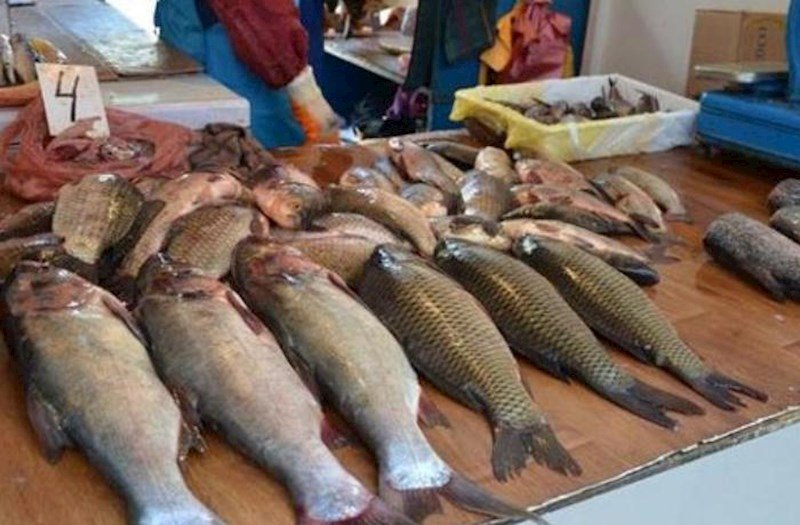
Carp is selling for 4-7 manats per kilogram, grass carp for about 7 manats and trout for 9-12 manats in Azerbaijani markets, but shoppers say fish caught in natural waters is becoming harder to find as farmed products take a larger share of supply.
Buyers interviewed by the “Xəbərin olsun” program said market stalls still offer a broad selection, yet it is often difficult to determine whether the fish came from a river or the Caspian Sea or was raised in a pond or commercial fish farm.
One shopper said the difference sometimes becomes apparent only after cooking. Vendors acknowledged that much of the carp, grass carp and trout on sale is farmed, including imported products.
Imports and Fish Farms Fill the Stalls
Traders said trout is imported from Iran and salmon from Norway, while Azerbaijani farms also supply the market. Carp arrives from areas around the Kura River and Mingachevir, but a local origin does not necessarily mean the fish was caught in a natural waterway because some of the supply is raised in ponds.
Vendors also listed kutum, mullet and zander among the available wild or marine species. They said supplies of these fish were more limited and that some species were harder to produce commercially.
Prices Reported at Market Stalls
- carp: 4-7 manats per kilogram;
- grass carp: about 7 manats per kilogram;
- trout: 9-12 manats per kilogram, depending on size.
The figures reflect prices quoted at the outlets visited by the television crew and should not be treated as a nationwide average. Buyers said fish had become more expensive over the past six to 12 months, but the report did not provide comparable earlier prices from the same stalls, making the increase impossible to calculate reliably.
Claims About Caspian Fish Remain Unverified
Some vendors blamed the limited supply of local marine fish on oil production in the Caspian Sea. The report also included claims that some catches had an odor resembling petroleum products.
No laboratory findings or comments from food-safety or environmental authorities were presented to support those claims. They should therefore be treated as observations by market participants, not as verified evidence of contamination.
One seller suggested that wild carp can be distinguished by a more elongated body, while farmed carp tends to be heavier and rounder. That is a vendor’s rule of thumb rather than a reliable method of establishing origin.
What Buyers Can Check
The main consumer problem is not the absence of fish, but the lack of clarity about where and how it was raised or caught. Buyers can ask sellers about the country of origin, the farm or fishing area and whether the product was wild-caught or aquaculture-raised. Visual appearance alone may not provide a dependable answer.
Source: Vesti Baku. Watch the original “Xəbərin olsun” report.