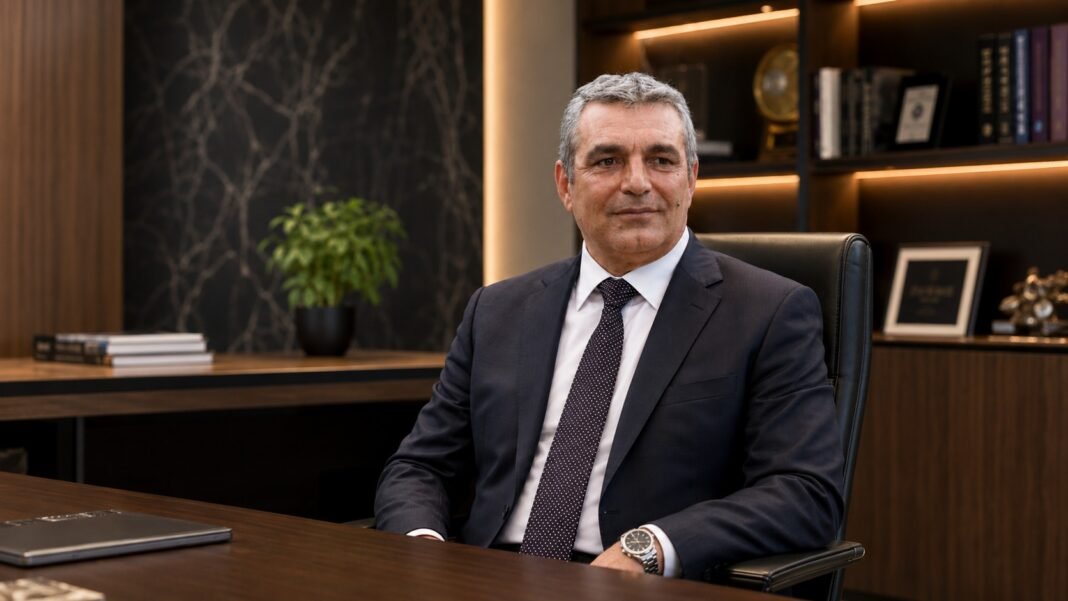
Moscow and Tehran see a transport route through southern Armenia not only as an economic project but also as a threat to their influence in the South Caucasus, economist and political analyst Natig Jafarli said.
Russia and Iran have different interests, he said. Tehran wants to retain influence over alternative transport links, while Moscow fears losing leverage over Armenia and the region’s transportation system.
Jafarli made the comments during a Pressklub TV broadcast while discussing prospects for the Trump Route for International Peace and Prosperity, or TRIPP, also known as the Trump Route.
He said a broad coalition of interested countries was forming around the proposed artery, including the United States, Britain, European Union countries, Türkiye and China. Russia and Iran, however, retain the strongest political objections to changing the existing regional transportation system.
Why Iran Wants to Retain Influence Over the Route
Jafarli said Tehran was motivated less by a desire to defend Armenia’s interests than by a wish to preserve its influence over traffic between Azerbaijan, Nakhchivan and Türkiye.
Iran currently offers an alternative connection through its territory. A road project along the Araz River is intended to link mainland Azerbaijan with Nakhchivan.
Baku is covering a significant share of the infrastructure costs, including bridge construction, Jafarli said. The existence of the Iranian route, however, does not eliminate Azerbaijan’s interest in opening a road through Armenia.
He said Tehran considered the ability to influence cargo traffic essential. Control over a transport connection would provide additional political leverage in relations with Azerbaijan and Türkiye.
Jafarli said Iran also could try to use TRIPP as a bargaining point with Washington, potentially offering to soften its opposition to the transport route in exchange for U.S. concessions on other issues.
Russia Fears Losing Leverage Over Armenia
Russia’s problem is more complex, Jafarli said. Despite Yerevan’s efforts to diversify its foreign relations, Armenia remains closely tied to Moscow economically, politically and through infrastructure.
Armenia’s railway system is especially important because it is operated under concession by a Russian Railways subsidiary.
TRIPP’s implementation with U.S. involvement therefore creates additional risks for Moscow, he said.
Jafarli said officials had discussed creating a separate company to manage the Armenian segment of the route, removing it from the existing railway-management system. He referred to a model involving U.S. and Armenian parties but stressed that the final implementation mechanism was still under discussion.
Russia would prefer to avoid a direct confrontation with Washington and instead wait for political circumstances to change, Jafarli said.
Moscow continues to promote the regional “3+3” format, which would bring together the three South Caucasus countries and the neighboring powers Russia, Türkiye and Iran. Full implementation has been complicated by Georgia’s refusal to participate in the meetings.
Jafarli linked Russia’s renewed diplomatic activity to its effort to retain influence over discussions of transport links and prevent a permanent U.S. role in the strategically important project.
Britain and the United States Focus on the Middle Corridor
Jafarli also emphasized Azerbaijan’s strategic partnership with Britain. He said cooperation between Baku and London joined three related areas: security, the economy and transportation logistics.
A strategic-partnership declaration signed on Nov. 12 calls for expanding defense cooperation, trade, infrastructure and the Middle Corridor.
Jafarli compared the prospective route to a land-based counterpart of the Suez Canal. Its importance would extend far beyond Azerbaijan and Armenia because it could create an additional trade route between Asia and Europe, he said.
Western interest makes the project less dependent on any single regional dispute, according to Jafarli.
Why Georgia Is Also Concerned
Georgia is not directly opposed to opening the Zangezur route, but Tbilisi has serious economic concerns, Jafarli said.
A significant share of freight between Azerbaijan and Türkiye currently passes through Georgia. That system generates revenue not only for transport companies and the state but also for thousands of employees at hotels, restaurants, vehicle-repair shops, filling stations and other businesses serving international transit.
Jafarli estimated that about 25,000 to 27,000 jobs were connected to services for road freight on the relevant routes. That is the analyst’s estimate and not confirmed official data.
An alternative route through Armenia could redirect part of the cargo flow and reduce Georgia’s transit revenue.
Jafarli also mentioned the possible restoration of direct transport between Azerbaijan and Armenia through the Gazakh-Ijevan route. He said that connection could shorten the trip for some cargo now transported through Georgia.
Destabilization Is the Principal Risk
Jafarli said the most dangerous scenario was not economic competition between routes but possible political destabilization in the South Caucasus.
Serious turmoil in Russia or Iran could prompt unpredictable actions by those countries in the region, he said.
He described Georgia as especially vulnerable, given the consequences of the 2008 war and the unresolved conflicts involving Abkhazia and South Ossetia.
Jafarli called for stronger regional security cooperation, including closer treaty-based relations between Georgia, Azerbaijan and Türkiye.
In his assessment, the contest over the Zangezur route has moved far beyond the opening of a road or railway.
The central question is who will control future trade flows between Europe and Asia, and what place Russia, Iran, Türkiye, the United States and the South Caucasus countries will hold in the emerging regional system.
Source: Vesti Baku.