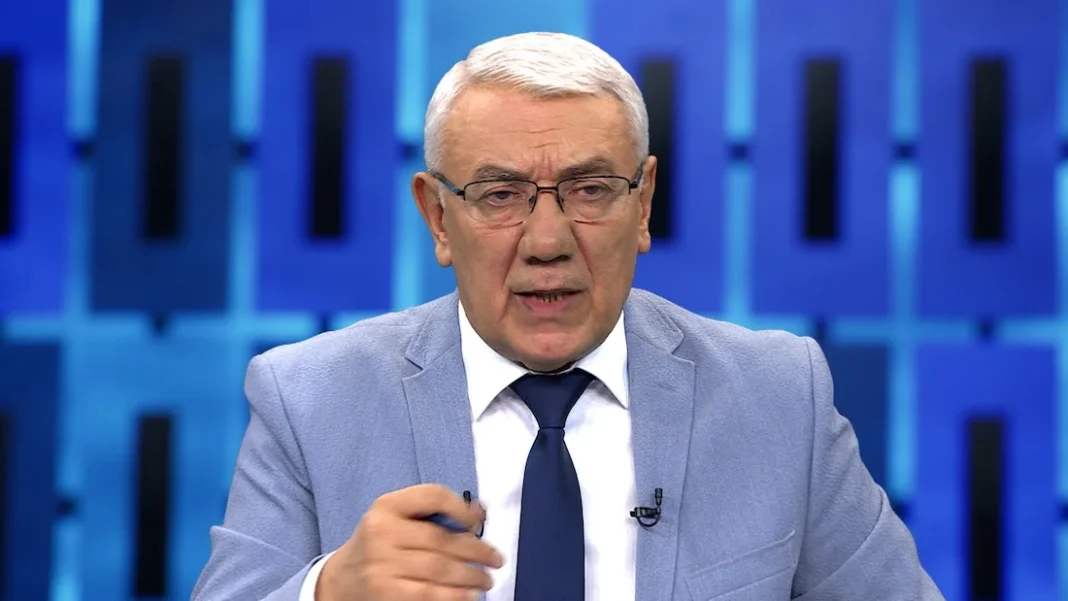
Azerbaijan should prepare for new security threats from both Russia and Iran regardless of whether the two large neighboring states emerge strengthened or weakened from their current wars, Azerbaijani political analyst Eldar Namazov said in an interview with ITV.
Namazov made the assessment while discussing a dispute over Yerevan’s Blue Mosque, Azerbaijan’s relations with Iran and the broader outlook for regional security, according to a Vesti Baku report.
The immediate controversy followed a decision to name a ceremonial hall at the Blue Mosque after Armenian poet Yeghishe Charents. Iranian Vice President Seyed Hamid Pourmohammadi attended the ceremony.
Why the Blue Mosque Dispute Matters
Namazov said the event should not be viewed solely as a cultural occasion. In his assessment, Tehran knowingly took a step that was certain to draw a negative reaction in Baku.
The Blue Mosque was built in the 18th century during the period of the Erivan Khanate. Azerbaijan regards it as an important part of the historical and cultural heritage of Azerbaijanis. Iran, meanwhile, presents the mosque as a monument of shared Iranian-Armenian heritage.
Namazov said the competing historical interpretations give the dispute a political dimension. Tehran, he argued, is well aware of how Azerbaijani society views historical monuments, especially Islamic heritage sites located in present-day Armenia. The Iranian vice president’s personal participation in a ceremony that gave a mosque hall the name of an Armenian poet therefore amounted to a demonstrative signal, he said.
The timing made the step particularly notable, according to Namazov. Iran is facing a difficult confrontation with the United States and Israel, serious economic strains and a simultaneous need to maintain stable relations with neighboring countries. Under those conditions, he said, Tehran could have avoided a decision likely to irritate Azerbaijan.
Namazov did not say the incident would necessarily trigger another deterioration in Azerbaijani-Iranian relations. He described it instead as a political signal that Baku could not ignore.
Iran’s Internal Debate
Namazov also pointed to divisions inside Iran’s leadership over how the country should respond to U.S. pressure and economic isolation.
One group within the Iranian political establishment, he said, appears prepared to wait out the current period in the hope that political circumstances in the United States will change and Democrats will regain influence. Others fear that continuing economic pressure will further weaken Iran regardless of the outcome of U.S. elections.
At the same time, Namazov said, some factions in the Iranian elite are already behaving as if the country has defeated the United States and Israel. Such attitudes could encourage a more assertive foreign policy and new attempts to expand Iranian influence in the South Caucasus, he warned.
He also cited Iran’s deteriorating social and economic conditions, including statements by Iranian leaders about the population’s difficult circumstances and the state’s financial problems. Demonstrative foreign-policy actions may therefore reflect not a single coherent strategy but competition among groups inside the Iranian leadership, he said.
Risks From Either Iranian Victory or Defeat
A central point in Namazov’s argument was that both major scenarios surrounding Iran carry dangers for Azerbaijan.
If Tehran emerges victorious from its confrontation with the United States and Israel, the outcome could strengthen the most radical groups inside Iran’s government. Those forces could then pursue a tougher policy toward neighboring countries, particularly in the South Caucasus, he said.
But an Iranian defeat would not guarantee stability for Azerbaijan. A weakened central government, internal conflict, social unrest and possible refugee flows could all create security problems directly along Azerbaijan’s southern border.
Baku should therefore consider both the consequences of a stronger Iran and the risks of Iranian destabilization, Namazov said.
Russia Presents a Similar Dilemma
Namazov applied the same logic to Russia’s war against Ukraine.
If Russia ends the war in a stronger position, Moscow may try to restore influence it has lost across the former Soviet space, including in the South Caucasus, he said. He also drew attention to radical statements by some Russian nationalist figures who have discussed using force against other post-Soviet states.
A Russian defeat, however, would not necessarily bring regional stability. Serious weakening of Moscow could be accompanied by domestic crises, rising tensions in the North Caucasus and new migration flows. Azerbaijan could thus face threats with different origins but similarly serious consequences for its security, Namazov said.
Azerbaijan’s position is distinctive because it is the only South Caucasus country sharing land borders with both Russia and Iran. Developments in the two states should therefore be treated as one interconnected set of strategic risks, he said.
Armenia’s Cautious Approach to Tehran
Namazov separately addressed Armenia’s behavior toward Iran. He said Yerevan is now more cautious than Baku in dealing with Tehran because Armenia has fewer options for resisting direct Iranian pressure.
He cited harsh Iranian statements opposing TRIPP, the transport project intended to connect mainland Azerbaijan with Nakhchivan through Armenian territory.
Armenian officials have responded cautiously, trying to reassure Tehran that the project would not bring U.S. troops to the area and was not directed against Iranian interests.
Views inside Iran are also divided. Some Iranian circles see the opening of regional transport links as a potential economic opportunity that could connect Iran’s railway network with other routes. Others view TRIPP as a threat to Iran’s geopolitical interests.
Against that background, Namazov said it was premature to conclude that Azerbaijan’s relations with Armenia and Iran had already entered a stable period of normalization.
Peace With Armenia Will Not Settle Every Issue
Namazov linked the Blue Mosque dispute to the broader question of historical heritage and Azerbaijan’s relations with Armenia.
He said Azerbaijan should raise the preservation of monuments connected to the historical Azerbaijani population on the territory of present-day Armenia more actively.
Namazov highlighted 2027, which will mark 200 years since Russian imperial forces captured the Erivan Fortress. He said the anniversary should become an occasion for historical research, documentary films and international conferences examining the city’s history and architectural heritage.
He stressed that historical monuments should not be turned into an additional condition for signing an Azerbaijani-Armenian peace agreement. Concluding peace and opening regional communications remain essential tasks, he said.
Long-term normalization, however, will also require changes in public perceptions and the dismantling of hostile stereotypes. Baku should pay attention not only to diplomatic agreements but also to how history is taught in Armenia, which political figures are commemorated and what ideas about Azerbaijan are passed to new generations, Namazov said.
Security Cannot Be Taken for Granted
Azerbaijan’s victory in the Second Karabakh War strengthened the country’s position and expanded its regional options, Namazov said. Yet Baku remains located between two major states involved in wars with uncertain outcomes.
A stronger Russia or Iran could bring renewed pressure on neighboring countries. A weaker Russia or Iran could produce instability that spreads beyond national borders.
Namazov described the Blue Mosque incident as one indication of how sensitive the regional environment remains. Azerbaijan, he said, should prepare not for a single most likely outcome but for several scenarios because neither victory nor defeat for its large neighbors would by itself guarantee security in the South Caucasus.