Vesti Baku Editorial
For decades, Europe persuaded itself that major wars belonged in history books and that international conflicts could be resolved through diplomacy, trade and economic sanctions.
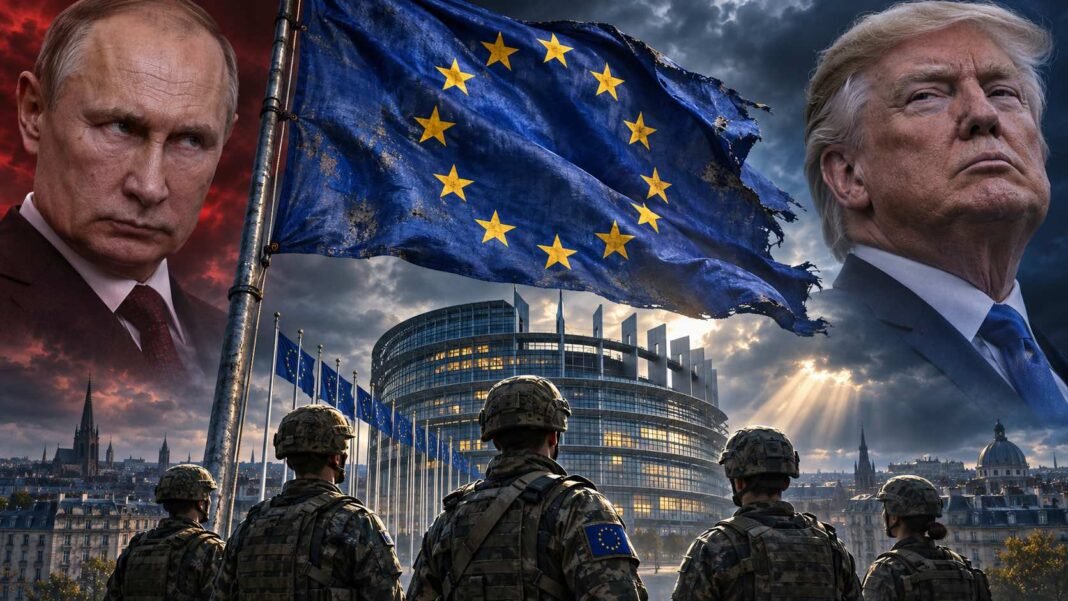
Vladimir Putin shattered that illusion. Donald Trump forced Europeans to finally abandon it.
After Russia’s full-scale invasion of Ukraine in February 2022, European capitals still hoped relations with Moscow might eventually return to the old pattern, as they did after the 2008 war in Georgia or Russia’s annexation of Crimea in 2014.
This time, that did not happen.
The End of European Naivety
A turning point came during Trump’s clash with Ukrainian President Volodymyr Zelenskyy in the Oval Office in February 2025. The U.S. president’s remark that Kyiv did not have the cards forced Europeans to consider what cards they possessed themselves.
Brussels faced an uncomfortable reality: an economic giant with political ambitions cannot rely indefinitely on someone else’s military power.
Europe is now moving rapidly to rearm. Germany aims to build the strongest army on the continent. Britain has signaled its readiness to continue supporting Ukraine. France is pressing for greater European strategic autonomy.
Such rhetoric would have seemed unthinkable only a few years ago.
Europeans have finally recognized that international law alone does not stop an aggressor and that diplomacy without real power has limited reach.
America No Longer Guarantees Calm
Washington is shifting more of its strategic attention to the Asia-Pacific, where China is becoming the United States’ principal rival.
Europe will have to assume responsibility for a much larger share of its own security.
Putin sought to divide the West, weaken NATO and force Europe to defer to Moscow. Instead, he helped revive European military power.
History can be cruel to those who try to rewrite it.
This editorial was translated and adapted from Vesti Baku.