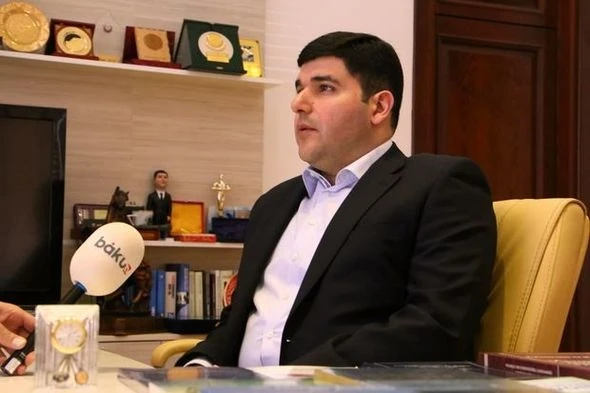
The Armenia-Azerbaijan peace process is entering a decisive phase, and its outcome may depend largely on whether Armenian Prime Minister Nikol Pashinyan can secure a constitutional referendum, Azerbaijani political analyst Farhad Mammadov said.
Mammadov made the assessment on the “Novosti Kavkaza” channel, according to Vesti Baku. The original interview is available on YouTube.
He said Armenia’s ruling party is six parliamentary votes short of the support needed to authorize a referendum. Pashinyan has effectively presented the opposition with a choice: support the referendum or face the prospect of an early parliamentary election.
The prime minister is also prepared to tie his political future to the outcome of a vote on a new constitution and has indicated that he could resign if it fails, Mammadov said.
“This is a moment of truth. Pashinyan is showing that he is going all in,” Mammadov said.
Why Pashinyan Mentioned Bayraktar Drones
Mammadov interpreted Pashinyan’s reference to the deaths suffered during the 2020 war under attacks by Turkish-made Bayraktar drones as a warning to the opposition about the risks of further delaying a settlement with Azerbaijan.
Yerevan has repeatedly hoped that changes in the international environment would improve its position, placing expectations on elections in Turkey and the United States and on the European Union’s response, he said. Those expectations did not materialize, and continuing the same policy would create serious risks for Armenia itself.
Peace Treaty Could Follow Within Days
Mammadov pointed to a recent statement by Armenian Parliament Speaker Alen Simonyan that Baku is not imposing new conditions for concluding a peace agreement.
Once Armenia’s new constitution takes effect, the treaty could be signed within days, according to Simonyan’s assessment.
The timing of constitutional reform remains uncertain. If Pashinyan obtains the necessary support from opposition lawmakers, a referendum could be held within the next six months. If not, an early election could delay the peace treaty by roughly another year.
Baku and Yerevan Expand Direct Contacts
Despite the absence of a signed peace treaty, contacts between Azerbaijan and Armenia are expanding, Mammadov said.
The two sides maintain regular communication involving their leaders, government commissions and security services. Discussions cover border delimitation, missing persons, transport links and environmental issues.
Mammadov placed particular importance on direct engagement between Azerbaijani presidential aide Hikmet Hajiyev and Armenian Parliament Speaker Alen Simonyan. Simonyan’s expected visit to Baku in December could further strengthen that channel.
TRIPP and External Risks
Mammadov described the TRIPP transport project as a central part of the peace agenda and said its implementation is especially sensitive to the positions of outside powers, particularly Iran.
Armenian diplomacy is working to ease tensions with Tehran over the project, he said.
Potential initiatives by pro-Armenian members of the U.S. Congress could also complicate relations between Washington and Baku. Even so, Mammadov said he does not expect either Azerbaijan or Armenia to abandon their bilateral settlement process.
Why There Will Be No New Yalta
Commenting on a meeting involving U.S. President Donald Trump, Russian President Vladimir Putin and Chinese President Xi Jinping in Shenzhen, Mammadov rejected speculation that the powers could divide the world into spheres of influence.
Modern international relations are too complex for a return to such a model, he said.
U.S. participation in TRIPP and the growing international agency of Central Asian states also run against the idea of restoring an exclusive Russian sphere of influence across the former Soviet region.
For the South Caucasus, Mammadov said, it is essential to preserve regional policy independence and avoid making it dependent on agreements among major powers.