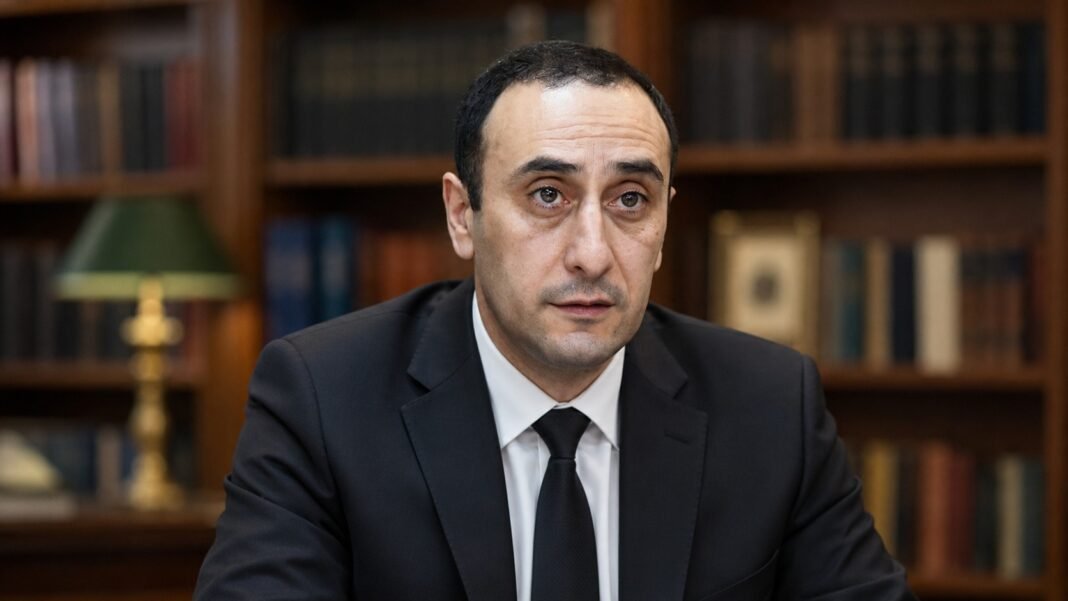
Tensions between Turkey and Georgia following a football-related controversy in Batumi may reflect a wider struggle for influence in the South Caucasus, Azerbaijani historian Rizvan Huseynov said.
Huseynov, director of the Center for the History of the Caucasus, made the comments in an interview with the YouTube program “Modern Conversation with Rasim Babayev,” according to Vesti Baku.
The discussion followed unrest surrounding a match between Turkey’s Besiktas and Israel’s Hapoel in Batumi. Clashes between supporters and Georgian police contributed to diplomatic friction between Ankara and Tbilisi.
Photographs of Turkish supporters holding a banner reading “82 Batum” caused additional anger in Georgia, where the slogan was interpreted as suggesting that Batumi should become Turkey’s 82nd province.
Huseynov described the banner as a provocation capable of damaging Turkish-Georgian relations. He said third parties could benefit from worsening ties between the two countries.
Competition for Regional Influence
Huseynov linked the episode to changes in the regional balance after Azerbaijan restored control over its internationally recognized territory. Armenia has expanded cooperation with the West, while Georgia has pursued what he described as a more pragmatic approach toward Russia.
He pointed to renewed contacts between Russian and Georgian foreign policy officials and argued that Moscow has an interest in encouraging the Georgian public to view Turkey as a potential threat. Territorial slogans and periodic historical or religious disputes could reinforce that perception, he said.
The football dispute, however, serves the long-term interests of neither Turkey nor Georgia, Huseynov said.
Transport Routes Add to Rivalry
Huseynov said competition over new transport corridors is another factor shaping regional politics. A route through Armenia linking Azerbaijan with Nakhchivan could alter established Asia-Europe transit patterns in which Georgia has traditionally held an important position.
He said work on transport infrastructure should not depend entirely on the timetable for adopting a new Armenian constitution. The document published in Yerevan remains a draft, and Armenia’s governing party is six parliamentary votes short of advancing the constitutional process.
Domestic political complications could delay the reform, Huseynov said, but Armenia’s intentions should also be judged by the pace of implementation of transport agreements.
Azerbaijan’s Transit Role
The historian also cited recent visits by Lithuanian and Estonian officials, as well as Azerbaijan’s developing relations with Germany, as signs of growing European interest in the country’s transport capacity.
He linked President Ilham Aliyev’s recent visit to Vietnam to the broader prospects for expanding transit routes between Asia and Europe.
Huseynov said the South Caucasus is increasingly becoming an arena for competing transport and political projects, giving even localized diplomatic disputes consequences beyond bilateral relations.