AZE.US
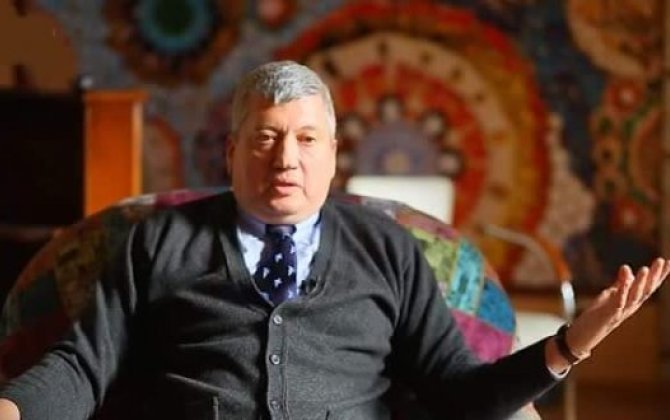
Former Azerbaijani Foreign Minister Tofig Zulfugarov has dismissed the latest meeting between Russian President Vladimir Putin and Armenian Prime Minister Nikol Pashinyan as political theater rather than evidence of a genuine rupture between Moscow and Yerevan.
His comments came after the two leaders met at the Kremlin on April 1, where the agenda officially included bilateral issues and the development of economic, transport and logistics ties in the South Caucasus.
In his Facebook post, Zulfugarov argued that the widely discussed image of Pashinyan as a leader resisting Kremlin pressure was misleading. In his reading, the meeting was not about confrontation at all, but about reaffirming an old союзнический framework in a new political style. That interpretation runs against the more dramatic framing that appeared in some commentary after the talks.
The publicly available record of the meeting gives both sides material for that argument. Putin used the talks to warn that Armenia cannot simultaneously be part of the European Union and the Russia-led Eurasian Economic Union, while Pashinyan responded that Armenia understands the incompatibility in principle but is trying, for now, to combine EAEU membership with closer cooperation with the EU. At the same time, Pashinyan also stressed that Armenia’s ties with Russia are “very deep” and “not subject to discussion.”
Zulfugarov’s broader point is that the fundamentals of the relationship remain in place despite the friction and the public messaging. That line is reinforced, at least in part, by Pashinyan’s own account after the trip.
The Armenian prime minister described the April 1 visit as “very successful” and said concrete agreements had been reached across a broad agenda, ranging “from culture to military-technical cooperation.”
The meeting also underscored the economic dimension of the relationship. During the Kremlin talks, Putin highlighted the scale of Russia-Armenia trade, while Pashinyan said that the new regional reality after peace between Armenia and Azerbaijan had strengthened Armenia’s economic links with Russia, including rail imports from Russia via Azerbaijani territory and closer ties within the Eurasian Economic Union.
That is where Zulfugarov’s critique lands most sharply. His argument is not simply that Moscow still has leverage, but that the public choreography around Armenia’s balancing act with Russia and the West can obscure how much of the old architecture is still functioning.
In that sense, his post reads less as a reaction to one meeting than as a broader rejection of the idea that Armenia has meaningfully broken out of Russia’s orbit.
For Baku, that message is politically familiar: behind the rhetoric, the system has not changed as much as some would like to believe. Whether one agrees with Zulfugarov or not, the April 1 meeting gave him enough material to make that case.