AZE.US
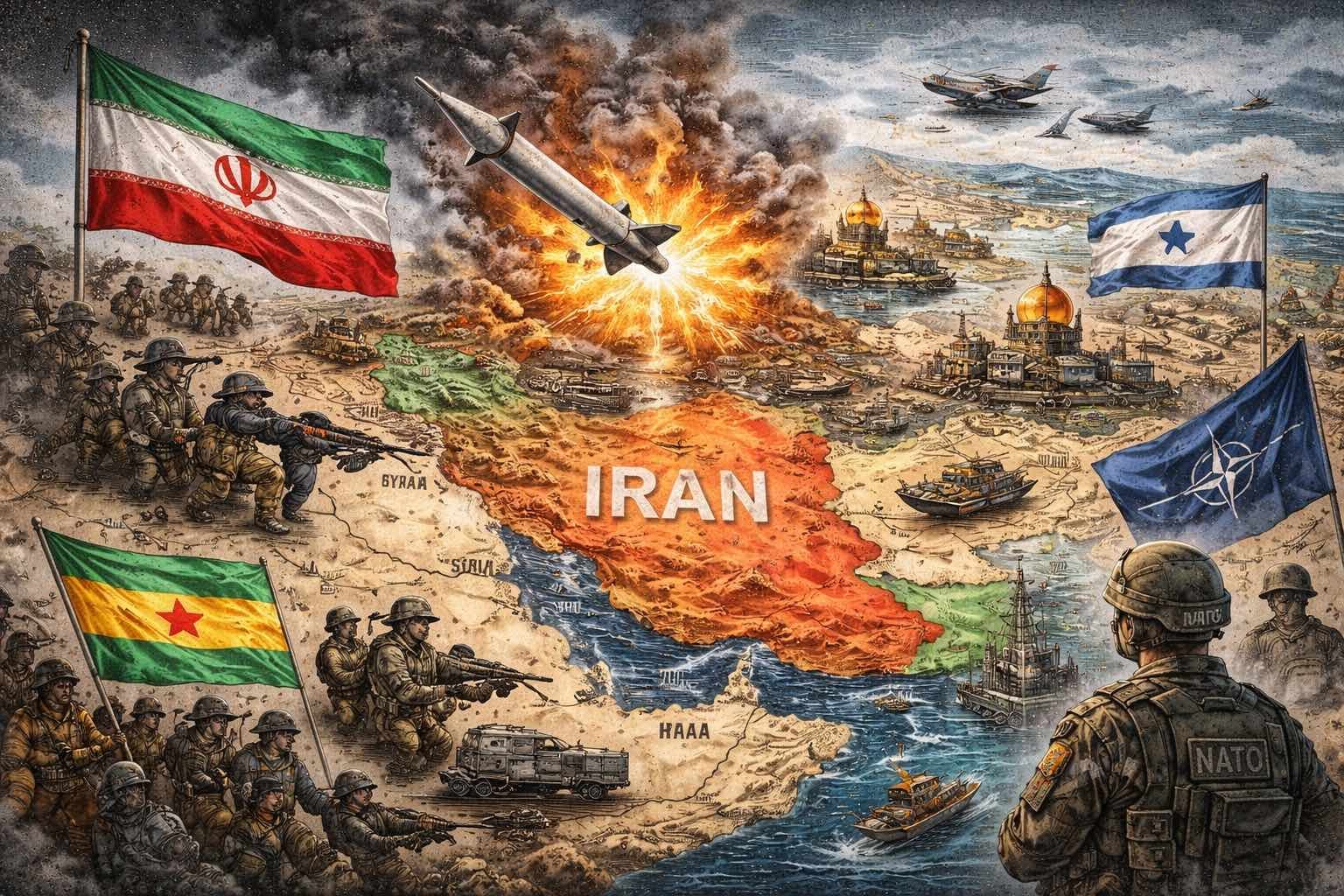
The current escalation around Iran may be part of a longer geopolitical transformation of the Middle East, according to Azerbaijani political analyst Ilgar Velizade, head of the South Caucasus Political Scientists Club.
Speaking on the analytical platform Daily Europe Online, Velizade said the developments surrounding Iran should not be viewed as an isolated episode, but rather as part of a broader process reshaping the regional balance of power.
According to the analyst, the political map of the Middle East has gone through several major transformations over the past century.
Historical roots of regional change
Velizade noted that one of the most important turning points was World War I, which triggered the emergence of a number of modern states in the Middle East following the collapse of empires.
The process of shaping the region’s political geography continued until the end of World War II, when many of the borders and state structures that exist today were established.
In the decades that followed, the region experienced several waves of political restructuring, often accompanied by wars and geopolitical rivalry.
Israel’s role in regional dynamics
According to Velizade, the role of Israel has become one of the key factors shaping the geopolitical landscape of the Middle East.
He pointed out that in recent years the United States and Israel have attempted to promote a new regional political architecture that included several major initiatives.
Among them were:
-
efforts to form a regional coalition countering Iran
-
the so-called “Deal of the Century” aimed at resolving the Israeli-Palestinian conflict
-
the Abraham Accords, which led to normalization agreements between Israel and several Arab states.
Velizade argues that Iran became the main obstacle to the full implementation of this regional realignment.
Internal resilience of Iran
Despite growing pressure, the analyst believes that Iran’s political system remains relatively resilient.
“Iran is not simply a political regime – it is a civilization with deep historical traditions,” Velizade said.
According to him, external military pressure alone is unlikely to lead to rapid political change in the country.
He added that many external observers often rely heavily on opposition or Western media sources when assessing the internal situation in Iran, which may not fully reflect the complexity of Iranian society.
Kurdish factor and potential scenarios
Velizade also addressed discussions about the possible use of the Kurdish factor to destabilize Iran internally.
He noted that Kurdish armed groups exist in the region and some are based in Iraqi Kurdistan, but their ability to significantly influence Iran’s internal political balance remains uncertain.
Any major internal shift in Iran, he suggested, would likely require substantial external political, financial, and military support.
Economic implications of regional tensions
The political crisis is also affecting global energy markets.
Velizade said rising tensions in the Middle East could contribute to higher oil prices, benefiting energy-exporting countries such as Azerbaijan.
At the same time, he warned that sustained instability could create economic challenges for many countries.
In his view, the European Union could face particular difficulties due to its current energy policy and limited access to some traditional energy sources.
Azerbaijan’s balanced position
Commenting on the South Caucasus, Velizade said Azerbaijan is trying to maintain a balanced approach amid the regional tensions.
According to him, Baku seeks to avoid becoming an instrument of geopolitical competition while maintaining dialogue with key international actors.
“Azerbaijan is located in a complex geopolitical environment, and therefore pursues a pragmatic foreign policy aimed at preserving stability and cooperation with multiple partners,” the analyst concluded.