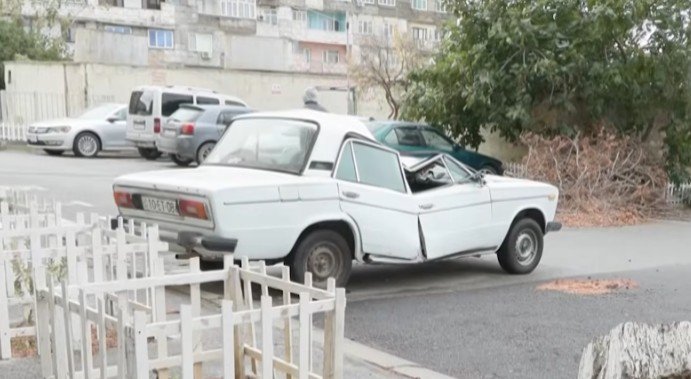
Strong winds in Azerbaijan have again exposed a recurring problem for car and property owners: damage may be obvious, but compensation is far from automatic. Even compulsory insurance does not necessarily mean every loss will be covered.
Emil Aghabaghirli, a member of the expert group at the Azerbaijan Insurers Association, explained when insurers must compensate weather-related damage and what people should do when their property is hit by fallen trees, advertising structures or other objects.
When a Tree Falls on a Car
One of the most common problems during strong winds is trees falling on parked vehicles. Many drivers expect compulsory motor insurance to help, but that policy does not cover this type of damage.
Compulsory motor insurance is primarily intended to compensate third parties for harm caused in a traffic accident. If a tree, advertising structure or another object falls on a car, the damage may instead be covered by voluntary comprehensive insurance, known locally as CASCO, if the contract includes the relevant risks.
For example, if a car worth 20,000 manats is insured under CASCO and suffers 1,000 manats in damage, the insurer may pay the repair cost within the terms of the policy.
Without CASCO, a driver generally cannot obtain payment under ordinary compulsory motor insurance. That does not rule out a separate claim against the person or organization responsible for maintaining the tree or structure if legal responsibility can be established.
What Happens When a Home Is Damaged
The rules are different for residential property. Unlike compulsory motor insurance, compulsory real estate insurance covers certain risks connected with natural disasters and property damage.
Aghabaghirli said that if strong winds damage an insured house, summer home or other residential property, the owner may seek compensation. The amount depends on the nature of the damage, the terms of the contract and the policy limit.
Compulsory insurance does not guarantee payment of the home’s full market value. If a house is worth 100,000 manats but the compulsory policy provides a maximum of 25,000 manats, a total loss would still be limited to the insured amount. Additional losses may be covered by a voluntary policy purchased in advance.
Annual Cost and Coverage Limits
The annual premium and maximum compulsory property coverage vary by location:
| Location | Annual Premium | Maximum Coverage |
|---|---|---|
| Baku | 50 manats | 25,000 manats |
| Ganja, Sumgayit and Nakhchivan | 40 manats | 20,000 manats |
| Other cities and districts | 30 manats | 15,000 manats |
Owners of higher-value property may insure the portion above the compulsory limit. Aghabaghirli gave the example of a Baku home worth 100,000 manats. In addition to 25,000 manats in compulsory coverage, the owner could buy voluntary insurance for the remaining 75,000 manats. He estimated that the additional protection would cost about 200 to 210 manats.
If an Insurer Refuses to Pay
Obtaining compensation can take time even when a valid policy exists. The circumstances and cause of the damage must be established, and the cost of restoration must be assessed.
When adverse weather caused the loss, the claim may require an official document from the relevant state authority confirming the conditions. A damage assessment follows.
If the insurer refuses payment or substantially undervalues the loss, the policyholder may request another assessment, consult an independent expert or complain to the Central Bank of Azerbaijan.
Aghabaghirli said insurers must observe the payment deadlines established by law once a complete set of required documents has been submitted. Unjustified delays may lead to financial penalties.
Collapsed Fences and Liability Claims
Storms can also bring down fences and other structures, causing property damage or injury. If a fence belonging to a private home or commercial property falls on a pedestrian, compensation may be available under the owner’s civil liability insurance.
If no liability policy exists, the injured person or their relatives may file a court claim against the property owner. Whether damages can be recovered depends on the circumstances and whether the legal grounds for holding the owner responsible are established. The mere fact that a structure collapsed does not automatically create a right to compensation.
Stricter Oversight Under Discussion
Aghabaghirli also said Azerbaijan is preparing a new concept for enforcing compulsory real estate insurance requirements.
The law has required such insurance for years, but many apartment and private-home owners still do not obtain policies. One reason is limited enforcement. Coverage is now often purchased mainly when a property is sold or bought or when a mortgage transaction is completed.
The expert said officials are discussing a more effective supervision mechanism and which agency would monitor compliance. Specific details have not yet been officially presented, and he said the Central Bank should provide further clarification.
Can a House Without a Registry Extract Be Insured?
Aghabaghirli said a property owner must have a document establishing rights to the building. Depending on the circumstances, that may be a technical passport, a purchase agreement, a court ruling or another legally recognized document.
Documents covering only the land are not sufficient if there is no legal basis for the house built on it. Property owners should therefore check their documentation before an insured event occurs.
Why the Question Returns After Every Windstorm
Aghabaghirli said many people begin thinking about insurance only after suffering a loss. Before an incident, the premium may appear to be an avoidable expense. After a tree damages a car or a roof is torn away, the question becomes who will pay for repairs.
Car owners and homeowners should understand the difference between compulsory motor insurance, CASCO and real estate insurance. Each policy covers different risks, and simply having insurance does not guarantee payment for every incident.
The most important step is to check in advance exactly which types of damage a contract covers, the maximum compensation available and the exclusions imposed by the insurer. Otherwise, even formally insured property may have to be repaired entirely at the owner’s expense after the next period of severe weather.
Source: Vesti Baku