AZE.US
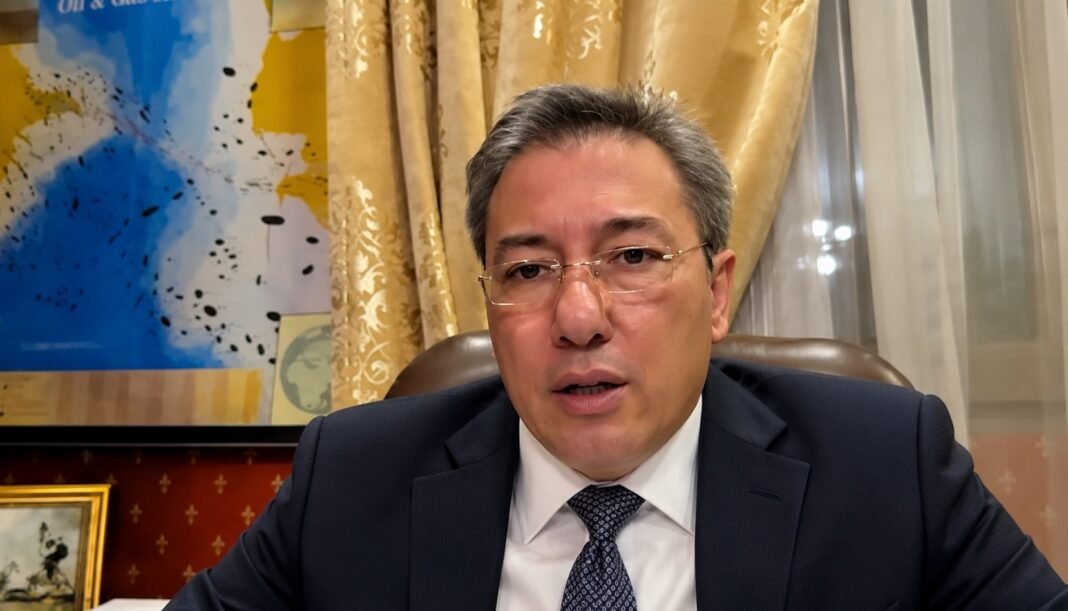
Azerbaijan does not have to choose between Moscow and Kyiv, political analyst Ilgar Velizade said, arguing that Baku’s relations with Russia, Ukraine and the European Union are guided by its own national interests rather than loyalty to a geopolitical bloc.
Contacts with Moscow should not automatically be read as a withdrawal of support for Kyiv, just as cooperation with European countries does not require Azerbaijan to follow every decision made in Brussels, Velizade, head of the South Caucasus Political Scientists’ Club, said in an interview with Daily Europe Online.
The discussion followed Chechen leader Ramzan Kadyrov’s visit to Azerbaijan. President Ilham Aliyev received Kadyrov on Oct. 10, according to the presidential website. The meeting was considered in the interview alongside the humanitarian assistance Azerbaijan has provided to Ukraine.
Velizade said the two policies appear contradictory mainly to observers who divide international relations into rigid and opposing camps. Azerbaijan’s ties with its neighbors, he said, are shaped by geography, trade and the need to preserve channels for resolving practical problems.
North Caucasus Ties
Velizade described Baku’s relations with Russian regions as a distinct element of Azerbaijani foreign policy. Azerbaijan deals not only with the federal government in Moscow but also with North Caucasus republics linked to it by transportation, economic and social ties.
Those relationships create mutual interests, he said: Russian regions gain partners and trade links, while Azerbaijan gains additional ways to shape bilateral cooperation.
He pointed to the International North-South Transport Corridor as an example. Expanding trade and transportation routes requires stable communication between neighboring countries, even when they have serious disagreements on other issues, Velizade said.
Velizade applied the same reasoning to the dispute stemming from the Azerbaijan Airlines passenger jet crash in December 2024. He said firm demands for an investigation, accountability and compensation should continue alongside negotiations aimed at securing concrete results.
Maintaining contact is a means of resolving disputes, he said, adding that remarks in the interview about compensation should not be treated as proof that every consequence of the crash has been settled.
One State Identity, Different Tools
Velizade rejected the interviewer’s suggestion that Azerbaijan has several geopolitical identities. The country has one state identity, he said, but it can use different approaches with different partners and on different issues.
Relations with Russia, the European Union and Central Asian states do not have to operate under identical rules, he said. Each relationship requires its own set of tools.
He also criticized the view among some Russian commentators that regional policy should revolve around Moscow and that neighboring countries should coordinate their priorities with the Kremlin. Countries across the region have become more independent, expanded their external ties and increasingly make decisions according to their own goals, Velizade said.
At the same time, he cautioned against applying Azerbaijan’s model mechanically to Ukraine. The two countries have different geography, circumstances and obligations, he said. Velizade called a diplomatic settlement of the Russia-Ukraine war necessary but said there is no universal formula for every conflict.
Questions About the Eastern Partnership
Velizade said international organizations and partnerships should be judged by the practical benefits they provide to their members.
By that standard, he questioned whether Azerbaijan should remain in the EU’s Eastern Partnership, saying the program has lost much of its earlier political momentum while Baku is more interested in concrete bilateral cooperation with the EU and individual European countries.
Leaving the initiative would not necessarily mean reducing those relationships, he said. His remarks represented an expert opinion, not an announced government decision.
The EU continues to describe the Eastern Partnership as an active cooperation framework whose members follow different paths and hold different ambitions toward the bloc. Participation does not itself require a country to seek EU membership.
A Changing CIS
Velizade offered a different assessment of the Commonwealth of Independent States, describing it as a continuing venue for contact among leaders and for work on transportation, labor mobility and humanitarian ties.
He rejected the idea that the CIS remains a fixed system of absolute Russian dominance. Central Asian states and Azerbaijan have gained influence while developing relations with China, the EU and the United States, requiring Moscow to account for their independent interests, he said.
Velizade’s central argument was that Azerbaijan should judge partnerships by what they deliver: preserve useful connections, press for solutions to disputes and reconsider formats that no longer serve the country’s needs.
Source: Vesti Baku, based on Velizade’s Daily Europe Online interview.