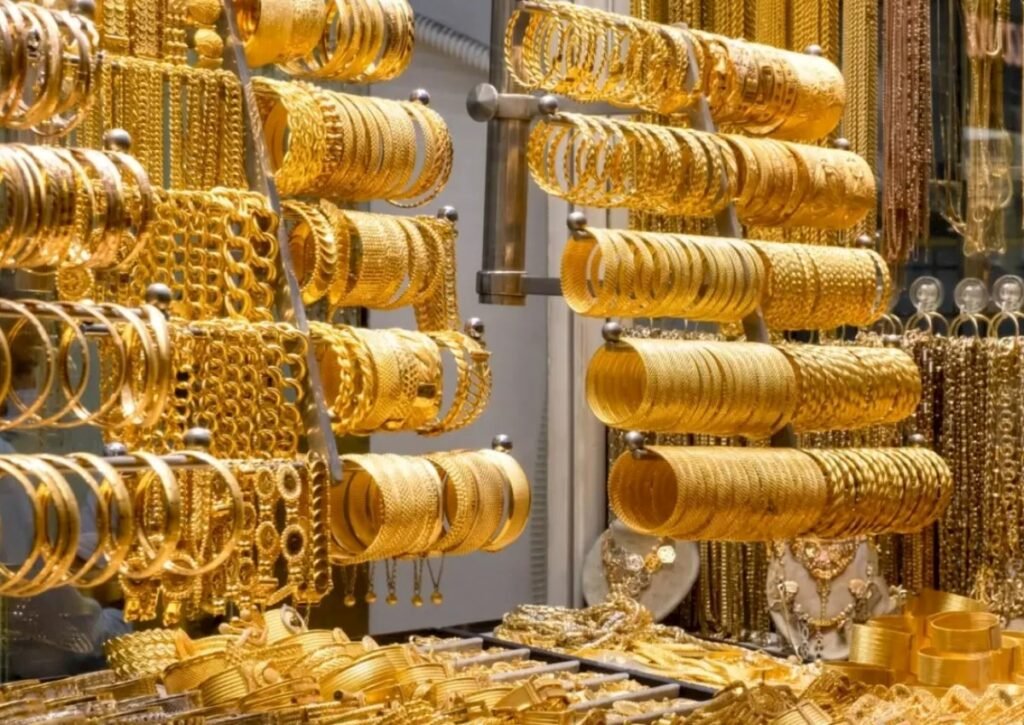
Gold jewelry prices are falling in Azerbaijan, with some items down by 20 to 30 manats per gram since the beginning of November, while growing interest in lower-cost used pieces is creating new risks for buyers.
The decline in global gold prices has begun to affect Azerbaijan’s jewelry market, Vesti Baku reported, citing figures presented in a Xəzər Xəbər report.
Gold lost about 9% of its value over one week, according to the report. A stronger U.S. dollar, rising yields on U.S. government bonds and expectations of higher Federal Reserve interest rates were cited among the reasons.
Prices by Purity
At the beginning of November, 585-purity jewelry was offered for about 150 to 170 manats per gram. Prices are now in a range of 130 to 150 manats.
Jewelry with 750 purity fell from 190-220 manats to 160-190 manats per gram. Gold with 999 purity, previously sold for 230-260 manats, is now offered for 220-240 manats.
The decline has affected all three categories, though by different amounts. Lower global prices do not require jewelry stores to immediately revise their price tags, however. Many retailers bought inventory when gold cost more, and store prices reflect not only the metal’s current value but also purchasing costs, workmanship and retail markups.
Used Gold Can Cost Hundreds Less
The changing market has increased demand for secondhand gold jewelry. New 585-purity items weighing 10 grams sell for about 1,450 to 1,600 manats, while comparable used pieces cost 1,150 to 1,350 manats.
The difference between some offers can reach several hundred manats, making used chains, bracelets and rings attractive to buyers. Secondhand prices usually include less of the original retail markup and jewelry-making cost.
But savings are not guaranteed. The value depends on an item’s condition, purity, actual weight and the seller’s asking price.
Used Jewelry May Be Presented as New
Sellers interviewed by journalists acknowledged that jewelry bought from members of the public is often cleaned and polished before returning to the market. After treatment, a used item can look nearly indistinguishable from a new one, and buyers are not always told that it was previously worn.
Market participants said disclosure depends largely on an individual seller’s honesty.
Specialists advise buyers to inspect jewelry closely. Fine scratches, dents, wear and weakened connections can reveal previous use. Thin chains and bracelets require special attention because prolonged wear can weaken individual links and raise the risk of breakage. The absence of visible damage, however, does not prove an item is new.
Why Owners Lose Money on Resale
Buyers often assume they will later be able to sell gold jewelry for roughly its purchase price. In practice, a new item’s price includes the precious metal, the jeweler’s work, design, retail markup and other costs.
When the owner sells it back, a store or buyer may value it primarily by weight and pure-gold content. Even if global gold prices remain stable, the owner may receive significantly less than the original purchase price. Jewelry and investment gold should therefore not be treated as interchangeable products.
What Happens Next
Future gold prices will depend on international markets. A stronger dollar and higher U.S. bond yields can pressure precious metals, while changes in U.S. interest-rate policy or rising geopolitical uncertainty can increase demand.
For buyers in Azerbaijan, that means the current decline may not continue. Changes in global prices also reach the local retail market with a delay, and shops have no single timetable for repricing. The timing depends on inventory costs, existing stocks and individual pricing policies.
Before buying, specialists recommend comparing per-gram prices from several sellers, checking purity and weight, and asking whether a piece is new or used. Buyers should also ask what the store would pay to repurchase the same item. The gap between the purchase and resale price may be larger than the apparent savings.
Gold has become less expensive in Baku, but a lower price alone does not guarantee a good purchase. Buyers also need to consider an item’s origin, condition and realistic resale terms.