Diamond jewelry is traditionally viewed as a symbol of wealth and a reliable way to preserve money, but owners trying to resell rings or earrings often discover that the items are valued far below their original price.
The difference is especially sharp for jewelry containing many small stones, some of which may be worth only a few manats on the secondary market, Azerbaijani jewelers told Vesti Baku.
Jeweler Elnur Huseynov, who has worked in the industry for 36 years, said a diamond’s value depends primarily on its size and characteristics. Small diamonds worth only a few manats are available on the international market, he said, so buyers should not assume that a piece with many small stones will necessarily resell at a high price.
What the Retail Price Includes
When customers buy new jewelry, they pay for more than the gold and precious stones. The final price also includes the jeweler’s labor, design, store expenses and a retail markup.
Those components are often given little weight when an item is resold. Gold is valued mainly by weight and purity, while diamonds are assessed by size, quality and demand on the secondary market. A ring bought for a substantial sum may therefore be repurchased for far less.
The gap is particularly visible in jewelry with numerous small stones. Those stones can increase the initial retail price but receive a very low valuation in a buyback transaction.
Some Small Stones Are Worth 3 to 5 Manats
Huseynov said small diamonds can be relatively inexpensive in global markets. Specialist Haji Alizade offered a similar assessment, saying small stones with low-quality characteristics may be worth only 3 to 5 manats each.
That does not apply to every small diamond. Even a small stone can be valuable if its characteristics are strong. Price depends on weight, clarity, color and cut quality. The number of diamonds in a piece does not, by itself, determine its real market value.
One Larger Stone or Many Small Ones?
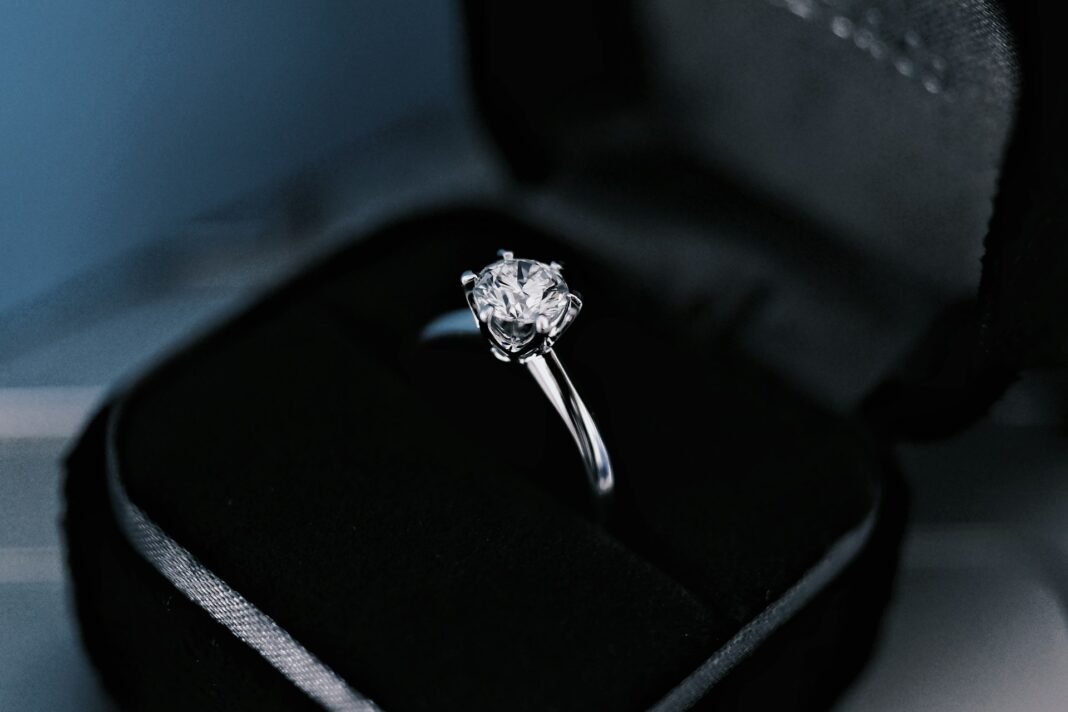
Rings with one relatively large diamond generally attract more resale interest than pieces with many small stones, jewelers said.
They cited a ring with a 0.5-carat diamond as an example. Such jewelry is assessed differently because the value of one larger stone can be more readily determined from its characteristics.
Even then, a high original price does not guarantee that value will be preserved. Diamonds of the same weight can differ significantly in quality and price.
Why Diamond Jewelry Is Not Always an Investment
The widespread belief that any diamond jewelry will inevitably appreciate over time does not match the realities of the secondary market.
For most buyers, jewelry is primarily for personal use rather than an investment asset. A resale requires taking account of the difference between the retail price and what a jewelry store or buyer is prepared to offer.
The risks are particularly high when expensive jewelry is purchased without documents confirming the stones’ characteristics. Specialists advise customers to ask not only about the sale price but also about possible buyback terms.
If a piece is bought specifically to preserve capital, the owner should recognize that a later sale could involve substantial financial losses.
Diamond jewelry can be an expensive gift without being a profitable investment. The higher the original retail markup and the lower the value of the stones themselves, the more the buyer risks losing on resale.