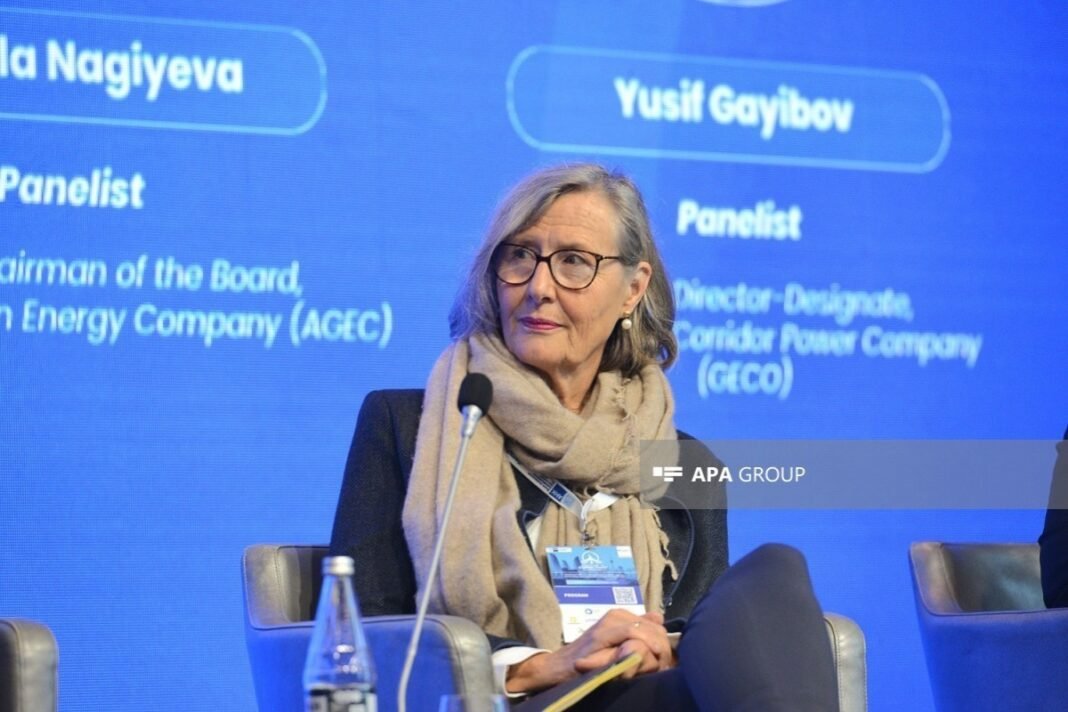
BAKU, Azerbaijan - Germany is ready to contribute technology and expertise to a green energy corridor intended to carry up to 4 gigawatts of electricity from the Caspian region to the European Union.
Kristina Haverkamp, managing director of the German Energy Agency, known as dena, announced the readiness to support the project at a German-Azerbaijani connectivity conference in Baku.
Germany could assist with integrating renewable generation into power grids, digitalization, infrastructure maintenance and specialist training, Haverkamp said. Renewable sources already account for about 60% of Germany’s electricity generation.
Up to 4 GW Through the Black Sea
Frederic Doye, senior vice president at Siemens Energy, said the Black Sea green energy corridor is designed to connect Azerbaijan, Georgia, Romania and Hungary.
The project’s stated capacity is up to 4 GW. Electricity would be transmitted through new high-voltage direct-current infrastructure.
Doye said the corridor has entered European planning processes and feasibility studies are continuing. A second route is intended to connect energy resources in Kazakhstan and Uzbekistan to the European market through Azerbaijan.
Ministers to Meet in Late November
The next meeting of ministers from Azerbaijan, Georgia, Romania and Hungary on the Black Sea Energy project is planned for late November. Ministers and senior energy officials have held 12 meetings over the past four years to coordinate technical and organizational issues.
Haverkamp said electricity exports to the EU would have to comply with European grid codes. Dena is ready to share experience in that area and offer digital technologies that can expand grid capacity without necessarily building additional transmission lines.
Germany has become a net electricity importer and is seeking new sources of clean energy. For Azerbaijan, the project offers a chance to expand beyond its traditional oil and gas role and become an energy hub connecting the Caspian region, Central Asia and Europe.
Source: Vesti Baku.