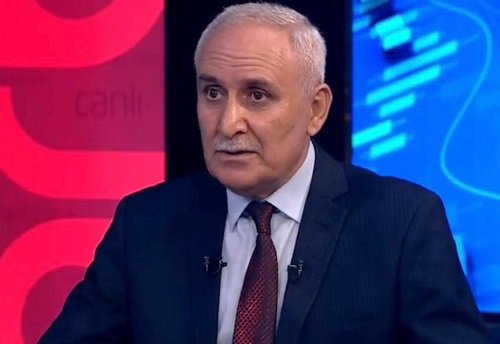
BAKU - Military strikes on Iran did not destroy its political system, but exposed internal contradictions and intensified questions about the country’s future, Azerbaijani political analyst Natig Miri said.
Miri argued that Iran’s Turkic population could become a major factor in any future change and that developments in Iran may be closely connected with deeper cooperation among Turkic states. He gave particular weight to Southern Azerbaijan, the northwestern regions of Iran where a large Azerbaijani population lives, in an interview with the Media Turk Azerbaijan YouTube channel.
Miri said the military confrontation involving Iran and the United States demonstrated the limits of even the largest military powers. At the same time, he said, serious strikes on Iran created new challenges for its governing system.
In his assessment, Iran’s existing model of government faces mounting public dissatisfaction, and further change could affect not only domestic politics but the geopolitical balance across Eurasia.
Missiles Do Not Guarantee Political Stability
Miri cautioned against equating a state’s military technology with the durability of its political system.
“The missiles accumulated underground should not be regarded as the strength of this regime,” he said.
He argued that substantial social discontent exists inside Iran, but said any transformation would not happen at once. In his view, it would be a long process shaped by internal contradictions, external pressure and changes in international relations.
That assessment remains a political forecast. The scale of public dissatisfaction and the likelihood of a specific political outcome cannot be established from military developments alone.
Southern Azerbaijan and the Turkic World
Miri devoted the most prominent part of his remarks to Azerbaijanis living in Iran. He said the idea of a common Turkic space could not be considered separately from Southern Azerbaijan.
“Turan will remain incomplete without Southern Azerbaijan. Southern Azerbaijan is the heart of Turan and its driving force,” Miri said.
He described Iran’s Turkic population as a major cultural and demographic factor that could influence regional integration, linking possible political change in Iran to stronger ties among Turkic-speaking societies across Eurasia.
The interview did not present a specific political or legal scenario for Southern Azerbaijan. Miri did not say whether his concept meant expanded cultural ties, changes to Iran’s internal structure or another form of engagement.
Iranian Azerbaijanis also do not constitute a single political force. Views differ on the country’s future, language rights and relations with neighboring states.
Call for Faster Turkic Integration
Miri said members of the Organization of Turkic States should move from declarations of cultural and historical affinity toward more practical action.
He called on Azerbaijan, Turkey, Kazakhstan, Uzbekistan, Kyrgyzstan and other participants in Turkic cooperation to accelerate economic and political integration. He linked that prospect to an increasingly multipolar international system in which regional organizations have more room for independent policy.
The organization has five full members: Azerbaijan, Turkey, Kazakhstan, Kyrgyzstan and Uzbekistan. Turkmenistan, Hungary and the Turkish Republic of Northern Cyprus hold observer status.
The organization is officially focused on cooperation in the economy, transportation, culture and other fields, not on creating a single state.
Northern Cyprus
Miri also urged Turkic states to support Turkish Cypriots more actively and take concrete steps concerning the international status of the northern part of Cyprus. He described the opening of a Northern Cyprus representation in Baku as an important political signal.
A representation does not amount to formal diplomatic recognition. Northern Cyprus is recognized as an independent state only by Turkey, while the European Union recognizes the Republic of Cyprus as the island’s only internationally recognized state.
Azerbaijan’s 2020 War
Miri cited Azerbaijan’s 44-day war in 2020 as an example of national consolidation, saying social unity around a common objective contributed to victory.
He said that experience could inform broader cooperation among Turkic states and urged governments to treat integration as a practical policy direction, not merely a matter of common history or cultural affinity.
Further development of the Organization of Turkic States will nevertheless depend on each member’s sovereign decisions, economic interests and international obligations.
Iran and a Changing Regional Order
Miri’s argument combines three points: Iran’s political system faces serious challenges; its Turkic population could play an important role in future change; and Turkic states should develop stronger cooperation mechanisms.
In that framework, Southern Azerbaijan is not only a historical and cultural term but a potentially significant factor in a future regional order. The actual consequences of any change in Iran remain uncertain and would depend primarily on domestic political processes, the population’s choices and the policies of neighboring countries.
Source: Vesti Baku.