BAKU - Russia has not abandoned imperial ambitions and continues to view the former Soviet space as its sphere of influence, political commentator Ali Mustafa said, warning that President Vladimir Putin’s strategic objectives may extend beyond Ukraine to the South Caucasus.
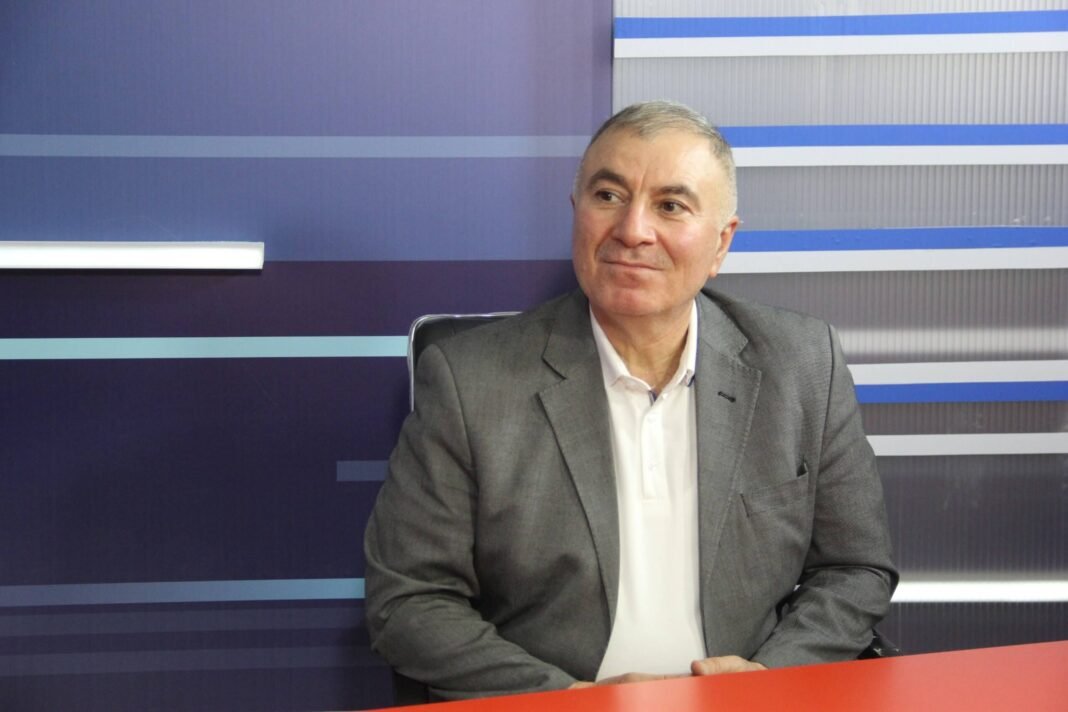
In an interview with the Media Turk Azerbaijan YouTube channel, Mustafa discussed why he believes Moscow is delaying peace efforts, what it expects from political change in Europe and why statements by Russian officials about lands reached by Russian soldiers should concern neighboring states.
Mustafa described Russia’s war against Ukraine as part of a broader effort to restore influence across former Soviet territories. He said Moscow could attempt to extend expansionist policies into the South Caucasus after Ukraine.
“Without Ukraine and the South Caucasus, Russia will not be able to restore its status as an empire capable of dictating terms to the world,” he said.
Mustafa offered no documentary evidence of a specific Russian plan to seize the South Caucasus militarily. His remarks were an assessment of Kremlin strategy, not proof that such an operation is being prepared.
Why Putin Has Not Met Zelenskyy
Mustafa cited the absence of a direct meeting between Putin and Ukrainian President Volodymyr Zelenskyy as evidence that Moscow does not want to end the war.
He said Russia was proposing deliberately difficult terms by offering Moscow as a venue rather than agreeing to a neutral location such as Turkey, the United Arab Emirates or Switzerland.
The Kremlin has repeatedly invited Zelenskyy to Moscow. In September 2026, spokesman Dmitry Peskov said the offer remained open but argued that a meeting without prior expert-level preparation would be pointless.
Mustafa said the dispute over a neutral venue reflected deeper disagreements. In his view, the Kremlin does not treat Ukraine as a fully equal negotiating party and continues to seek decisive influence over its future. He said that approach helps explain long pauses, contradictory signals and the lack of a final agreement.
Moscow Watches Political Change in Europe
Mustafa said Russia had an interest in prolonging the conflict while waiting for international conditions to change, including the possible election of European political forces that favor reducing support for Ukraine.
He said Moscow was watching domestic politics in France, Germany and other European countries and hoped that weaker Western unity could create more favorable conditions for continuing the war.
Mustafa also said Donald Trump’s return to the White House had changed the character of U.S. policy toward Ukraine. He interpreted these developments as part of Moscow’s expectation that foreign support for Kyiv would decline over time.
Such expectations do not guarantee that European governments will change course. Their policies will depend on domestic politics, international commitments and the war’s development.
“Where a Russian Soldier Has Set Foot”
Mustafa focused on remarks by Vladimir Medinsky, an aide to the Russian president. On Nov. 11, 2026, while discussing territorial questions in negotiations over Ukraine, Medinsky recalled Putin’s statement that Moscow considers lands entered by Russian troops to be Russian. Medinsky also ruled out a territorial exchange with Ukraine.
Mustafa said that rhetoric reflected a broader Russian approach to borders and described as dangerous the principle that an army’s presence could justify territorial claims.
Medinsky’s remarks were made in the specific context of Russia-Ukraine negotiations. They were not accompanied by an official Russian claim against Azerbaijan or any other South Caucasus country.
Russian Forces in Karabakh
Mustafa compared the rhetoric with Russia’s former military presence in Karabakh. Russian peacekeepers deployed after the trilateral statement of Nov. 10, 2020, but left Azerbaijan after Baku restored full control of Karabakh in September 2023. Their withdrawal was completed in 2024.
He said that episode showed Russian military presence did not necessarily preserve Moscow’s political control. Mustafa also recalled Medinsky’s previous comparisons between Karabakh and Donbas, saying they reflected concepts of territorial influence and the status of post-Soviet states in Russian political thinking.
Why the South Caucasus Matters to Moscow
Mustafa said Russia’s approach to neighboring states was still driven largely by a desire to retain influence in the former Soviet space. He cited Armenia, where discussion of closer ties with the European Union has drawn negative reactions from some Russian politicians.
He argued that Moscow often views independent foreign-policy decisions by its neighbors as threats and said the same logic could affect other regional states. He also cited the experience of Georgia, Ukraine and countries whose relations with Russia have involved territorial conflict.
His forecast rests on historical parallels and his reading of Russian policy. Long-term Russian geopolitical interests in the region do not make a new war inevitable.
Expansion Versus Modernization
Mustafa linked Russian expansion to domestic governance problems, arguing that the country had failed to turn its vast territory and natural resources fully into durable prosperity.
He contrasted that record with smaller countries that achieved high living standards through technology, effective institutions and economic policy, citing Japan, Norway, Sweden and Finland.
Territorial expansion cannot substitute for internal modernization, Mustafa said, describing imperial views of neighboring countries as a central problem in modern Russian foreign policy.
Could Ukraine Be Russia’s Last War?
Mustafa said ending the Ukraine war would not necessarily cause Moscow to abandon old ideas about regional influence. Neighboring states would continue to face risks if territorial expansion remained a foreign-policy instrument, he said.
The prospect of war spreading to the South Caucasus remains Mustafa’s prediction. The interview presented no official evidence that Moscow is preparing to seize Azerbaijan, Armenia or Georgia.
Source: Vesti Baku.