A prolonged conflict in the Middle East and renewed supply disruptions could cut global oil production by another 4 million barrels a day and push prices to $130, according to an alternative risk scenario presented by the International Monetary Fund.
The estimate was outlined during a presentation of the IMF’s regional economic outlook for the Middle East and Central Asia, Vesti Baku reported. For Azerbaijan, higher prices could provide additional export revenue, but the fund stressed that the scenario is not its baseline forecast.
Baseline Assumes Conflict Eases
The IMF’s baseline calculations assume the conflict will ease, oil production will gradually recover and energy trade through the Persian Gulf will normalize.
Under those assumptions, the average oil price is estimated at about $96 a barrel in 2026 and $87 in 2027. The fund said those figures are working assumptions used in its economic modeling rather than guaranteed price forecasts.
How Oil Could Reach $130
The alternative scenario assumes the war lasts longer than expected and restrictions on production and trade remain in place. Under those conditions, global oil output could fall by an additional 4 million barrels a day.
The IMF’s modeling shows that oil prices could reach $130 between the fourth quarter of 2026 and the first quarter of 2027 before gradually returning to the baseline path by the end of 2027.
Average prices would be about 17% above the baseline level in 2026 and 40% higher in 2027.
More expensive energy would add roughly 1 percentage point to inflation in oil-importing countries compared with the baseline scenario. Persistently high prices would also weigh on economic growth, foreign trade and the public finances of countries that depend heavily on imported fuel.
Implications for Azerbaijan
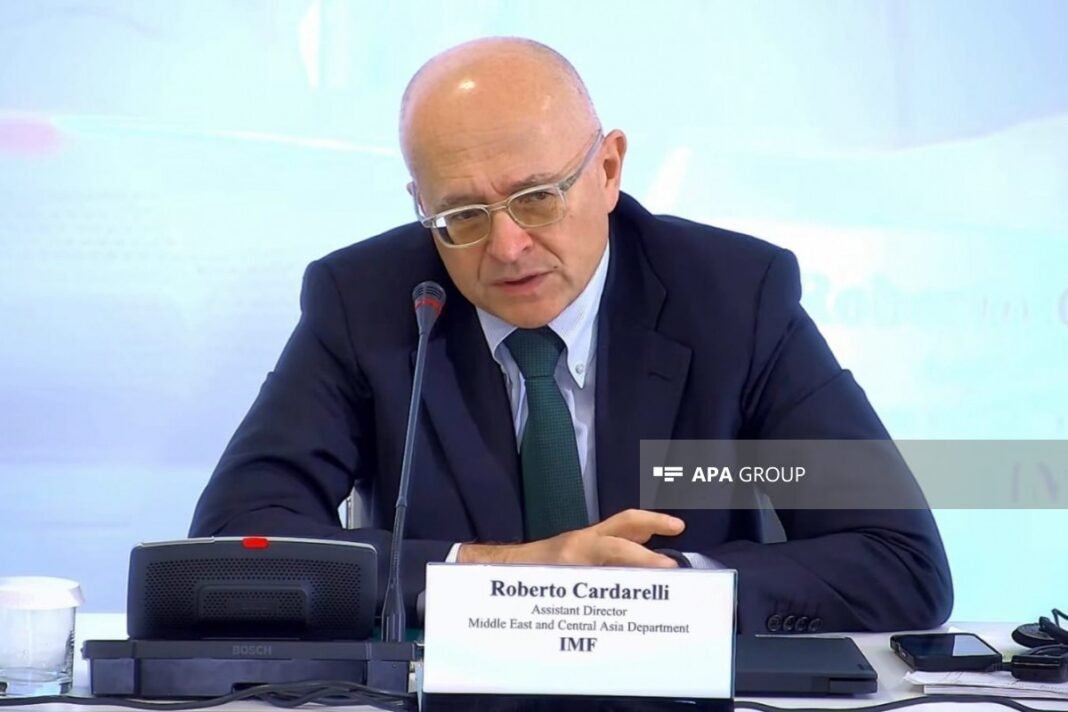
Roberto Cardarelli, deputy director of the IMF’s Middle East and Central Asia Department, said the direct production disruptions in the scenario would affect Persian Gulf producers, Iran and Iraq.
Oil exporters in the Caucasus and Central Asia, including Azerbaijan, would not face the same supply cuts and could receive additional revenue from higher global prices.
At the same time, the IMF said the contribution of oil exports to growth in Azerbaijan and Kazakhstan weakened in the first half of 2026. The fund linked an increase in Azerbaijan’s potential growth rate primarily to expanding investment in capital-intensive industries.
Oil Prices Also Face Downside Risk
The risk to oil exporters is not limited to supply-driven price increases. The IMF’s modeling also found that a major correction in the U.S. artificial intelligence sector could weaken global demand and push oil prices about 30% below the baseline level.
That contrast underscores the wide range of possible outcomes facing energy exporters: a prolonged regional conflict could sharply lift prices and revenue, while a global demand shock could produce the opposite effect.