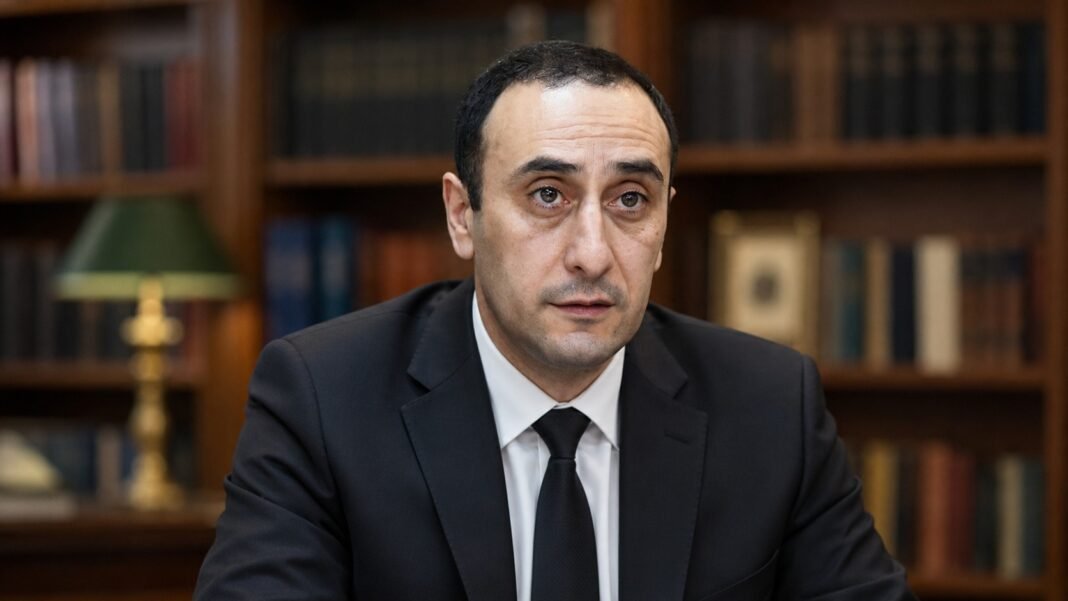
Russia emerged as one of the biggest geopolitical losers from the 2020 war and the changes that followed in the South Caucasus, according to Azerbaijani historian and political analyst Rizvan Huseynov.
Huseynov made the assessment in a YouTube discussion with Georgian commentator Gela Vasadze on the News of the Caucasus channel, Vesti Baku reported. His comments represent his analysis rather than an independently documented plan by Moscow.
Huseynov said the events of 2020 through 2023 changed not only the situation in Karabakh but also the broader system of relations among the South Caucasus states and major outside powers.
Russia’s Regional Role Diminished
“The country that suffered the greatest damage from the outcome of the war was not Armenia, but Russia, followed by Iran,” Huseynov said.
He argued that Moscow had expected to retain its role as the chief mediator between Baku and Yerevan. In his account, Russia may have anticipated a limited Azerbaijani advance followed by a ceasefire that would leave the conflict unresolved and preserve leverage over both sides.
Huseynov said the course of the war upset those expectations. He pointed to Azerbaijani operations in southern Karabakh, the recapture of Jabrayil, Hadrut and Fuzuli, the advance along the Araz River and the drive toward Shusha. He said the capture of Shusha on Nov. 8, 2020, effectively determined the outcome.
His description of Russia’s presumed calculations is an analytical judgment and has not been confirmed by documentary evidence.
Russian Peacekeepers Left Azerbaijan
Russia deployed peacekeepers in Karabakh after the trilateral statement signed on Nov. 10, 2020. Huseynov said Moscow expected a lasting presence, but the situation changed after Azerbaijan restored control over the remaining part of Karabakh in September 2023. Russian peacekeepers left Azerbaijan in 2024.
He linked the outcome both to Baku’s actions and to the weakening of Russia’s international position amid its war against Ukraine. In his view, Moscow lost a major instrument of military and political influence that it had used in regional affairs for decades.
Huseynov said economic relations between Azerbaijan and Russia could continue to develop, but he considered a return to a model based on political pressure on Baku unlikely.
Azerbaijan-Turkiye Alliance Remains Firm
The discussion also addressed Turkish President Recep Tayyip Erdogan’s visit to Karabakh after recent disagreements between Baku and Ankara. Huseynov said the meeting between Erdogan and Azerbaijani President Ilham Aliyev demonstrated the resilience of their strategic alliance.
He cited the leaders’ meeting in Fuzuli, their joint trip, talks in Shusha and public statements as signs that predictions of a serious bilateral crisis had not materialized.
Huseynov acknowledged that disagreements could remain and said Azerbaijan’s growing international role required Baku to defend its interests more clearly even with its closest allies. He also suggested that outside forces could have sought to exploit tensions, but presented no specific evidence of organized intervention.
Iran and the TRIPP Route
Huseynov said he expected the Trump Route for International Peace and Prosperity, or TRIPP, which envisages transport links through Armenia with U.S. participation, to be implemented.
He described sharp remarks by Iranian politician Ali Akbar Velayati as reflecting concern among parts of Iran’s leadership over the changing regional balance. Huseynov said Tehran had gradually lost the ability to shape transport projects through earlier methods of pressure, pointing to large Iranian military exercises near Azerbaijan’s border in 2021 and 2022 that did not change Baku’s plans.
He said views within Iran were not uniform: hard-line officials may see new routes as a geopolitical threat, while business groups could benefit from additional trade and transit opportunities. Companies from Turkiye, Kazakhstan and other countries could take part, he said, although the participants, financing and construction timetable remain under negotiation.
The “3+3” Format and Russia’s Base in Armenia
Huseynov expressed skepticism about the “3+3” regional format involving Azerbaijan, Armenia, Georgia, Russia, Turkiye and Iran. He said attempts to revive it reflected a desire by Moscow and Tehran to retain influence over regional decisions.
Azerbaijan, Turkiye and Georgia have already built independent transport and energy infrastructure, while Baku and Yerevan are moving toward normalization, he said. Georgia’s refusal to join because of its disputes with Russia also remains an obstacle.
Huseynov said Russia’s military base in Gyumri remains one of Moscow’s most important instruments in the South Caucasus, even as Armenia seeks to diversify its foreign-policy and defense ties while maintaining economic cooperation with Russia. He predicted that Russian military-political influence over Armenia would decline over the long term, though the timing and form of any change to the base’s status remain uncertain.
Trade Corridors Shape the Next Contest
Despite political differences, Russia retains a strong interest in Azerbaijani transport infrastructure, especially the North-South corridor connecting Russia with Iran and South Asian markets. The route has gained importance as restrictions have tightened on Russia’s western trade links.
Huseynov also said Moscow could be interested in gas transportation projects involving Caspian and Gulf states, though any such initiative would require substantial investment and commercial agreements. Vasadze questioned the appeal of some proposals given competition from major gas producers including Qatar and Iran.
The central question, the participants said, is whether Russia is prepared to treat Azerbaijan as an independent economic partner instead of trying to restore its former political leverage.
Huseynov concluded that the consequences of the 44-day war extended well beyond Karabakh: Azerbaijan restored control over its territories, Turkiye strengthened its regional position, Armenia began reconsidering its foreign-policy orientation and Russia lost some instruments of influence. The United States also expanded its role in regional transport initiatives.
Russia and Iran still retain economic, political and military capabilities, and new communications projects will require lengthy negotiations. But Huseynov said the defining change is that South Caucasus states now have more room to set their own regional agenda.